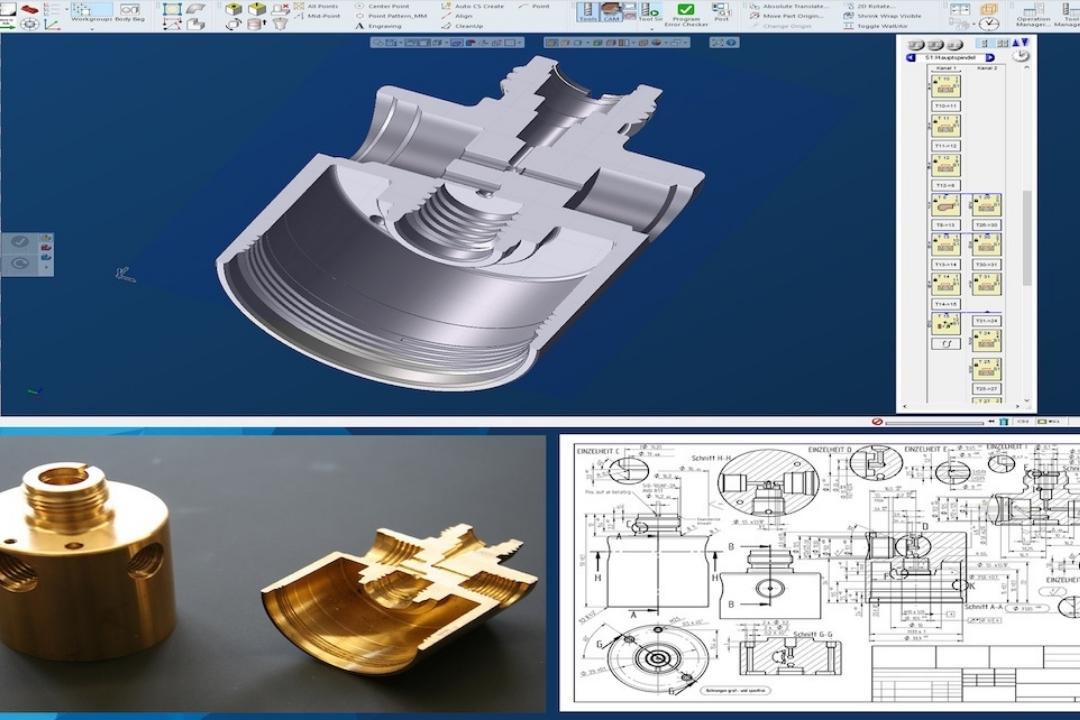
Manufacturing across the world is entering a new phase as Industry 5.0 becomes a reality. Factories are no longer just automated production centres. They are becoming smart environments where engineering talent, human creativity, and intelligent digital systems come together. This shift demands strong leadership, especially from those who deeply understand Computer-Aided Manufacturing (CAM). Their knowledge of machining, CNC processes, and multi-axis programming allows them to guide the industry toward a future where advanced CAM solutions make complex machining more efficient and accessible for all, including small and medium manufacturers in India.
In earlier years, CAM was mainly seen as a tool for generating toolpaths faster. However, modern manufacturing requires more than speed. Today, customers expect quicker deliveries, reliable process quality, and full traceability of every step. This has pushed CAM to evolve into a digital, knowledge-based platform that not only generates toolpaths but also assists in planning, strategy, simulation, and real-time decision-making. Leaders who understand this change are not just adopting technology; they are using it to transform operations and build competitive advantage.
One key transformation is the rise of artificial intelligence in toolpath generation. Traditionally, programmers depended heavily on experience, trial cutting, and manual adjustments to achieve stable cutting conditions. Now, AI can study the behaviour of tools, materials, vibration, cutting forces, and spindle load to calculate cutting conditions that deliver more stable results. The role of the programmer shifts from manual coding to guiding strategy, while the machine continuously improves its own performance with every job. This collaboration between human understanding and machine learning improves machining accuracy, surface finish, and tool life, while reducing programming effort and machining time. In shops where manpower is limited, this becomes a significant advantage that allows engineers to focus on higher-level improvements.

Another major development is the rise of the digital thread. In the traditional workflow, design, programming, and production often existed in separate silos. Changes in design meant repeating manual work and risking errors on the shop floor. With digital thread integration, a change in the CAD model automatically updates toolpaths, fixtures, and machining logic. This reduces programming time, shortens delivery schedules, and ensures that no information is lost between departments. In sectors like aerospace and medical manufacturing, where documentation and traceability are critical, digital thread systems turn compliance from a burden into an advantage by tracking decisions and actions automatically.
Modern CAM systems are also becoming knowledge-based rather than rule-based. Earlier, every new component required the programmer to apply experience manually. But many companies now face a skills gap, as experienced machinists retire and younger professionals enter the industry. Knowledge-based CAM captures machining know-how and stores it within the system. This allows the software to automatically identify features, apply proven strategies, and maintain consistency across all programmers. As a result, programming time can be reduced dramatically, and new engineers become productive much faster. This not only increases efficiency but also preserves decades of manufacturing knowledge that would otherwise be lost.
The development of adaptive machining further strengthens this transformation. Instead of cutting under fixed conditions, modern systems monitor heat, force, and vibration in real time to adjust cutting speeds, feed rates, and tool engagement automatically. This prevents tool damage, protects machines, and enables longer periods of unmanned running. Manufacturers adopting this approach often achieve shorter cycle times, longer tool life, and improved confidence in lights-out production. For leaders, these shifts focus from fire-fighting production issues to planning long-term capability development.
The smart factory is where the full potential of advanced CAM is realised. When CAM systems communicate with MES, tool management systems, scheduling software, and machine monitoring platforms, shops gain unprecedented clarity and control. Machine status, tool availability, and workload can all be considered while planning a program. Inspection data can feed back into CAM to improve future operations. Successful strategies from one job can be saved and reused. Predictive maintenance algorithms can schedule service before breakdowns occur, eliminating unexpected downtime. For manufacturers operating in competitive markets, this integrated environment becomes a major advantage, improving delivery reliability and building customer trust.
Despite all this automation, human skill remains essential. In the future, the most important manufacturing professionals will not be those who only know how to write G-code, but those who can analyse systems, make decisions, optimise processes, and drive improvement. Advanced simulation and virtual validation now allow programmers to test outcomes before machining begins, reducing risk on the shop floor. Instead of performing repetitive tasks, professionals focus on strategy, problem-solving, and innovation. This is the new model of manufacturing leadership, where technology supports people rather than replacing them.
Sustainability is becoming an integral part of this manufacturing evolution. Advanced CAM and automation technologies enable more precise material usage, reducing waste and energy consumption during machining processes. Real-time monitoring and adaptive machining optimise resource efficiency by adjusting cutting parameters to minimise tool wear and energy use. Furthermore, the integration of digital thread systems supports lifecycle tracking and environmental compliance, helping manufacturers meet sustainability goals while maintaining high quality and productivity. By embedding sustainability into Industry 5.0 practices, manufacturers not only reduce their environmental footprint but also create long-term economic value and resilience in a rapidly changing global market.
As manufacturing moves deeper into Industry 5.0, the organisations that succeed will be those that treat CAM and automation not as optional software tools but as strategic business assets. Leaders with deep technical grounding and a clear vision of how digital manufacturing should evolve are already helping factories increase productivity, improve quality, and compete more effectively. They are shaping the future with solutions that make advanced machining simpler, more stable, and more efficient. Industry 5.0 is not only about intelligent machines. It is about enabling engineers, machinists, and programmers to achieve more with the tools available to them. Those who embrace this transition early will be the companies that define the next chapter of modern manufacturing.