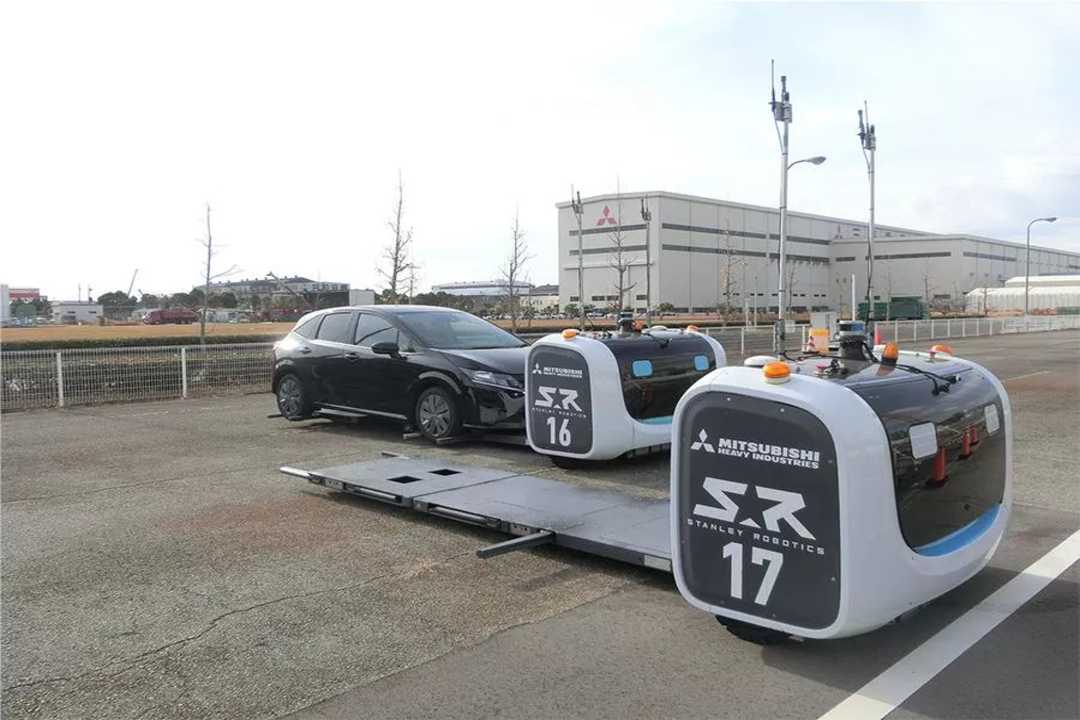
MHI Machinery Systems, Ltd (MHI-MS), a member of the Mitsubishi Heavy Industries (MHI) Group, will begin demonstration testing of autonomous vehicle transport robots at Nakagusuku Port in Uruma City, Okinawa Prefecture, starting December 1, 2025. The project, adopted under Okinawa Prefecture’s Testbed Support Subsidy Program, will assess the effectiveness of robotic systems in improving efficiency and sustainability in finished vehicle logistics (FVL).
The demonstration will utilize vehicle transport robots designed to autonomously move completed vehicles within storage yards and logistics facilities. These robots can operate even when the vehicles themselves lack autonomous driving or connectivity features, allowing for automated movement of both new and used cars without modifying the vehicles or making extensive infrastructure changes. This flexibility makes the system highly suitable for motor pools, production sites, and large parking facilities such as shopping centers, airports, and entertainment venues.
MHI-MS has been jointly developing these advanced robotic transport systems with Stanley Robotics, a France-based technology company, since 2021. As of October 2025, the partnership has secured seven domestic patents related to autonomous transport robots. The company completed development of a customizable system optimized for Japan’s operating conditions in March 2025, marking a key milestone toward local implementation and commercial deployment.
Okinawa was selected as the testing location due to its distinctive vehicle landscape—where private car ownership per capita exceeds Japan’s national average and used vehicles are an essential part of daily life. The prefecture also has one of the country’s highest concentrations of rental cars, driven by a robust tourism industry. Many of these rental vehicles are regularly replaced and resold as used cars, making efficient vehicle handling and logistics operations critical to local economic activity.
The Nakagusuku Port Motor Pool, used primarily for the temporary storage and shipment of used vehicles, faces operational challenges such as labor shortages, aging workers, and increasing physical strain due to outdoor conditions. Additionally, digital transformation (DX) initiatives—including the digital tracking of vehicle locations—have become increasingly important for improving productivity and management efficiency.
Through this project, MHI-MS aims to demonstrate how autonomous transport robots can reduce the physical workload on employees, address labor shortages, and enhance workplace safety. The testing will also explore robot-assisted yard management, digital vehicle tracking systems, and potential environmental benefits, including lower CO₂ emissions through reduced operation of gasoline-powered vehicles.