Raychem RPG, a joint venture between RPG Enterprises and TE Connectivity, is a leading Indian manufacturer of power connections and energy infrastructure solutions. Through its technologies in cable accessories, termination systems, and grid reliability products, the company plays an important role in strengthening India’s transmission and distribution backbone, ensuring that the nation’s growing power demand is met safely, efficiently, and sustainably.
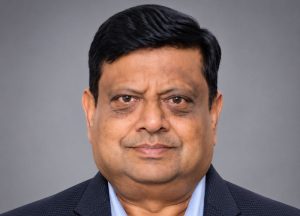
In July 2020, Vivek Venkatachalam took over as the Chief Executive Officer of Raychem RPG, when the world was still finding its footing after the pandemic. Leading one of India’s most trusted names in power connection and transmission solutions, he stepped into a sector that was both essential and evolving, where energy, infrastructure, and self-reliance were about to converge.
Five years later, Raychem RPG stands at the centre of India’s renewable and infrastructure transformation, championing Make in India manufacturing, technology integration, and system-level reliability. In this exclusive feature with Machine Maker, Vivek reflects on how the company has harnessed the momentum of post-COVID CapEx, the rise of renewables, and the discipline of local value creation to become a true enabler of India’s energy future.
A Leader in Transition
Vivek Venkatachalam’s entry as CEO of Raychem RPG came at a time of unusual uncertainty. The pandemic had slowed industrial activity, and infrastructure projects were stalled across the country. Yet amid that turbulence, Vivek saw something different —a once-in-a-generation opportunity to reset India’s energy narrative.
“Before 2020, the energy sector was growing at barely two or three percent,” he recalls. “COVID created a contraction a pause that allowed everyone to rethink. What came after was escape velocity.”
That “escape velocity” emerged when India’s dual engines of public infrastructure and private investment began firing together. Massive government expenditure on metros, airports, and connectivity projects created downstream opportunities for private players. For Raychem RPG, whose business is deeply woven into the country’s power infrastructure, this was a moment to accelerate.
The Energy Sector Reset
In the years following the pandemic, the company witnessed a transformation across India’s energy ecosystem. Private companies like Reliance, Adani, and Birla resumed long-term investments, while government-funded projects expanded rapidly. “Once both engines start running together,” Vivek explains, “it becomes a very exciting period for the country. You can feel the multiplier effect across industries.”
That optimism was not unfounded. New investments in transmission, connectivity, and renewable projects pushed the sector’s growth from a sluggish 2–3% to a robust 6–7% annually. Energy became a foundation for India’s aspiration to become a $5 trillion economy.
Renewables: From Alternative to Mainstream
The conversation around renewable energy in India is no longer about “if”, it’s about “how fast.” Vivek notes how far the sector has come from the days of experimental solar rooftops and small wind farms.
“In the 1970s, India was already thinking about alternative energy,” he says, “but the technology wasn’t mature enough then. Today, the efficiency, scale, and materials have changed everything.”
He illustrates this with an engineer’s precision. “If you looked at a windmill in those days, it was the height of a three-storey building. Today, each blade of a wind turbine can be the length of a tennis court, and the full rotation covers more than a football stadium.”
Solar energy, too, has evolved from being an “alternative” to being India’s primary renewable driver. Vivek emphasises the modular advantage of solar systems, which operate at both the micro and macro levels. Solar is the only energy source that is both centralised and decentralised. You can power a home with two panels, or a city with an array of modules.”
During a recent visit to rural China, Vivek was struck by the extent of solar penetration even in remote locations. “Every streetlight had a panel. It’s unbelievable how deeply they’ve integrated renewables into everyday life,” he says. “That’s the level of scale we need to aspire to.”
Building Local Supply Chains: A Non-Negotiable Discipline
At the heart of Raychem RPG’s growth story lies one unshakable principle: make it in India, or don’t make it at all. As a 50:50 joint venture between RPG Enterprises and TE Connectivity, Raychem RPG could have taken the easy route of importing and assembling. Instead, the company committed to building everything it sells for the Indian energy sector within India itself.
“Depending on somebody else is not a strategic choice for a country like India,” Vivek asserts. “Whatever it takes to generate, transmit, and distribute power must be available domestically from raw material to final product.”
This belief has practical consequences. Some projects had to be delayed until local manufacturing capability caught up, but the long-term payoff has been resilience and control. Today, over 90% of the company’s product components are made in India, with only select raw materials imported.
That discipline positions Raychem RPG as a true enabler of Atmanirbhar Bharat in the energy domain, practising self-reliance on the shop floor.
Raychem RPG’s Business and India’s Energy Equation
Raychem RPG operates across transmission, distribution, and connection effectively, the invisible network that ensures power flows where it should. About 80% of its business is tied to the energy sector, and Vivek sees that dependence as a strength, not a risk.
“Our job,” he explains, “is to connect lines to make sure power reaches people. With India’s digitalisation, electric mobility, and industrial expansion, demand for reliable transmission is only going to multiply.”
He lays out the numbers clearly. India’s per-capita power consumption is around 1,800 kWh per year, compared to 9,000 kWh in developed nations. “If we even aspire to become a seven or eight trillion-dollar economy, our energy consumption must double,” he says.
That means twice the generation, twice the transmission, and twice the distribution and companies like Raychem RPG are at the centre of that transformation. “In the next five years, I see every segment of our business doubling itself. We don’t need to do anything dramatically different; we need to stay in the market with the right technology at the right price point.”
Challenges Ahead: Scale, Technology, and Value
Growth brings its own tests, and Vivek identifies three that define his leadership focus.
1. Creating capacity before demand.
“Indian companies tend to build capacity after the demand comes. That’s safe — but it’s slow. If we don’t create capacity in anticipation, others will fill the gap. The world doesn’t wait.”
2. Bridging the technology gap.
“The days of being a version behind are gone,” he says. “If Apple can launch a phone in India on the same day as the US, why should our customers wait for world-class technology? The minus-one lag is over.”
3. Delivering best-cost, not cheapest-cost.
In a world obsessed with price, Vivek reframes the conversation. “Best cost doesn’t mean cheap. It means delivering what the customer wants at a price that’s hard to refuse. Value is the real differentiator.”
He connects these three imperatives—capacity, technology, and cost—as interdependent levers. “You can’t achieve one without the other two. Scale enables cost, technology drives value, and foresight makes both sustainable.”
Renewables and Distribution: Engines of the Future
The renewable surge is now aligned with India’s digital revolution. As data centres, electric vehicles, and smart infrastructure expand, power reliability becomes non-negotiable. Vivek foresees equal momentum in both generation and distribution.
“Producing power isn’t enough,” he points out. “You must transmit and distribute it efficiently. Tier-2 and Tier-3 cities will be the next big frontier for energy demand; that’s where we’re focusing our solutions.”
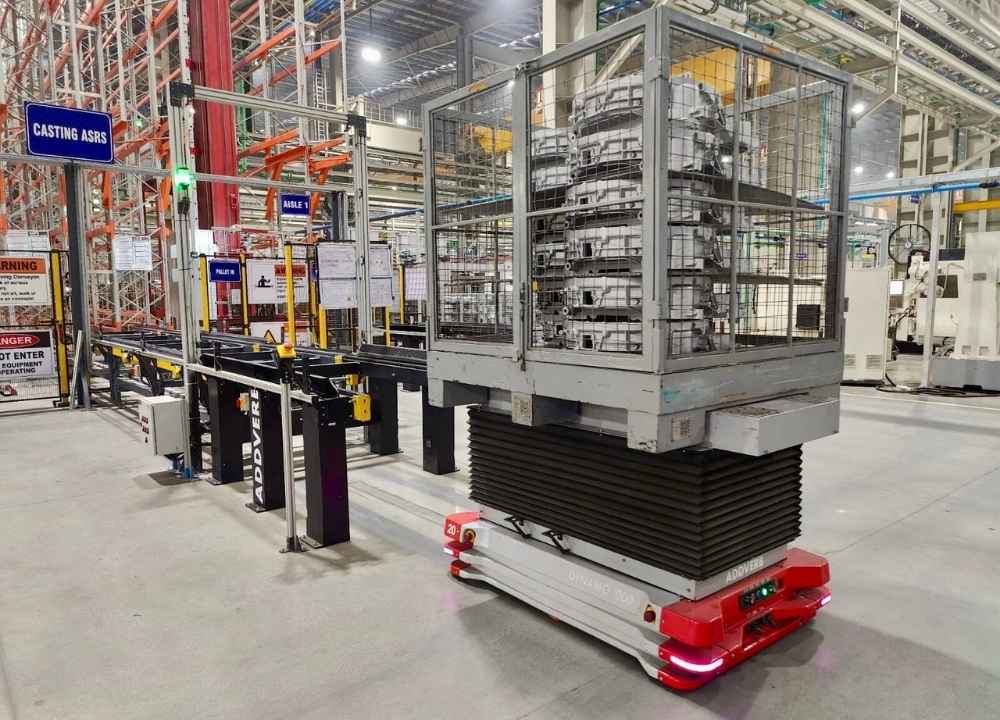
From cable accessories and connection systems to high-voltage terminations and solar connectors, Raychem RPG’s portfolio continues to evolve to meet the expanding grid. The company’s local manufacturing facilities in Vasai, Naigaon, Halol, and Chakan serve as strategic nodes that balance speed, quality, and capacity.
Powering India’s Next Decade
Looking ahead, Vivek’s vision for Raychem RPG is both pragmatic and ambitious. More than a component manufacturer, he wants to be the system enabler for India’s power transition. He envisions a future where Raychem RPG integrates digital intelligence, IoT, and smart grid capabilities into traditional electrical systems, making them not just functional but intelligent.
“India doesn’t lack ambition,” he concludes. “What it needs is foresight, the courage to create capacity before the world demands it.”
Under his leadership, that foresight has become Raychem RPG’s core philosophy. As India races toward a renewable-powered future, the company stands as both participant and catalyst, building the infrastructure that makes ambition possible and the capacity that keeps it sustainable.