

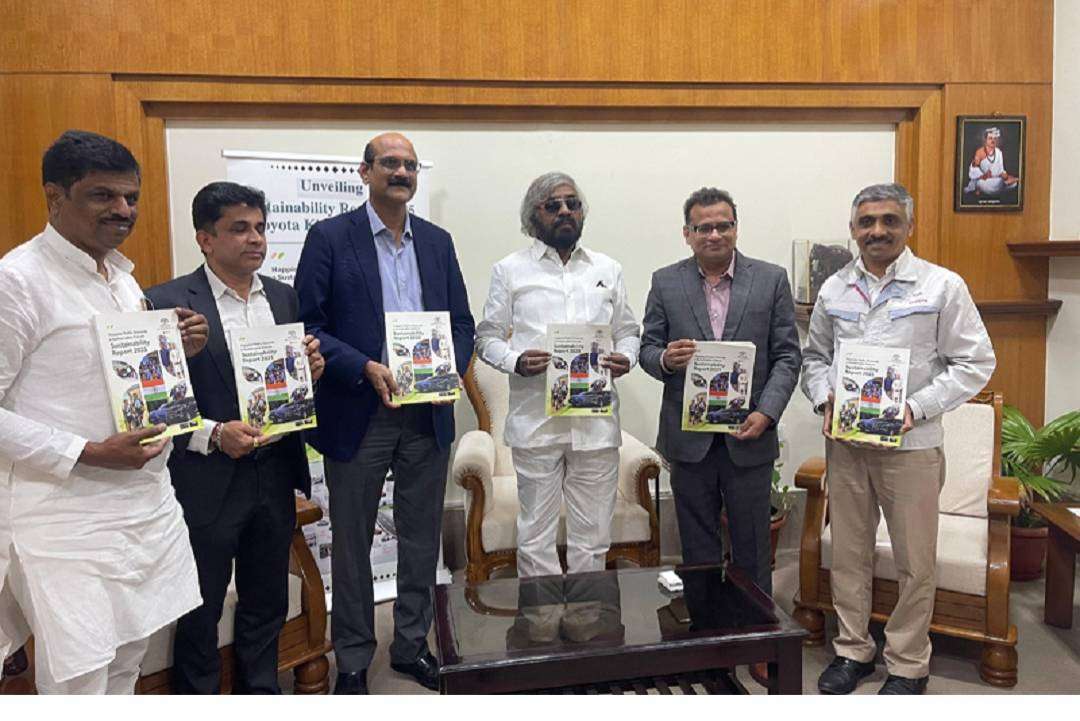
Toyota Kirloskar Motor (TKM) has published its detailed Sustainability Report for 2025, highlighting its ongoing dedication to environmental responsibility and sustainable transportation solutions tailored to India’s development needs. The report was officially launched by Eshwara Khandre, Minister for Forest, Ecology and Environment of Karnataka, with key executives from TKM including Swapnesh Maru, Deputy Managing Director – Corporate Planning & Green Field Projects, and Sudeep Dalvi, Senior Vice President and Chief Communication Officer, present to emphasize the company’s role in India’s journey toward carbon neutrality and sustainable manufacturing leadership.
During the launch, Minister Shri Khandre stressed the vital link between greenery and the future of the planet, urging industries to promote tree planting, protect urban greenery, and adopt eco-friendly practices such as renewable energy use and water conservation. He highlighted afforestation and environmental care as crucial steps to combat climate change impacts.
Mr Maru remarked, “Our approach aligns closely with India’s COP26 climate goals and Toyota’s global vision for environmental sustainability by 2050. We are committed to implementing solutions that fit India’s unique conditions while contributing to worldwide climate targets. Every initiative — from planting trees to expanding renewable energy and producing eco-friendly vehicles — is a step toward making sustainable mobility accessible for all.”
Key highlights of TKM’s 2025 report include initiatives across environmental stewardship, social responsibility, and governance. The company continues to lead efforts toward carbon neutrality, embedding green practices in its manufacturing and supply chain operations.
In response to growing vehicle-related emissions, TKM is expanding its range of electrified vehicles, including hybrid, battery electric, fuel cell, plug-in hybrid, and alternative fuel models. These efforts make clean transportation options more affordable and widespread across India. Additionally, development of Electrified Flex-Fuel Vehicles supports the country’s biofuel integration ambitions.
Aware that emissions stem from vehicle production to delivery, TKM enforces strict environmental standards with suppliers and has established eco-friendly dealership and logistics networks to reduce carbon footprint throughout the entire lifecycle. TKM has transitioned to 100% renewable electricity at all manufacturing sites and aims for carbon-neutral production by 2035, with zero emissions across the supply chain by 2050. Energy-saving technologies are also deployed to reduce consumption annually.
The company sources nearly 90% of its water needs through rainwater harvesting and recycling, addressing India’s critical water scarcity challenges. Its factories operate on zero-liquid discharge principles and actively replenish water through community watershed and recharge programs.
Achieving zero waste sent to landfills across plants, TKM recycles over 96% of waste by practicing Reduce, Reuse, and Recycle principles. The company supports vehicle recycling policies and is advancing circular economy strategies covering production and post-use phases.
Through the Toyota Green Wave Project, TKM has created a 112-acre green space with native trees and flora, restoring local ecosystems and supporting wildlife. The initiative includes a 25-acre eco-education zone benefiting tens of thousands of students and visitors, demonstrating TKM’s commitment to environmental balance. Environmental awareness is promoted year-round with special events and campaigns, including a dedicated environment month in June, involving employees, communities, suppliers, and partners in sustainable practices.
Environmental, social, and governance (ESG) principles are integral to TKM’s strategy, overseen at the board level to ensure transparency and long-term success. Social initiatives include skill-building programs at Toyota Technical Training Institute, efforts to increase women’s participation in leadership and technical roles, expanded healthcare access, and support for local farmers focused on water conservation. TKM’s future roadmap beyond 2025 centers on innovation and collaboration, aiming to scale up green vehicle solutions, increase renewable energy usage, optimize resource efficiency, and ensure an inclusive transition that benefits all stakeholders.








