In a significant boost to India’s automotive ecosystem, Karnataka’s Industries Minister M B Patil recently announced that Japanese multinational Shinko Nameplate will invest ₹100 crore to set up its first manufacturing facility in the country. For the Japanese company that began in 1947 with hat-making tools and went on to pioneer decorative and functional plastic components for global automotive and electronics brands, this marks the start of an exciting new chapter.
In the aftermath of World War II, when Japan was rebuilding and bold new ideas were emerging, a young entrepreneur named Akiyama Shigeo founded what would become Shinko Nameplate Co, Ltd, applying press methods initially used in hat-making to produce affordable nameplates. Over the decades, the company grew from crafting simple metal badges to supplying precision emblems, calculator panels, wheel caps, and more, navigating shifts in automotive design, including the industry’s drive to reduce weight that threatened demand for heavy metal parts. To survive, Shinko began innovating: replacing metal with resin, perfecting plastic moulding, developing coatings and vapour-deposition techniques, designing emblems that penetrate millimetre-wave signals, and combining durability with aesthetic metallic finishes.
In its expansion beyond Japan, Shinko established research and tool-room operations at home, even as it built a manufacturing facility in Bangkok (Shinko Asia Bangkok), to balance innovation and global production capacity. More recently, seeing immense potential in India’s automotive and decorative parts market, the company formalised its presence with Shinko Nameplate India Private Limited, led by Shiro Ohata as its Managing Director, and guided by industry veteran D K Sharma.
In an exclusive interview with Machine Maker, Shiro Ohata shares the company’s journey and vision, joined by industry veteran D K Sharma, who is mentoring their India entry. Together, they reflect on how design and functionality converge in Shinko’s innovations, and why India is the natural next step for the company’s global growth.
From Hats to High-Tech Emblems

“Shinko Nameplate was established in Japan in 1947,” begins Shiro Ohata, tracing the roots of the company he now leads in India. “It’s still a family-owned company, and today the president is from the third generation. But it may surprise you, at the very beginning, we weren’t in the automotive field at all. The founder actually wanted to produce hats, and then started making the tools for those hats.
The second generation ushered in a significant shift during the 1960s, when Shinko moved into supplying metal emblems. Its proximity to the Nissan Technical Centre in Atsugi opened the door to becoming a supplier for Nissan, and the company’s reputation grew. However, by the late 1980s, the automotive industry’s focus on lightweight vehicles disrupted Shinko’s traditional metal emblem business, leading to a sharp decline in sales.
Rather than faltering, Shinko transformed. But the company didn’t stop at decoration. Guided by visionary leadership, the company transitioned from metal to plastic components in the early 1990s. Initially focusing on painting, hot stamping, and printing, Shinko supplied emblems not only to carmakers but also to consumer electronics giants such as Sony, Panasonic, Sharp, and Hitachi, gracing products ranging from camcorders and digital cameras to DVD recorders.
Innovation didn’t stop there. To replicate the premium look of chrome on lightweight materials, Shinko pioneered the use of Physical Vapour Deposition (PVD), combining painting, screen printing, and metallic finishes to achieve high-end aesthetics on plastic parts. This breakthrough opened new opportunities in the automotive sector, particularly in key fob emblems and interior decorative components, cementing Shinko’s reputation as a company that thrives on reinvention. “That allowed us to deliver to the automotive industry again, especially for key fob emblems and interior parts”, added Shiro.
Building Global Capacity in Thailand
By the late 1990s, Shinko faced another turning point. While Japan remained the company’s development and tooling hub, the explosive growth of the mobile phone industry brought both opportunity and strain. “At that time, consumer electronics, especially mobile phones, dominated our business. The cycle was brutal. Three months for design, three months for production, then it was gone. Yet in those three months, we had to supply up to 500,000 pieces per month. It was fast, and it consumed all our capacity.”
The rapid cycles required intense manpower, increased defect risks, and strained production capacity in Japan. Recognising the need to expand, Shinko followed customer invitations to Thailand, where it established Shinko Asia Bangkok in 1998. That pressure pushed Shinko to look outside Japan. “We started in Thailand with just laser cutting and inspection of the final stages of our process. We’d finish everything else in Japan, ship it to Thailand, and they’d complete the cutting and QC before sending it to customers. Slowly, we gained confidence and took more steps.” Gradually, as confidence in quality and processes grew, more production stages were transferred until Bangkok became the company’s primary manufacturing base.
Today, Japan continues to house the sales, quality assurance, development centre, and tool shop. At the same time, Thailand undertakes mass production, supplying customers across Europe, North America, South America, and Asia, including China, Japan, and India. The business itself has also evolved: once dominated by consumer electronics, Shinko’s portfolio is now over 90% automotive, reflecting its ability to adapt to global market shifts while scaling production internationally.
Turning to India: A New Chapter
“We are a decorative plastic supplier, and what we deal with is a very niche part of the industry,” explains Shiro. “It all depends on the design of the vehicle. We supply not only for exteriors, but more importantly for interior components, key fobs, audio panels, shifters, switches, knobs, anything that combines design with touch.”
As an appearance specialist in decorative plastic components, Shinko Nameplate’s business has always been closely tied to automotive design trends. Their niche offerings have defined the tactile and visual identity of vehicles. Yet, global shifts began to reshape demand. Japanese OEMs started phasing out chrome-plated finishes, citing environmental concerns around plating processes. Meanwhile, the rise of EV pioneers like Tesla with interiors dominated by a single digital tablet further reduced the need for physical buttons and separators. “That means fewer separators, fewer switches, and naturally, our business will shrink unless we innovate,” he says.
Looking beyond Japan, Shinko identified new opportunities. In India, demand for plating components remained strong, while in North America, automakers still valued chrome aesthetics but were seeking alternatives to conventional plating. Recognising this, Shiro Ohata personally began exploring India from 2022, meeting with Suzuki, Tata, Mahindra, and leading Tier-1 suppliers. The market study revealed that India not only offered volume but also competitive pricing through building a strong local supply chain. This condition limited Shinko’s ability to secure large contracts without a local presence.
By mid-2023, momentum had built. On August 12, 2023, Shinko Nameplate formally established its subsidiary, Shinko Nameplate India, headquartered in Bengaluru. The speed of India’s automotive development cycles, which is faster than Japan’s or other markets, made it clear that delaying local production would be a missed opportunity. What began as exploratory visits by Shiro Ohata quickly transformed into a committed investment in one of the world’s fastest-growing automotive markets.
Expanding Beyond Chrome: Function Meets Design
To stay ahead, Shinko is moving beyond appearance alone, embedding functional value into its decorative parts. Using advanced Physical Vapour Deposition (PVD), the company has developed emblems and panels that allow RF transparency, essential for smart key fobs and other connected systems. Similarly, its functional front emblems can support technologies like Toyota’s pre-crash safety system, enabling radar sensors to work seamlessly behind a visually striking badge. Other innovations include light-transmissive logos, where the emblem itself illuminates in line with OEM branding requirements.
“For example, we make functional front emblems for OEMs like Toyota, where radar sensors sit behind the badge to enable pre-crash safety systems,” Shiro notes. Similarly, their logos can be designed to light up, giving OEMs fresh branding possibilities. While Shinko doesn’t produce electronics, Shiro is clear about their role. “We make the appearance components and leave the sensors and LEDs to Tier-1 suppliers like Continental or Fujitsu, to ensure that their components integrate smoothly into advanced systems like ADAS. What we do is ensure our parts integrate perfectly with those systems.”
This collaborative design-driven approach extends beyond four-wheelers. Shinko also works with two-wheeler OEMs such as Suzuki and Honda, engaging directly with design studios to co-create logos and emblems. From initial sketches to prototypes, Shinko offers multiple options and material finishes, enabling OEMs to bring their brand identity to life in every new model. It’s this blend of artistry, engineering, and adaptability that Shinko aims to localise in India, ensuring its products remain relevant in a market evolving at breakneck speed.
Beyond Cost: Shinko Nameplate Unlocking India’s Quality Potential
For D K Sharma, industry veteran and mentor to Shinko Nameplate India, the company’s arrival could not be more timely. “When we did the initial survey and spoke to OEMs, it was clear that they’re already making logos and emblems, but the technology is driven by cost here,” he observes. “Shinko, on the other hand, brings advanced Japanese technologies, higher in quality because they’re backed by years of R&D.”
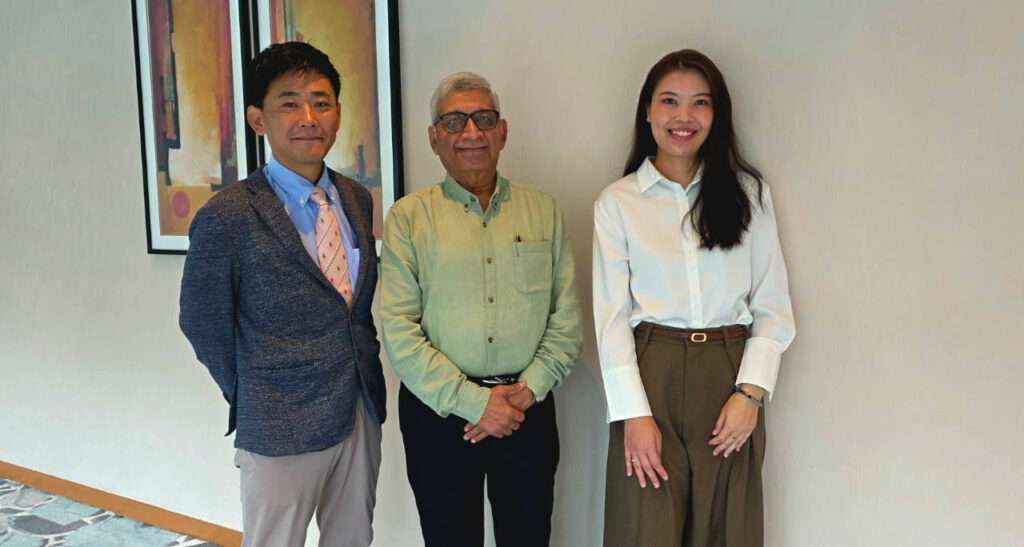
D K Sharma highlights how the Indian ecosystem is beginning to shift. “Earlier, they were seen as a niche player—a small company that doesn’t do assemblies but focuses only on logos and emblems. But now, Tier-1s and OEMs are inviting them in at the design stage itself. Tata and Mahindra alone are launching eight new platforms, a mix of EVs and ICE vehicles. We find Indian design engineers kept coming back to Shinko’s offerings – curious, excited, and impressed by what they saw.”
Cost, D K Sharma admits, will remain a challenge. “Japanese quality always comes at a premium, and Indians naturally push for the lowest price. But there’s merit here. Shinko has already shown goodwill; as they proactively developed logos for Indian automotive OEMs even before being asked. That openness to co-creation is what will set them apart.”
Beyond automotive, D K Sharma sees even broader opportunities. “I took Shinko team to one of the leading electronic white goods showrooms, and when Shiro looked at the logo on a product, his first reaction was: this is not good quality. And they were right. Logos, buttons, aesthetics, these matter not just in cars but in white goods, consumer electronics, and even machines. If Shinko leverages its strengths, India offers them a chance to de-risk their business and expand beyond automotive.”
His conclusion is clear: “India is a huge market. They will start small, which is wise, but eventually they’ll have to expand operations. With the opportunities here, I can already foresee it.”