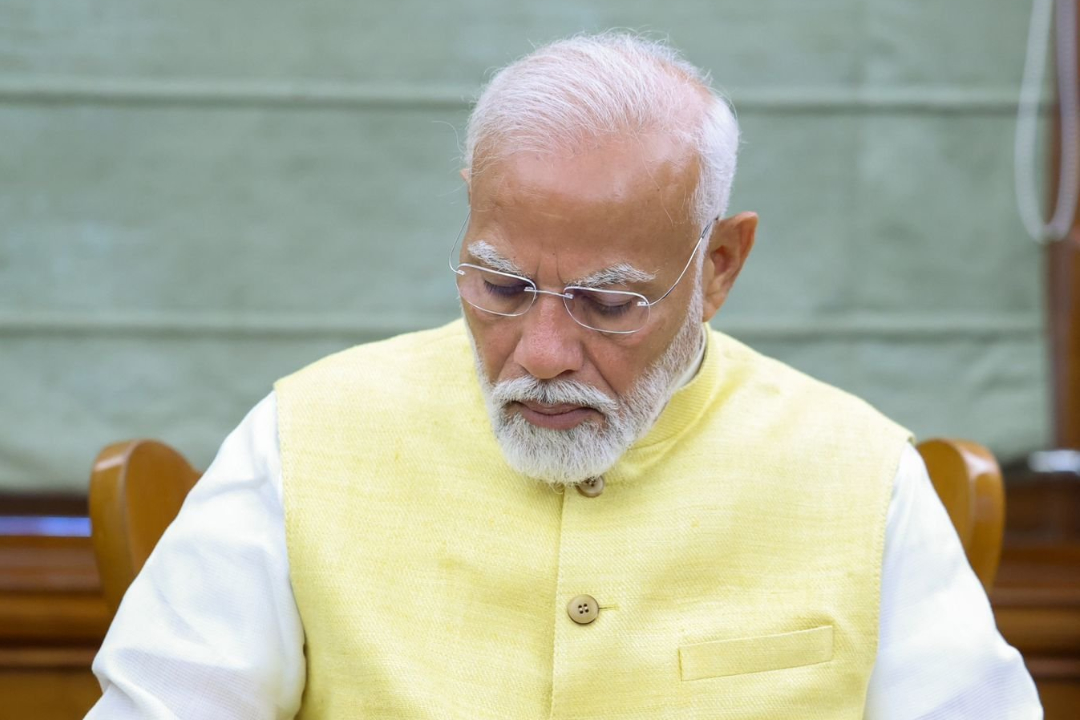
Prime Minister Narendra Modi on Friday announced that India’s first indigenously developed semiconductor chip will be available in the market by the end of this year. Addressing the nation on the 79th Independence Day, Modi said six semiconductor units are already operational and four more projects have recently been approved.
“By year-end, chips made in India, by Indians, will reach the market,” he stated. Semiconductors are the backbone of modern electronics, used in everything from smartphones and computers to home appliances and electric vehicles.
Modi recalled that the idea of semiconductor production in India was discussed 50–60 years ago but was never executed, while other nations advanced and established global dominance in the sector. He added that the country has now overcome past setbacks and is moving ahead with a clear mission.
The first known attempt to establish a semiconductor plant in India dates back to the late 1960s, when American physicist Robert Noyce, who later co-founded Intel, explored the idea. Industry estimates suggest that India’s semiconductor market will more than double to USD 100–110 billion by 2030, up from about USD 45–50 billion in 2024–25 and USD 38 billion in 2023.
This week, the Union Cabinet approved four new semiconductor projects with a combined investment of Rs 4,594 crore across Odisha, Andhra Pradesh, and Punjab. The government has cleared several major semiconductor projects, marking a milestone in India’s chip-making journey. Among the key approvals is a Rs 1,943 crore investment by 3D Glass Solutions Inc, which will establish a 3D glass semiconductor packaging unit. Backed by technology giants such as Intel, Lockheed Martin, and Applied Materials, the facility will have the capacity to produce 5 crore units annually.
Another significant development is the approval of SiCsem’s fabrication plant in Bhubaneswar, which will be the country’s first commercial silicon carbide semiconductor facility. With an investment of Rs 2,066 crore, the plant is expected to produce 9.6 crore chips per year, boosting India’s position in advanced semiconductor technology.
In Andhra Pradesh, Advanced System in Package Technologies has been given the green light to set up a Rs 468 crore packaging facility. This unit will also have a capacity of 9.6 crore units annually, adding to the country’s growing infrastructure for chip assembly and packaging. Meanwhile, Continental Device India Ltd (CDIL) will establish a new semiconductor unit in Punjab with an investment of Rs 117 crore, targeting a production of 15.8 crore units each year.
With these additions, India will soon have 10 semiconductor plants in operation. Collectively, these facilities represent an investment of nearly Rs 1.6 lakh crore, reflecting the country’s accelerating progress toward building a robust domestic semiconductor ecosystem.
Looking ahead, several large-scale projects are also in the pipeline. These include a Rs 91,000 crore wafer manufacturing plant by Tata Electronics in partnership with Taiwan’s PSMC, a Rs 22,516 crore packaging unit by Micron Technology, and a Rs 27,000 crore assembly and testing plant by Tata Semiconductor Assembly and Test (TSAT).
Other notable projects involve CG Power & Industrial Solutions with Renesas and Stars (Rs 7,600 crore), Kaynes Semicon (Rs 3,307 crore), and the HCL–Foxconn joint venture (Rs 3,700 crore), all of which aim to further strengthen India’s position in the global semiconductor industry. Together, these initiatives mark a major step toward India’s ambition to become a global hub for semiconductor manufacturing.