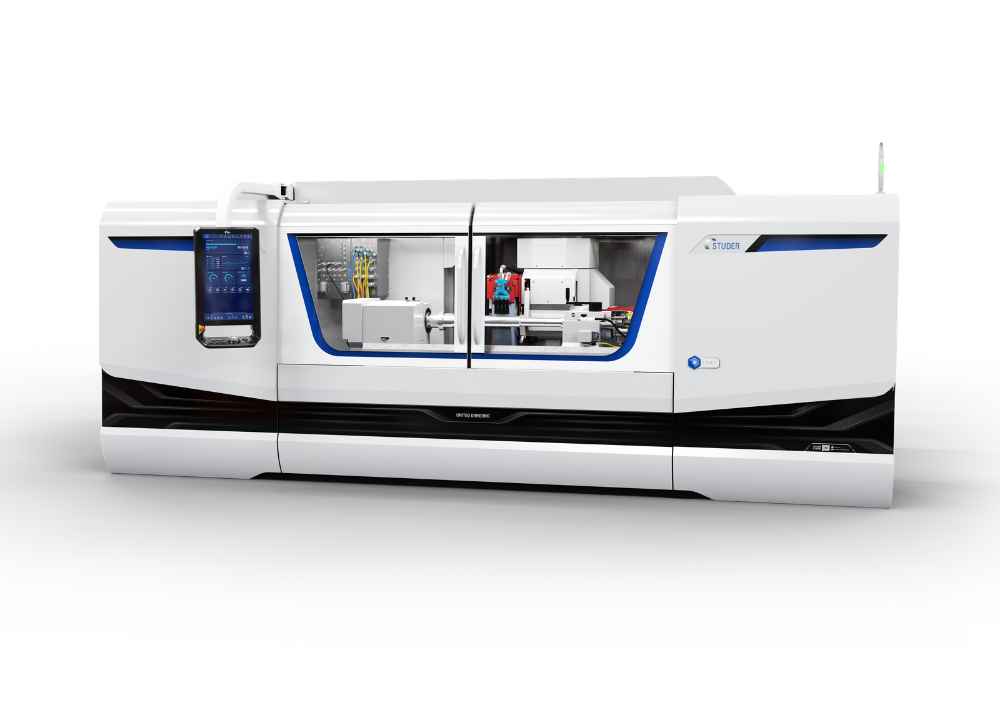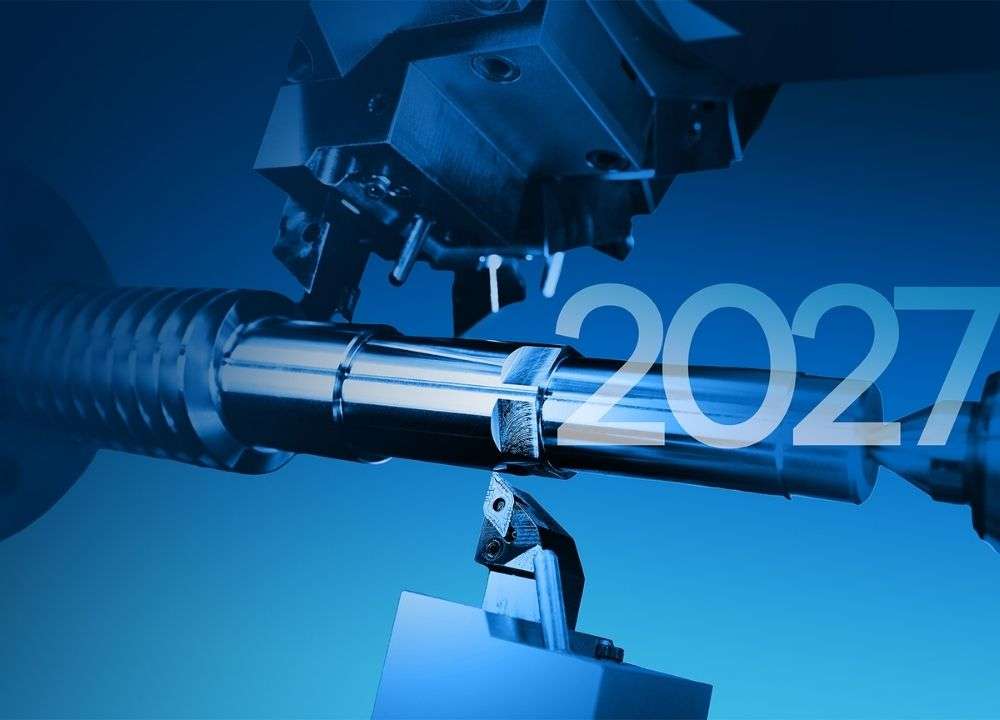
GibbsCAM, A Sandvik Company, is having a very eventful stretch showcasing their new product and the add on services that are being introduced; namely the launch of the GibbsCAM 2027, launched at IMTS 2026 in Chicago and AMB 2026 in Stuttgart, and the arrival of CloudNC’s AI-driven CAM Assist, which can be added as an optional add-on.
The new version facilitates the induction of setup inspection into the programming workspace, helps shorten the simulation review and widens the range of 3D and multiaxis strategies.
Minor fixes major solutions
Time is a major factor in case of any delivery; and deliverables, more importantly in a heavy machine industry, requires razor sharp precision. The GibbsCAM Copilot, with its latest version, runs on a very capable reasoning model, supports images, documentation links and has an inbuilt system to suggest follow-up questions. In addition to these features, each marker adjustment has its own undo and redo button, saving time in case of unwanted inputs, has label signing from Small to Extra Large, along with the new Multi-Select and Range-Select mode, where segments can be selected as if you’re using Ctrl and Shift.
Visibility is a major priority at every step of production, as the supervision helps in reducing wastage and enables earlier rectification. GibbsCAM 2027 delivers exactly that, with added features that help in providing visuals along the toolpath, check-in progress stocks and shows the machine assembly and fixture without opening Machine Stimulation. The Simulation Review has become quicker with the Reverse-Rewind steps saving the time as checkpoints rather than a restart, and chip management and removal has become easier as the Chip Manager and Stop catches loose chips and residues as they appear, leaving a clearer view of the finished products.
Enhanced flexibility in Tool, Hole and Turning workflows
The upgraded Hole Manager feature can split a through-hole feature into several features, manually or automatically, while drilling can use connector and terminal points directly. The Tool Dialog can be found in the Tool List Editor, and a proven threading strategy is added through Oscillating Thread Turning, which works with Coroplus Tool Library data.
The enhanced 3D Machining is now acquainted with multiple form tools, like tapered, barrel, lollipop and form tools, with pre-aligned strategies such as automatic machining angle selection, single-cut flat machining, helical linking and smart trimming. The redesigned Adaptive Pocketing offers more efficient tool management, while profile smoothing and corner cleanup reduce manual corrections. On the other hand, while multiaxis work comes into the picture, VoluMill arrives in rotary machining, Geodesic Morph gains intermediate guide curves, Multiaxis Finishing adds Bull Nose, Offset Spiral and Constant Z-Cut options , and deburring can include or skip holes and vertical edges.
CAM Assist: The AI Supervisor
What if the programmer had an assistant who could handle their repetitive tasks, so they can focus on the development rather than repeating the same commands? The CloudNC CAM Assist does exactly that. Announced in early August 2026, it helps in building machining strategies for 3-axis and 3+2 axis machines inside the familiar GibbsCAM workflow.
Strauss defines it as a tool to hand off repetitive programming while staying in command of the process. Along with this, the Strategy Editor in CAM Assist 2.0 supports programmer setup machines, materials and tooling, AI suggestion adherence and then inspection, modification and approval of each strategy before the toolpath returns to GibbsCAM.
What happens in the shop floor
The GibbsCAM GO Operator, released shortly before the GibsCAM 2027, helps to extend GO Viewer so engineers and shop-floor staff can prepare production data , adjust already approved processes and generate NC code without a full programming license, as the Toolpath creation stays centrally controlled.
Strauss has revealed that it is his “personal dream” to make GibbsCAM a primary choice for advanced technologies like MTM and Swiss machining, and India is a part of this pursuit. Earlier this year Gibbscam organised its second India reseller meeting at the Sandvik Innovation Hub in Pune, which emphasises the fact that the Indian market is a clear priority. On CAM Assist, Strauss states the aim is to bring cutting edge AI tech to our workflows that the customers have trust and reliability.
AI Driven CAM Programming
Moving forward in the world of manufacturing automation is reducing the time spent setting up your machines. Working alongside up2parts GibbsCAM brings a new dimension to automation by introducing up2parts autoCAM. This uses AI to automate CAM programming.
This solution aims to reduce CAM programme times by up to 70%. This can reduce the amount of time spent doing repetitive tasks. The NC code can be generated quickly and in a post ready state and can be transferred directly into GibbsCAM. This can reduce the time needed to go from design to machining programme.
The real exciting part about this technology is that it can learn from the data provided from manufacturing. Over time it can build up to become your very own AI co-pilot. It can help provide you with recommendations on manufacturing standards, planning and CAM programming.
Manufacturers working on complex components will spend less time doing repetitive tasks and have more time to improve processes, increase quality and plan production.
A Smarter Manufacturing Data Ecosystem
Whilst using AI can speed up your manufacturing processes, it relies on having good quality data available. Often manufacturing data can be split between many sources. GibbsCAM has developed up2parts Cockpit to centralise manufacturing data.
This brings all manufacturing related information together including engineering, planning, production and CAM. The platform provides a structured digital environment to ensure this data can be used throughout manufacturing. The integrated CAD Viewer provides easy access to important component information. This can be viewed directly on your machine tool.
You can do much more than just view 3D models. It recognises holes, pockets and faces automatically. You can run Design for Manufacturing checks and measure features. You can also add PMI features. These include dimensional tolerances, fits, threads and surface roughness. An amazing feature of this platform is that it can extract tolerances from technical drawings automatically. This takes a 3D model of your component and adds structure by turning it into a tolerance based digital model. This can then be used to help engineers with calculations, automated CAM and manufacturing optimisation using AI. This should create a more connected manufacturing environment by providing greater access to manufacturing information.
Intelligent Tool Management
An important factor to consider when looking at efficient CNC programming is tool management. Finding the right tool, checking if it is available or finding an existing fixture can take up lots of time. Often this information can be found in many folders and databases.
GibbsCAM has developed ToolManageriQ to help manage your tools. This is an SQL database which can be accessed from within GibbsCAM. It can help CNC programmers manage their cutting tools, tool holders, tool assemblies, fixtures, suppliers and inventory. It also has a separate version for those who aren’t involved in programming. This can be used by tool crib managers and purchasing staff.
An impressive feature of this platform is that it has AI built into it to optimise your feeds and speeds. By bringing your tool information together with your programming processes, this should reduce any repetitive tasks. It provides greater visibility of your resources and will make it easier for your team to utilise existing tool and fixture data. If there are multiple programmers in your manufacturing unit working on different machines, this can help reduce any duplication. It also shows how important it is to include your tool data in your manufacturing process.
Catch GibbsCAM 2027 Live
Seeing a feature at work says more than reading about it. GibbsCAM’s webinar, Discover What’s New in GibbsCAM 2027, runs on Thursday, 19 November 2026 in two live sessions:
● Session 1: 10 AM Eastern / 4 PM CET / 8:30 PM IST
● Session 2: 2 PM Eastern / 8 PM CET / 12:30 AM IST (Friday, 20 November)
Register: Session 1 | Session 2