Siemens has signed an agreement to acquire Lauterbach, a leading provider of debug and trace solutions for embedded software and complex system-on-chip (SoC) architectures. The proposed acquisition will combine Lauterbach’s software debugging technologies with Siemens’ hardware-assisted verification capabilities, giving semiconductor developers a unified view of hardware and software behaviour during chip development.
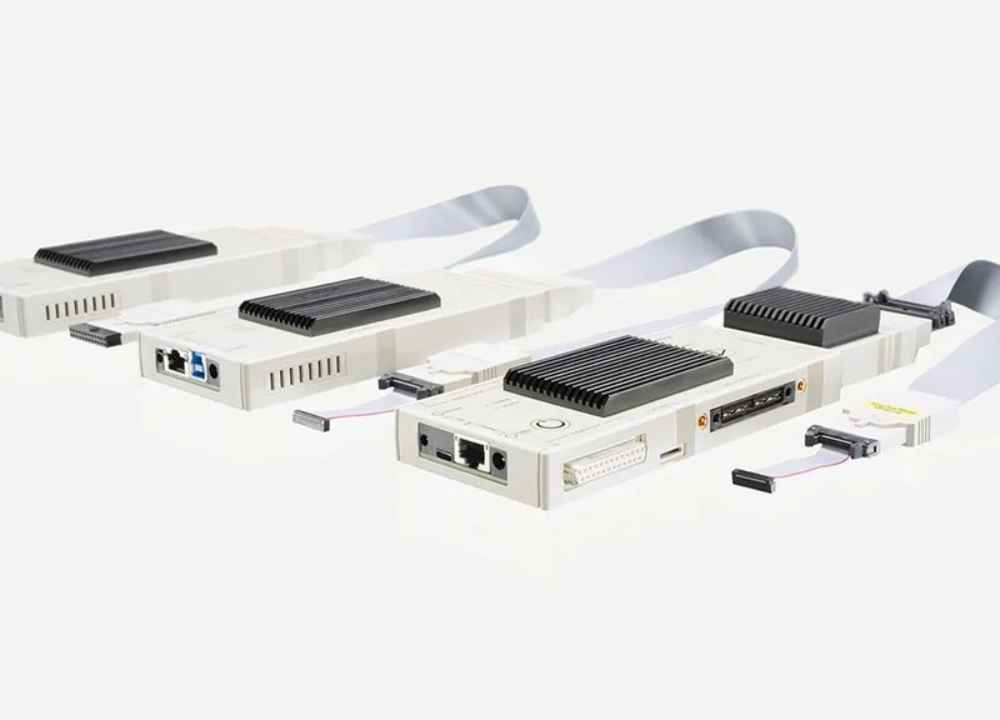
Lauterbach develops modular and extensible development and verification tools for microprocessors and embedded CPU cores. Its portfolio includes hardware-assisted debuggers and real-time trace tools used by semiconductor and embedded systems developers worldwide.
By integrating these technologies with Siemens’ existing electronic design automation (EDA) and hardware-assisted verification solutions, the companies aim to help customers identify errors arising from complex hardware-software interactions at an earlier stage. The combined capabilities will allow embedded software to be developed and verified before physical chips are available, potentially reducing development cycles, improving product quality and accelerating time to market.
The acquisition is another step in Siemens’ strategy to strengthen its position in electronic design automation. Increasing complexity in semiconductors and embedded software, driven by artificial intelligence, software-defined vehicles, the Internet of Things, multi-core architectures, cybersecurity and functional safety, is bringing hardware and software development closer together.
Cedrik Neike, Member of the Managing Board of Siemens AG and President of Digital Industries, said, “With Lauterbach, we are further extending our industry-leading EDA portfolio for semiconductor design by bringing together our premier hardware-assisted verification portfolio with its industry-leading software debugging technologies. As semiconductors represent a core vertical for our technology strategy, this enables customers to test and optimize their products even before the actual chip is produced – significantly reducing development time.” He added that Siemens would build on Lauterbach’s legacy and welcomed the continued involvement of co-founder Stephan Lauterbach and Thomas Ullmann following completion of the transaction.
Stephan Lauterbach, CTO and co-founder of Lauterbach, said the combination would provide developers with an integrated view of increasingly complex ASIC and SoC devices across AI, high-performance computing, storage and hyperscale infrastructure, automotive, communications and aerospace and defence applications. He added that the company’s commitment to customers would remain unchanged.
Headquartered near Munich, Germany, Lauterbach was founded by brothers Lothar and Stephan Lauterbach in 1979. The company employs approximately 170 people and serves more than 1,200 customers globally, including businesses in automotive, semiconductors and telecommunications. It generated approximately €60 million in revenue in 2025.