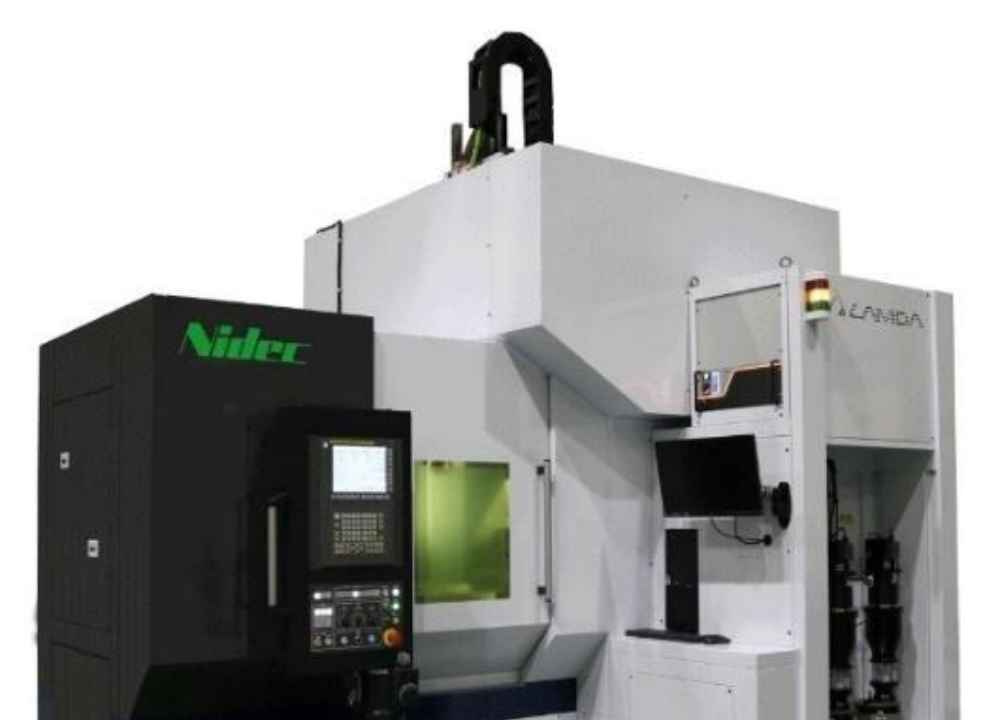
Nidec Machine Tool Corporation has developed an Autonomous Learning-Based Automatic Control System for its LAMDA Series metal 3D printers. The new technology learns from changes occurring during the manufacturing process and automatically adjusts operating parameters as components are built.
The system combines a proprietary, patent-pending algorithm with image processing technology to control laser power and travel speed according to changes in temperature and component geometry. The adaptive control system is designed to improve build stability and prevent structural collapse, particularly when manufacturing thin-walled components and at toolpath intersections where heat accumulation can affect fabrication quality.
Conventional control methods, including open-loop control and proportional-integral-derivative (PID) control, can face difficulties when thermal conditions change rapidly or heat accumulates in specific areas. Even after adjustments to control settings, these methods may not adequately respond to changing conditions throughout the build process.
Nidec Machine Tool’s new system addresses this limitation by continuously monitoring the manufacturing process and learning how conditions change during fabrication. Based on this information, it automatically adjusts laser power and travel speed to maintain the required operating conditions.
The company has also developed patent-pending image processing technology to improve the monitoring of the build process. The technology uses images captured by a coaxial camera to detect brightness levels, which are correlated with melt pool temperature, and measure the distance between the nozzle and the workpiece.
These measurements allow the system to identify changes in thermal conditions and work distance in real time. The information is then used by the autonomous control algorithm to make the required adjustments to the manufacturing parameters.
A key feature of the technology is its ability to learn during the build process without requiring large volumes of historical data for advance collection and training. Operators only need to establish baseline target values, after which the system monitors fabrication conditions and adjusts control parameters automatically.
According to Nidec Machine Tool, the combination of autonomous learning and image processing is expected to support more stable component production, reduce the risk of build failures and improve equipment operating efficiency. The technology is particularly relevant for complex geometries and structures where conventional feedback-based control systems may have limitations.
The company will demonstrate the new system using its LAMDA500 five-axis-controlled metal 3D printer at JIMTOF2026, the Japan International Machine Tool Fair, scheduled to be held at Tokyo Big Sight from October 26, 2026. The demonstration will provide manufacturers and industry participants with an opportunity to examine the system’s ability to respond to changing build conditions and automatically regulate the metal additive manufacturing process.
Nidec Machine Tool Corporation, headquartered in Ritto, Shiga Prefecture, Japan, is part of the Nidec Group and develops machine tools and manufacturing technologies. Its LAMDA Series includes metal 3D printing systems designed for industrial applications. The latest development adds autonomous process control to the company’s metal additive manufacturing portfolio, with a focus on improving production stability and reducing the need for manual intervention during fabrication.