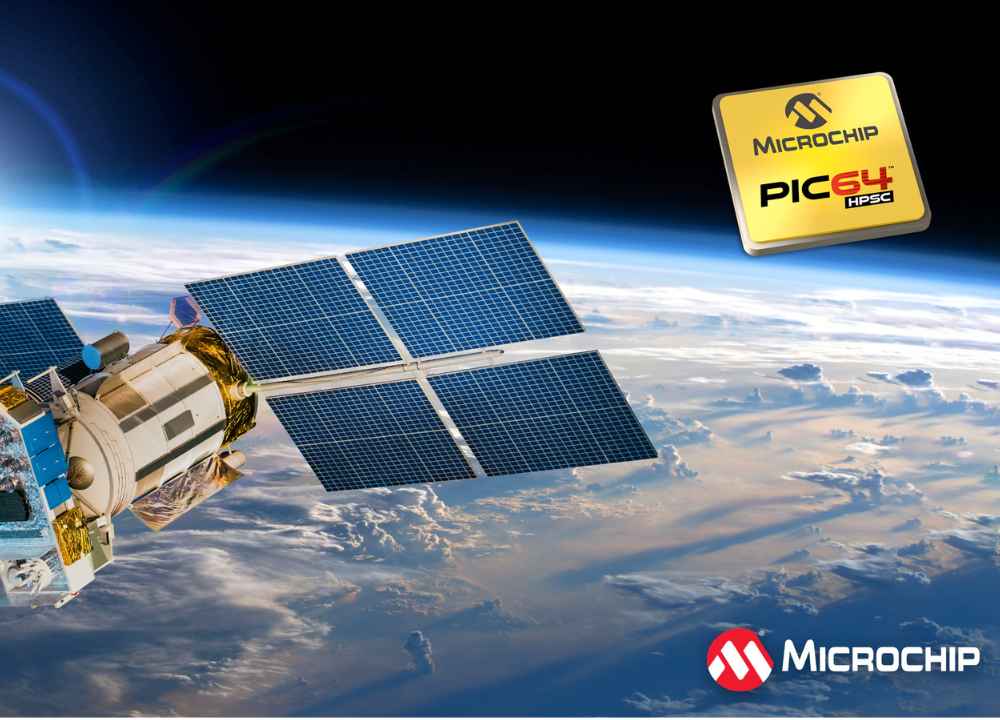
Microchip Technology Inc (Nasdaq: MCHP) has reported progress in its PIC64-HPSC High-Performance Spaceflight Computing Series, a 64-bit multicore RISC-V computing platform developed for spacecraft, satellites and other mission-critical space systems. The company announced early radiation-characterisation results for the PIC64-HPSC1000-RH radiation-hardened variant, along with progress in customer evaluations and development activities. Testing has demonstrated Total Ionizing Dose (TID) performance up to 200 krad(Si) and successful Single Event Latch-up (SEL) testing up to 78.2 MeV·cm²/mg under specified operating conditions.
Early Single Event Effects testing also showed stable system-controller operation, with no uncorrected errors or external resets required during testing completed to date. The results provide an indication of the platform’s progress towards meeting radiation-tolerance requirements for future missions ranging from Low Earth Orbit to lunar and Mars exploration.
Kevin So, Vice President of Microchip’s Communications Business Unit, said the programme was intended to provide a modern, high-performance computing platform for civil, commercial, scientific and defence space systems. He said operational silicon, radiation-characterisation results and customer evaluations marked progress in the development of the platform.
Through its Early Access Program, Microchip is supplying silicon and development kits to participating customers. They are evaluating the hardware and beginning application development with software, tools, technical resources and engineering support from the company.
Microchip is also working with a growing group of board partners developing PIC64-HPSC-based VPX and VNX+ computing platforms. These products are expected to provide system developers with additional options for integrating the processor into future spacecraft and related systems.
Initial silicon performance measurements are in line with programme objectives. Potential applications include onboard autonomy, Earth observation, intelligence, secure communications, spacecraft control, scientific exploration, high-performance payload processing and edge artificial intelligence.
By processing sensor and mission data onboard, spacecraft can reduce reliance on communications bandwidth, lower decision-making delays and respond more quickly to changing conditions. Microchip noted that NASA’s FY26 Civil Space Shortfall Prioritization ranked advanced onboard computing for space operations as the third-highest civil space technology shortfall.
The PIC64-HPSC programme originated from NASA and the Jet Propulsion Laboratory’s assessment of future spaceflight computing requirements. Microchip received the HPSC contract in 2022. The programme also helped establish the foundation for the company’s broader 64-bit PIC64 microprocessor portfolio, which addresses computing requirements across multiple markets.
Microchip Technology is widely recognized for its semiconductor, embedded systems, and timing solutions used across automotive, industrial, aerospace, communications, and consumer electronics applications. Through ongoing innovation in frequency control and precision timing technologies, the company aims to support next-generation electronic systems that demand higher performance, lower power consumption, and improved operational resilience.