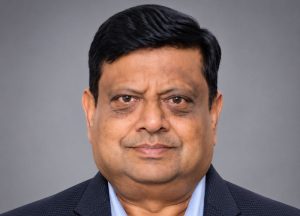
As global companies look beyond China to build stronger and more reliable supply chains, India is emerging as one of the most important destinations for electronics manufacturing. Mumbai based LeSol is among the Indian companies riding this wave. Founded in 2017 with a focus on energy efficiency, it has grown into an integrated electronics manufacturer with plants in Pune and Umbergaon, more than 500 people, and a house of brands that includes ReneSola and Usha Shriram. In this exclusive interview with Machine Maker, Founder, Managing Director and CEO Naman Shah talks about the China+1 opportunity, LeSol’s growth journey, its push into deep tech, and why he believes quality is a matter of culture.
When Naman Shah started LeSol in 2017, energy efficiency in India was still more of a talking point than a business. Nine years later, the Mumbai-headquartered company has grown into an electronics manufacturing group with plants in Pune and Umbergaon, more than 500 people on its rolls, and a portfolio that now runs from lighting to EV electronics.
Ask him what has driven this journey, and he does not begin with machines or capacity. He begins with a mindset. “Working with leading OEM brands has shown us that quality is a matter of culture, which is developed through disciplined processes and continuous improvement,” he says.
The company’s name carries its story. LeSol draws from two ideas, Leasing Solutions and Le Soleil, the French word for the Sun. Before starting up, Naman was part of the team at Asian Electronics that took up energy-efficient street lighting projects with Indian cities, work that was later studied by the World Bank. That grounding in saving energy and thinking long-term has stayed with LeSol. The Umbergaon plant came up in 2021 and marked the company’s entry into full-scale electronics manufacturing. Acquisitions of BAG Electronics, ReneSola India and Usha Shriram followed, turning a small startup into a diversified manufacturing group.
A moment for India: Two businesses, one engine
Naman sees the global China+1 shift as much more than a supply chain hedge. “China’s +1 strategy has transformed from supply chain diversification into an opportunity for the transformation of India’s manufacturing sector,” he says. Global firms, he explains, now look at India as a centre for manufacturing innovation because of its talented workforce, improving infrastructure, government support and a maturing electronics ecosystem. These firms want one partner that can handle design, precision manufacturing, electronics manufacturing, supply chain, and product realisation under one umbrella. That is exactly the space LeSol wants to occupy as a partner of choice.
LeSol runs a hybrid model. On one side is its EMS and OEM business, and on the other is its House of Brands. “With our unique model, we can leverage the whole value chain with the help of our EMS/OEM manufacturing and our consumer brands,” Naman says.
The EMS work builds deep capability in design engineering, component procurement, printed circuit board assembly, box build and logistics. The consumer brands, in turn, give the company a direct view of the market: what customers prefer, what they will pay and how products actually perform in the field. Put together, market insight feeds into manufacturing expertise, and the result is faster innovation, better quality and lower cost.
Pune and Umbergaon: two plants, two roles
The two manufacturing locations play different but complementary roles. Pune is the engineering centre. It is the base for EMS operations, PCB assembly, box build, testing, design collaboration and new product development. Naman credits the city’s well developed industrial network for helping LeSol move faster from concept to production.
Umbergaon, on the other hand, is the base for consumer and brand manufacturing, with large scale production capacity and ongoing expansion. “These two locations enable us to combine our engineering and large-scale manufacturing projects and diversify our operations geographically,” he says.
This combination has been tested by growth. LeSol expanded its manufacturing capacity nearly threefold in 2025. Naman says the push came from customers in India and abroad who need partners that can deliver high quality at high scale and speed. The China+1 shift, the drive for localisation and government initiatives all added to this demand. Looking ahead, he expects rising electronics consumption, wider use of smart technology and exports to keep demand growing.
Policy that stays the course
Naman gives clear credit to government policy. Make in India and the Production Linked Incentive schemes have helped position India as a global manufacturing hub, while component manufacturing programmes, electronics manufacturing clusters, tariff policies, state incentives, infrastructure and ease of doing business have made the operating climate better. But one factor stands above the rest for him. “Perhaps more important than all these is the continuity of the policy that has helped us to invest confidently in the future,” he says.
For all the progress, Naman is candid about what still holds the industry back. India continues to depend heavily on imports for components, semiconductors, specialised materials and precision sub assemblies. Building a competitive component supply chain, he says, will need large investment, advanced technology, skilled talent and steady demand. Fragmented supply chains, high logistics costs and a small supplier base remain real hurdles.
He sees MSMEs as central to solving this. Small and medium suppliers already provide components, precision parts, tooling, packaging and engineering services, and a strong domestic supplier base cuts lead times, lowers logistics costs and reduces import dependence. “The need of the hour is to leverage their true potential through increased access to technology, finance, skill training, and integration within larger supply chains,” he says.
LeSol’s own sourcing reflects this thinking. The company keeps alternate sources for critical components so that it is not tied to any one geography, rates suppliers regularly on cost, quality, delivery and stability, and mixes global and local suppliers to raise localisation. It also holds strategic inventory of critical materials and relies on demand planning and supply chain visibility to see disruptions coming. “We don’t concentrate exclusively on unit prices when considering our sourcing choices,” Naman says.
Lessons from leading brands
LeSol’s work with leading OEMs such as GoldMedal, Finolex and Havells has shaped the way it operates. These partnerships, Naman says, have strengthened its manufacturing, quality systems and process discipline. They have also taught the team to be transparent with customers and to deliver on cost, quality and timelines every single time. Most importantly, they changed how the company plans. “It has motivated us to build up capabilities, capacity and talent even before demand arises,” he says. Consistent delivery has built credibility, deepened existing relationships and brought in new business.
The same discipline guides how LeSol handles the brands it has acquired. Rather than merging everything into one identity, the company integrates the back end and leaves the front end to each brand. “We do not homogenize all brands but rather focus on the integration of back-end functions like manufacturing, logistics, research and development, procurement, and quality systems,” Naman explains. Each brand keeps its own positioning, customer engagement and brand value, while shared engineering, faster product development and lower operating costs create the synergy.
Over the next five years, he wants the House of Brands to grow through product innovation, entry into more categories and stronger consumer engagement. The focus will stay on energy efficient, intelligent and stylish products, sold through retail stores, direct to consumer channels and online. He also sees strong export potential for India made products and remains open to selective acquisitions that fit LeSol’s manufacturing strengths.
The deep tech bet
LeSol is now moving into deep tech sectors, including EV mobility, healthcare, telecom, and aerospace and defence. Naman sees promise in all of them. Vehicle electrification will drive demand for batteries, chargers, controllers and connected electronics. Telecom is opening up with localisation and new infrastructure. Healthcare electronics can reduce India’s reliance on imported devices. Earlier this month, LeSol also announced a partnership with China’s Hefei Pengpai Energy to localise EV battery management systems.
Yet his strongest conviction lies elsewhere. “But perhaps the most promising sectors for the future would be aerospace and defence, owing to the efforts made by the government towards indigenisation and increased budget allocations to the defence sector,” he says. LeSol is already working on the certifications and quality processes these industries demand.
LeSol is targeting a serviceable obtainable market of ₹2,000 to ₹3,000 crore over the next five years. For Naman, though, the vision goes beyond revenue. He wants LeSol to be counted among India’s most trusted and integrated electronics manufacturers, with stronger capacity across EMS, OEM and branded products, deeper localisation, closer supplier relationships and new manufacturing technologies. As global supply chains diversify, he believes India has a unique chance to become a centre for advanced manufacturing, and LeSol wants to play its part through jobs, supplier development, innovation and globally competitive products.
A word for the next generation
His message to young entrepreneurs is simple: play the long game and build something of real value. “Manufacturing takes time, constant innovation, discipline and tackling difficult problems,” he says. The winners, in his view, will be those who invest in technology, people, quality and execution, and who build ecosystems around their businesses by developing suppliers and skills.
“Together, we have the opportunity to develop and manufacture world-class products from India,” he says. Coming from a company that began with a small team and an idea about saving energy, it sounds less like a slogan and more like a plan.