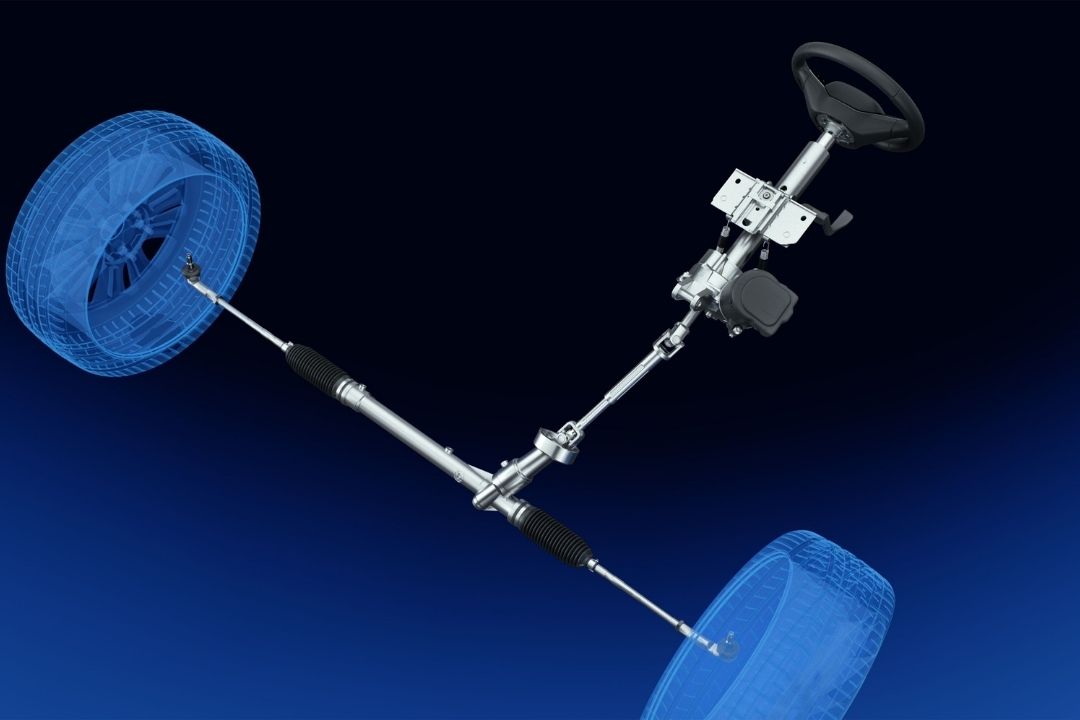
ZF has reached a major manufacturing milestone with the production of 100 million Electric Power Steering (EPS) systems worldwide, reinforcing its position as a global leader in advanced steering technologies. The achievement reflects the rapid evolution of electric power steering from an alternative to traditional hydraulic systems into a core technology powering the next generation of connected and software-defined vehicles.
Since introducing its first EPS system in 2001, ZF has continuously expanded its steering technology portfolio to meet changing industry requirements. Today, the company’s electric power steering solutions are used across a wide range of passenger cars, sport utility vehicles and light commercial vehicles, offering improved efficiency, enhanced vehicle control and compatibility with advanced digital vehicle platforms.
The growing shift toward electrification, reduced emissions and software-driven vehicle architectures has significantly accelerated the adoption of electric power steering. Unlike hydraulic steering systems that require continuous engine power, EPS systems consume energy only when steering assistance is needed. This results in lower energy consumption, improved vehicle efficiency and reduced carbon emissions, while also supporting the integration of advanced driver assistance and automated driving technologies.
Ramiro Gutierrez, Senior Vice President, Business Unit Steering at ZF, said the production of 100 million electric power steering systems highlights the company’s long-standing leadership in steering technology. He noted that EPS has become the global industry standard because it combines energy efficiency, scalability and software compatibility, while serving as the technological foundation for future steering innovations, including steer-by-wire systems.
ZF’s electric power steering portfolio is designed to meet the needs of different vehicle segments and performance requirements. The company offers Column-Drive, Dual-Pinion and Belt-Drive EPS systems, enabling manufacturers to select steering solutions best suited to compact passenger vehicles, premium sedans, high-performance SUVs and commercial vehicles. The flexibility of these systems allows vehicle manufacturers to improve driving comfort, steering precision and fuel efficiency while preparing their platforms for future software updates and intelligent vehicle functions.
As the automotive industry moves toward software-defined vehicles, electric power steering is becoming an increasingly important component. The technology provides the electronic architecture needed for software-controlled steering functions and serves as the foundation for steer-by-wire systems, where the traditional mechanical connection between the steering wheel and road wheels is replaced by electronic controls.
ZF has already begun global production of its steer-by-wire technology, marking another important step in the company’s efforts to support the next generation of intelligent mobility solutions. The technology offers greater design flexibility, enhanced safety functions and opportunities for continuous software upgrades throughout a vehicle’s lifecycle.
The company attributes the success of its electric power steering business to sustained investment in research and development, continuous product innovation and close collaboration across its worldwide engineering and manufacturing network. ZF’s steering technologies are developed and produced through facilities located across Asia, Europe, North America and South America, enabling the company to serve global automotive manufacturers efficiently.
With demand for electric, connected and autonomous vehicles continuing to grow, ZF expects electric power steering to play an even greater role in future vehicle development. By combining advanced engineering, scalable manufacturing and software integration capabilities, the company remains focused on delivering steering solutions that improve vehicle performance, support sustainable mobility and enable the transition toward fully software-defined vehicles.