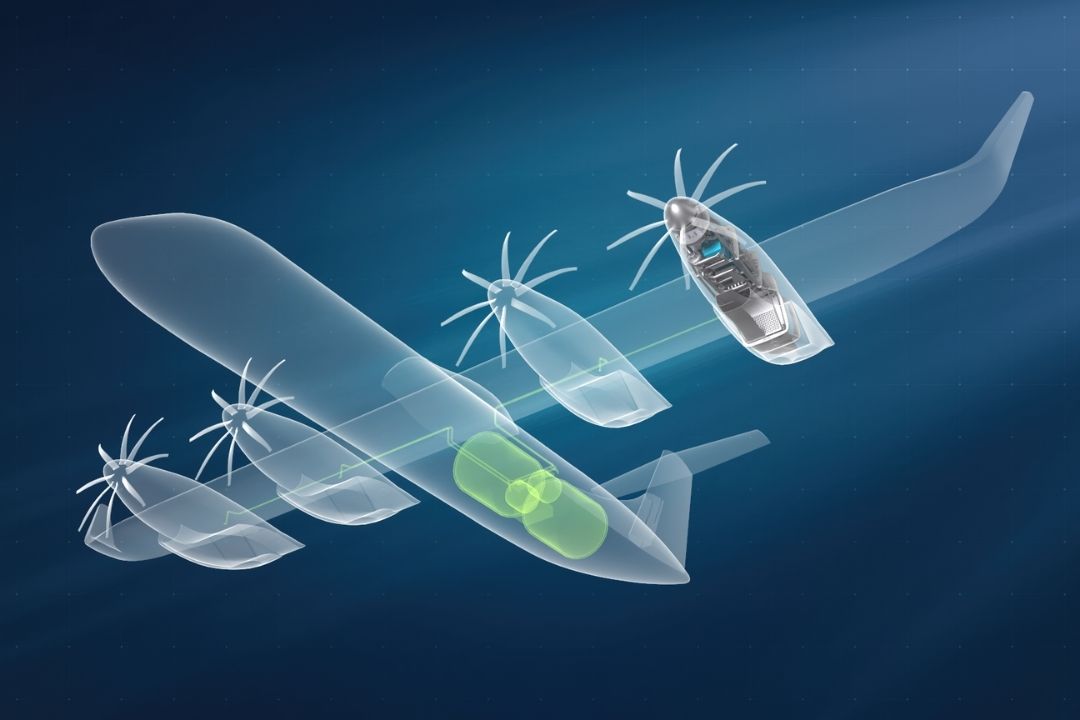
Airbus and MTU Aero Engines have announced plans to establish a joint venture focused on developing and commercialising a fully electric hydrogen fuel cell engine, marking a major step towards next-generation zero-emission aviation. The proposed venture follows the Memorandum of Understanding (MoU) signed by both companies at the Paris Air Show in June 2025. The new entity will create a dedicated platform to accelerate the development, testing, certification, and industrialisation of hydrogen fuel cell propulsion technology for commercial aircraft.
The joint venture will combine Airbus’ expertise in commercial aircraft programmes, fuel cell propulsion, and liquid hydrogen technologies with MTU Aero Engines’ experience in fuel cell development, engine design, integration, validation, certification, and maintenance. Supported by engineering and manufacturing teams from both organisations, the venture aims to develop a complete hydrogen fuel cell powertrain ecosystem, from technology development to commercial deployment. The agreement is subject to customary regulatory approvals and completion of social processes at European and national levels. The joint venture is expected to begin operations in 2027.
Commenting on the development, Bruno Fichefeux, Head of Future Programmes at Airbus, said, “This planned joint venture represents the next logical step in our shared vision for hydrogen-based propulsion in aviation. By bringing together our respective expertise within a dedicated organisation, we aim to accelerate the transition from advanced research to industrialised and certifiable electric propulsion systems. This collaboration will strengthen Europe’s capabilities in future aviation technologies and support our long-term ZEROe ambition.”
Dr Stefan Weber, Senior Vice President Engineering and Technology at MTU Aero Engines, said, “Our goal is to develop a safe, reliable, and economical propulsion system that supports climate-neutral aviation. This initiative is a significant milestone towards the first hydrogen-powered aircraft engine and demonstrates European leadership in advanced aviation technologies. The new company will address the complete lifecycle of fuel cell powertrains, including development, testing, certification, and commercialisation.”
Hydrogen fuel cell technology has the potential to play a key role in reducing aviation’s climate impact. The technology produces electricity through an electrochemical reaction between hydrogen and oxygen, with water vapour as the primary byproduct, eliminating in-flight carbon dioxide emissions and reducing nitrogen oxide emissions compared with conventional propulsion systems.
Airbus and MTU will also continue supporting the development of the wider hydrogen aviation ecosystem, including infrastructure and regulatory frameworks needed for the adoption of hydrogen-powered flight at scale. The partnership reflects the companies’ shared commitment to advancing sustainable aviation solutions and creating the technologies required for future climate-neutral air transport.