Researchers at MIT World Peace University (MIT-WPU) have developed an innovative solar thermal energy storage system capable of supplying hot water for up to 12–14 hours after sunset. The technology uses a phase change material (PCM)-based thermal battery to store solar heat during the day and release it when required, offering a practical solution to one of solar energy’s biggest limitations—its intermittent availability.
The system has been developed by Dr Anita Nene and Dr Rohit Ghadge from the Department of Mechanical Engineering at MIT-WPU. By combining a Scheffler solar concentrator with a thermal storage capsule containing paraffin wax, the researchers have created a compact energy storage solution that stores heat directly rather than converting it into electricity.
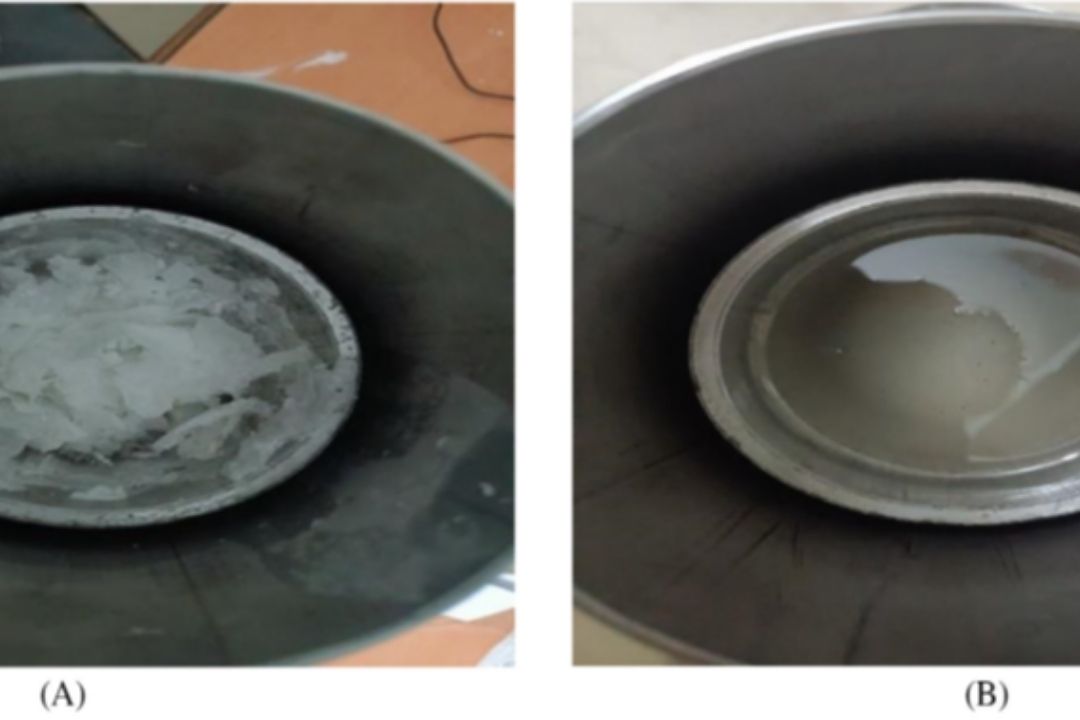
Unlike conventional systems that depend on electrochemical batteries, the new technology captures and stores thermal energy in a phase change material that absorbs heat while melting and releases it as it solidifies. The system incorporates a detachable PCM storage tube, a water-jacket heat transfer mechanism and polyurethane insulation to improve heat retention and overall efficiency.
Laboratory-scale testing demonstrated a thermal efficiency of nearly 55 per cent. The prototype achieved complete thermal charging in approximately 18 minutes and discharged stored energy in around 32 minutes while continuing to provide hot water after solar input had ceased. The unit stores between 1.5 and 2 kWh of thermal energy and maintains water temperatures between 50°C and 60°C for up to 14 hours, making it suitable for domestic and institutional hot water requirements.
Explaining the motivation behind the project, Dr Anita Nene said, “One of the major limitations of solar energy is that it is available only during sunshine hours. Our objective was to develop a simple, affordable and sustainable thermal storage solution that captures solar heat and makes it available whenever required.”
Dr Rohit Ghadge said the technology addresses a critical aspect of energy consumption. “Thermal energy accounts for a significant share of overall energy use. Efficient storage of solar heat can reduce dependence on conventional fuels, strengthen energy security and support the transition towards cleaner and more sustainable energy systems.”
The research team validated the system through Computational Fluid Dynamics (CFD) simulations and laboratory experiments. The technology has reached Technology Readiness Level (TRL) 7 and is being prepared for pilot-scale deployment in real-world conditions. Potential applications include residential buildings, hotels, hospitals, hostels, educational institutions, industrial process heating, community kitchens, agricultural operations and off-grid rural communities.
An Indian patent application titled “Solar Energy Storage Capsule Using Phase Change Material” (Application No. 202521118546) has been filed for the innovation. The researchers are now exploring partnerships with industry for pilot projects, commercialisation and large-scale deployment. Once adopted commercially, the system has the potential to reduce carbon emissions by an estimated 2.5 to 3 tonnes annually per installation by lowering dependence on electricity and conventional fuels for water heating.
MIT World Peace University, Pune, has more than four decades of academic excellence and offers over 150 undergraduate and postgraduate programmes. Through research-led innovation and industry collaboration, the university continues to develop technologies that address real-world challenges while advancing sustainable development.