Imagine a woman living the familiar rhythm of everyday life: caring for her home, nurturing her family, and building a world centred around her loved ones. Sneha Ambre’s life once followed that path. Married to Ravindra Ambre and raising their daughter in Mumbai, she lived what many would call a normal life. But life had a different plan for her. In its 2026 30 Days 30 Stories campaign, Machine Maker begins the series with the inspiring journey of Sneha Ambre, Director of Kiran Electronics, a woman whose story resonates with countless Indian women, someone who chose to take charge of her destiny, carrying forward her husband’s dream and transforming it into a journey of determination, resilience, and leadership in manufacturing.
Ravindra Ambre was a passionate engineer who believed that the Indian industry needed reliable electronic solutions, and with that vision, he founded Kiran Electronics in 1997 in Ambernath, Maharashtra. Sneha, a commerce graduate, had never been involved in the company’s technical or business operations. In 2012, tragedy struck the Ambre family when Ravindra Ambre passed away, leaving behind a grieving family and an unfinished vision.
With a young daughter to raise and a company to sustain, Sneha Ambre chose the harder path. She stepped into a world she had never imagined, one that encompassed electronics engineering, manufacturing processes, and industrial customers. The journey of directing Kiran Electronics toward the future began there.
Born into a middle-class Maharashtrian family, Sneha had no business background to rely on. Her father, Arjun More, served at LIC, and her mother, Subhadra More, was a homemaker. As the eldest among four sisters and a brother, she was never unfamiliar with responsibility, but leading an engineering enterprise was an entirely different challenge. However, the team that had worked with her husband to establish Kiran Electronics stood as the backbone of support during this challenging time.
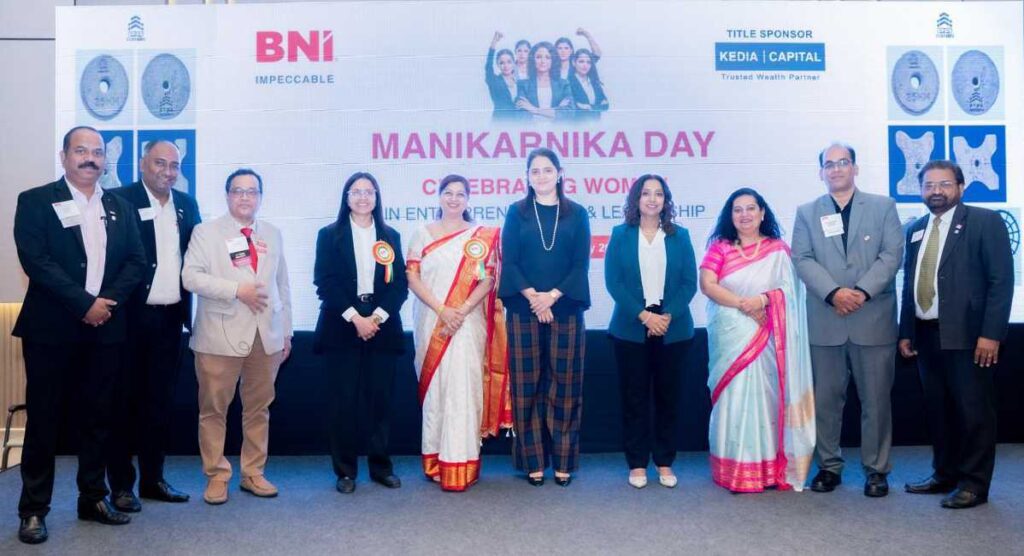
From Homemaker to Industry Leader
Stepping into a field Sneha Ambre had never explored before was not easy. Electronics engineering and industrial instrumentation were far removed from Sneha’s academic background and daily life experiences. Yet she understood that if the company had to survive, she would first need to understand the business from the ground up.
Her first challenge was learning. “My first challenge was to understand the work,” she explains. That meant spending countless hours reading documents, studying technical materials, and going through the records her husband had left behind. Every night became a learning session, where she read, took notes on concepts, and slowly tried to comprehend the products and processes.
Unlike the dramatic transformations shown in films, Sneha knew that mastering the business would take time. Sneha Ambre did not seek degrees or certifications in electronics; instead, she focused on understanding the company’s products, the technology behind them, and how the business functioned. The process involved reading, interpreting, and then applying that knowledge to real situations on the shop floor.
The learning curve was steep. In the early days, she admits that a lack of confidence and knowledge sometimes resulted in missed business opportunities. But she remained determined not to make hasty decisions or give up.
The Power of a Supportive Team
When Sneha joined the company, the team consisted of 11 people who had worked closely with her husband. Today, the organisation has grown to around twenty employees. She credits much of this journey to her team’s support.
In manufacturing environments, respect is rarely automatic; it is earned through consistent effort and leadership. Sneha understood this early on. Instead of asserting authority immediately, she focused on learning from the team, building trust, and showing commitment to the business.
“Respect in factories is often earned. It’s not a given,” she says.
Her approach to leadership was grounded in practical clarity. Rather than introducing complex systems right away, she focused on understanding how people worked when she was not present on the shop floor. To her, this was the true measure of a functioning system.
Standard operating procedures and documents are important, she believes, but they do not always reflect real-time conditions. What truly matters is how people act and make decisions when the leader is not around.
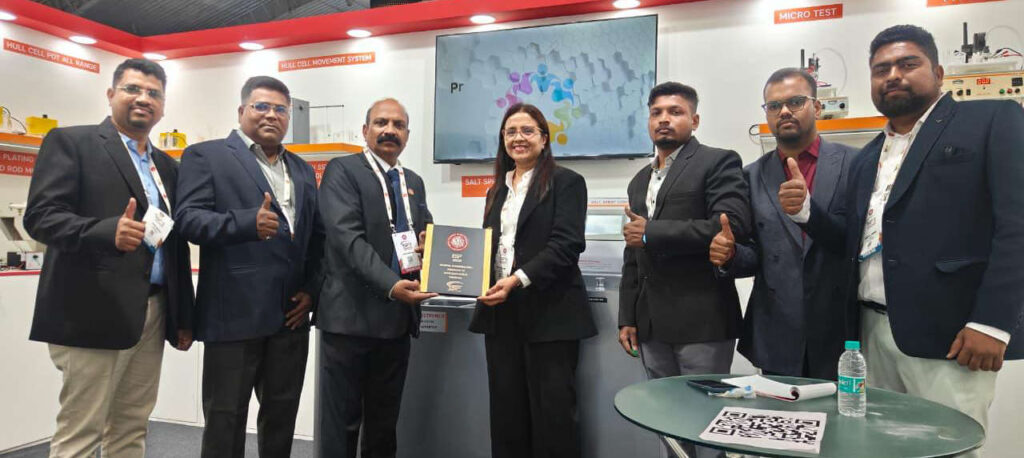
Carrying Forward the Vision
Under Sneha Ambre’s leadership, Kiran Electronics has continued to evolve. The company has expanded its product range and adopted more advanced technologies in plating thickness testing equipment.
Over the years, the organisation has upgraded its technology and expanded its capabilities to keep pace with market needs. Today, the company is aware of technological trends and continuously upgrades its solutions accordingly.
The company has also begun exploring international markets. Although exports are currently limited, Sneha believes that strong domestic foundations are essential before aggressively pursuing global opportunities. Her philosophy is simple: before chasing international orders, companies must ensure that their products consistently meet quality standards and industry certifications.
A Perspective on Women in Manufacturing
“Can you complete an electronic circuit without both male and female connectors? If not, why do we still compare men and women when it comes to capability in real life?”
Rather than focusing on comparisons between men and women, Sneha believes the conversation should be about capability, results, and leadership. Strength, she says, does not come from adopting masculine traits but from innovation, consistency, and effective team leadership.
Her own story challenges the common stereotype that women cannot lead technical businesses without an engineering background. Through persistence and continuous learning, she proved that leadership in manufacturing is as much about mindset as it is about technical expertise.
To young women considering careers in engineering or manufacturing, Sneha offers straightforward advice: follow your own passion and avoid comparisons.
Sneha Ambre believes that every individual has a different journey, and copying someone else’s path rarely works. What matters most is clarity of purpose and belief in one’s own abilities.
“Don’t compare with anyone. If you are sure about what you want to do, go ahead,” she says.
Building a Culture of Opportunity
Within her own company, Sneha tries to encourage women employees to continue their professional journeys even after marriage or motherhood. She understands that these life stages bring new responsibilities, but she believes they should not end a woman’s career.
Her approach is simple, support employees when they need flexibility and welcome them back whenever they are ready to return to work. She offers flexibility to women on maternity leave. The office rules and discipline are the same for all at Kiran Electronics. For Sneha, leadership is about creating an environment where people feel encouraged to contribute and grow.
Sneha Ambre: A Journey That Continues
Kiran Electronics designs and manufactures a range of electronic testing and measuring instruments, supporting industries where precision and performance of electrical systems are critical. The company’s solutions are used for testing, monitoring, and quality assurance of electrical equipment and components, helping manufacturers maintain safety and operational reliability. Over time, the company has developed expertise in creating dependable instruments for industrial customers seeking practical, durable testing solutions.
Today, as Sneha Ambre looks back at the path she has taken, the transformation is remarkable. From a homemaker with little confidence in business matters to a leader guiding a technology company. Yet for her, the journey has always been about something larger than personal achievement. It is about fulfilling the dream of the man who started the company and ensuring that his vision continues to grow.