

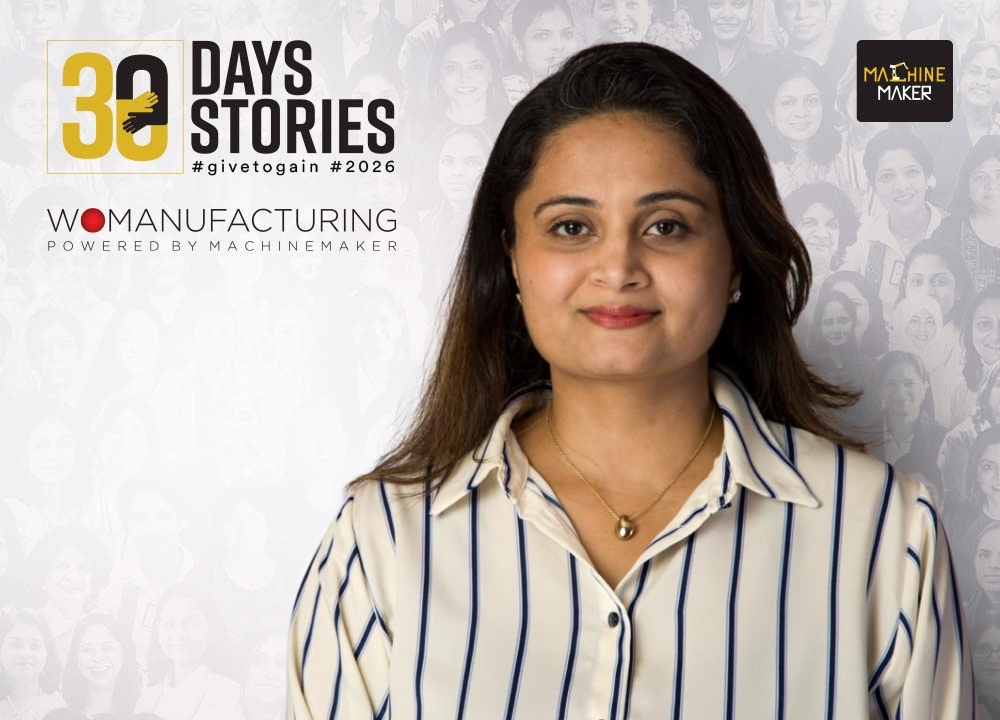
Nikita wanted to be a performer. Her father, a chemical engineer who worked night shifts, said: try engineering first. She tried. She successfully completed her degree. MBA came next, then a career that took her through Tech Mahindra, Tata Communications, and Ernst and Young. At the point when most people would have settled in, she left and started a blog about startups.
That was the first step. In 2019, Nikita Kumawat co-founded Brandworks Technologies in a 20,000 square foot space in Vasai, just outside Mumbai, with a small assembly line and a simple idea: make the products that Indian brands were importing from China, but make them in India, better, and at scale. Today the company operates from 3.2 lakh square feet, employs over 1,200 people, manufactures 11 million products a year, and is entering a joint venture to supply Sonos and Bose for global markets. Seventy percent of the workforce are women from nearby villages.
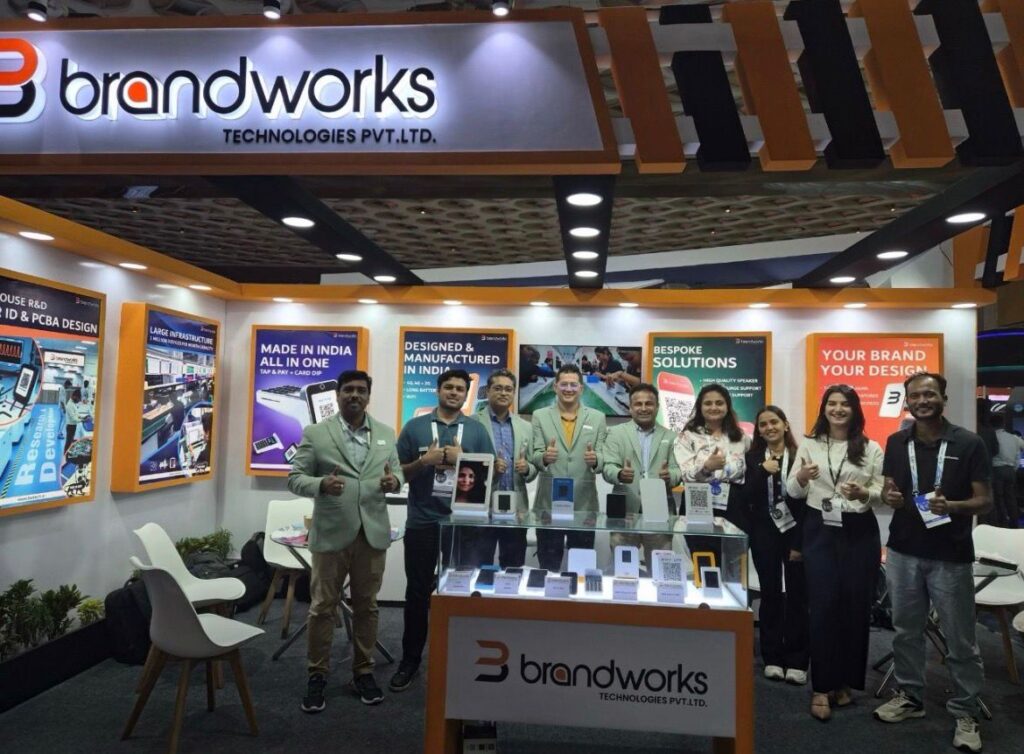
Brandworks Technologies is India’s full-stack electronics manufacturer. The company designs, engineers, and manufactures across four product categories: IoT and fintech surveillance devices, home and personal audio, charging solutions, and automotive electronics including EV chargers and EV cluster products. It operates a 3.2 lakh square foot R&D and manufacturing facility in Vasai, Maharashtra, with a Global Innovation Centre in Bengaluru and an international R&D Centre in Taiwan. The company achieved 101% year-on-year growth, holds eight global certifications including ITAF, ESD, ISO 27001, and has recently secured a $7-11 million funding round led by Cactus Partners. Nikita Kumawat is Co-Founder and Managing Director. Her husband, Co-founder and CEO, Ishwar Kumhar, leads strategy and new business development.
How a Performer Became an Engineer then a Manufacturer
Nikita grew up as the eldest daughter in a service family. Her father was a chemical engineer who did night shifts and understood, from watching his own career, that English communication and presentation skills were the differentiators nobody told you about. So he made sure his children learned them early.
She had other plans. She wanted to dance, to choreograph, to build something in the performing arts. Her father did not dismiss it outright. He reframed it: engineering is also a risk worth taking. She disagreed, but she gave it a shot. It turned out she was good at it. During her MBA at Symbiosis, she used to say she would never draw a salary. She would generate revenues. People laughed. She did not entirely mean it as a joke.
She joined Ernst and Young after her MBA and worked in telecom, electronics, and IoT. It was a good learning experience, Nikita recalls. But the dot com boom was emerging around her and she was closely watching: Flipkart, Myntra, Sachin Bansal exiting at six thousand crore after the Walmart acquisition. She thought it was an easy journey. She found out it was not. But by then she was already in. “I was confident that if I failed, I could always find my way back to the corporate world. I wanted to try a small business model. So I started Startupbuzz.com, a blog about startups. Then I went into product. And then one thing led to another.”
Soulfit was a fitness tracker band, imported from China and sold in India. The problems it threw at her, how to brand a product, how to pack it, how to service it, how to handle repairs, how to manage an application-rich Chinese supply chain in a messy ecosystem, became the exact curriculum for what came next. She did not see it that way at the time. She only saw it looking backwards.
She Made a Company Out of Thin Air
Brandworks started in 2019 with four people, a rented assembly space, and one product category: power banks. The first two years were about one thing: supply. Make it faster, deliver it reliably, be the manufacturer that Indian brands could trust. Then the question changed. Can we offer more than assembly? Can we design?
During COVID, while other factories shut down, Brandworks kept running. The all-women workforce came in every day. The company pivoted to manufacturing thermometers and oximeters, COVID supplies that the market suddenly and urgently needed. Nikita calls it smart pivoting. It is also good instinct under pressure.
“You make a company out of thin air. You gather four people. You make a product and start speaking to a customer. It builds momentum. Then you become a big company. But your DNA doesn’t change. You always know you have to make maximum from minimum. That is business.”
The company kept going two steps ahead every few years. First assembly, then design, then in-house PCBA manufacturing. Where China had built its electronics dominance by mastering the entire value chain, Nikita decided Brandworks would do the same. Not because it was easy. Because it was the only way to build something that lasts.
Today, at 37, she is announcing a joint venture with a Chinese manufacturing partner to produce products for global audio brands including Sonos and Bose from India.
Why Seventy Percent of the Factory Floor Is Women
Brandworks having seventy percent women on its factory floor did not come from a diversity target or a founding principle. It came from where the factory was built.
Vasai is surrounded by seven or eight villages. The men in those villages already had factory work. There were more than ten factories competing for male labour. The women in those villages did not. And electronics manufacturing does not need heavy lifting or brute force. It needs precision, patience, and soft handling of PCB boards and plastic components. The fit was strategic.
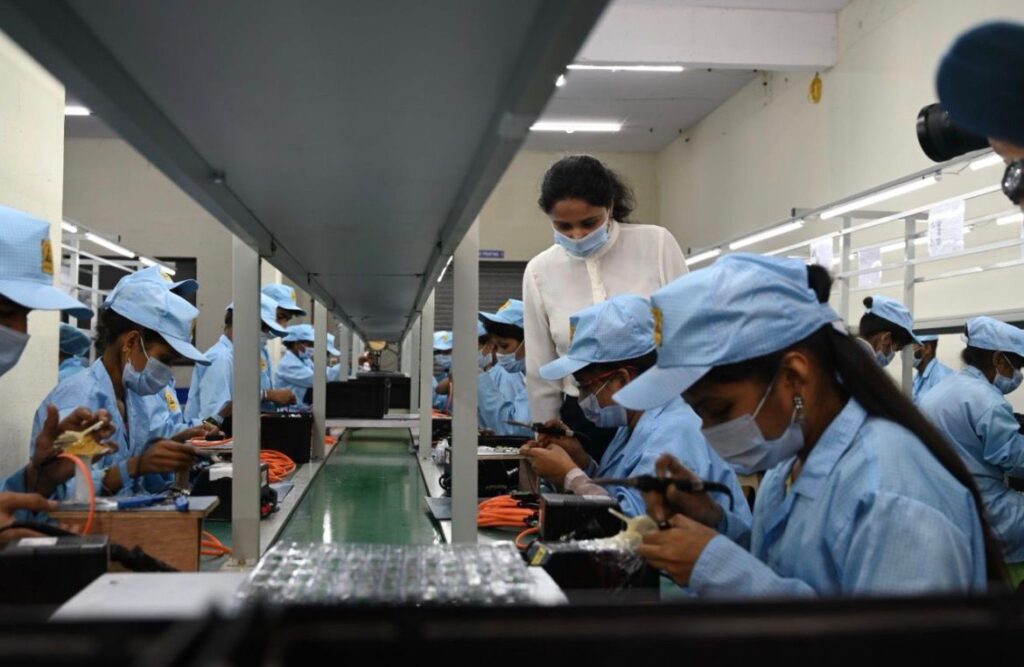
But what happened next was more than strategy. Women who had never worked in a formal organisation came in unskilled or semi-skilled and went through structured training: product handling, safety, quality SOPs, how to wear ESD protection, how to work a line. Over time, the same woman who started on the assembly floor became a line leader, then a quality engineer, without any formal degree, entirely through on-the-job learning.
“They work in a tech company. They assemble tech products. That changes how their community sees them and how they see themselves. We can promote them, nurture their growth. Gradually a shopfloor operator becomes a leader.”
She is also honest about the hard part. Women leave after having children. The period of three to four years when a woman is most tied to the home is where industry loses them. Her answer is not to pretend the problem does not exist but to ask a different question: can the work go to the women, instead of asking the women to come to the work? “If India can crack that, it will have a multifold participation of sincere, honest women working with skill and authenticity.”
The Brand Behind the Brands
Brandworks is an OEM and ODM manufacturer. The company’s products go out under other brands’ names. You see them in Starbucks. You use them at home. You do not know Brandworks made them. That is the point.
Nikita has thought carefully about this model and she defends it without apology.
“For a hyper-growth company in India, it is better to be the brand behind the brands. We end up working with multiple brands every day and I proudly say we made that brand work in the market. Whichever brand is growing because of us, that is a better pride. Because we did not have that ecosystem when we launched our own brand. We came one step back so the brands can go forward.”
The company is going strategically backward. Venturing beyond assembly, beyond design and into semiconductors, magnets, components that India currently imports entirely from China. The ambition is full-stack, complete backward integration, making complex products for multiple sectors from a single platform.
When the Bank Saw a Woman Promoter
When Brandworks needed growth capital, banks evaluated the business performance, the market potential, and then they looked at who the promoters were. A woman promoter, in some of those conversations, registered as a risk element.
“Maybe they had seen so many cases where women promoters had not run long businesses successfully. They have their reasons. I understand those reasons. But I also think a solo woman founder in manufacturing, if she has done it and grown it, has done something miraculous.”
Having her husband as co-founder helped build credibility with lenders and investors. She acknowledges it plainly. What she also says is that investors invest in teams, not individuals, because teams diversify risk. The solution for a solo woman founder is not to be treated more fairly. It is to build the team that makes the case undeniable.
Two People, Two Brains, One Company
Nikita handles people and operations. Her husband, Ishwar, handles strategy and new business. There are functions each leads alone, functions they decide together, and functions they have learned to read into each other without speaking.
“In a personal capacity, a lot of things become intuitive and telepathic between us. You do not sometimes need to talk. There are things you just understand. You are not competing. As family members you catch each other’s mindsets or complement them, keeping the values intact.”
She points to Sugar Cosmetics, to Mama Earth, to other founder couples who have built together. Each one is different. The ones that work, she thinks, are the ones where neither person is the other’s assistant. They are genuinely complementary. A compounding effect, she calls it, like compound interest, except what is growing is shared understanding.
When asked about work-life balance, Nikita spends time with her son watching OTT shows. She plays pickleball. She works out. She is clear that the concept of fifty-fifty work-life balance is not India’s story and probably not anyone’s honest story. What she does believe in is the ten percent: ten percent of your week that has nothing to do with work. She guards that ten percent.
Message to Future Womanufacturers
Her message is practical and honest: “start by convincing your family to give you five lakh rupees. Not because you need exactly that amount, but because if you cannot convince the people who love you most, you cannot convince anyone. Pitch your plan to your grandmother, your parents. Get them to take a small risk on you. Spend it. Account for every rupee. Do it again.”
For those who want a job first: the GET programmes at L&T, Dixon, and other large listed manufacturers are genuinely good places to learn. Go in for a year or two. Build the muscle. Understand how a factory actually runs. Then decide.
For those who want to build: find one person who wants to buy what you are making and one person who wants to help you make it. If both of those exist, the rest of the company builds itself around them. “Be shameless. Ask questions. Look like a fool. Mad people go further because they stop worrying about being judged. Entrepreneurship is not for the faint-hearted. Show up, lead, fail. That is how you build.”
She says this having built a factory from nothing in a sector where India has historically depended on China for every component, every circuit, every finished product. She is 37. She has been doing this for nine years. She is just getting started. “We are just taking care of the country at the moment. There should be more women doing breakthrough innovations at the world level.”








