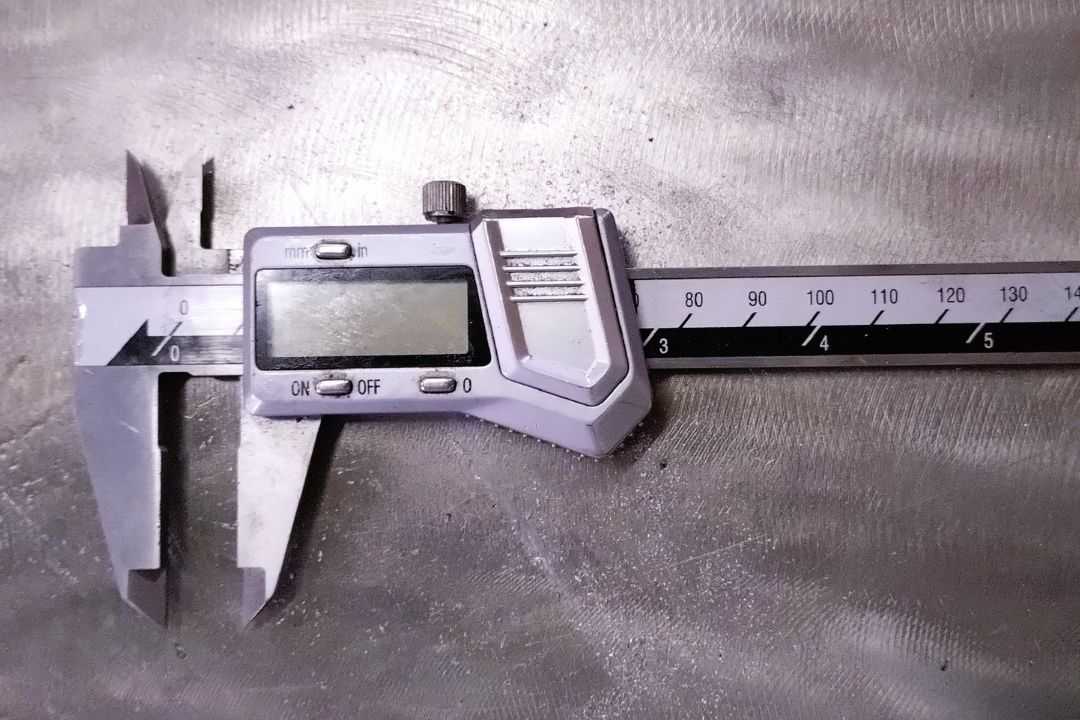
India is entering a decisive period in its journey as a global manufacturing nation. Over the past decade, the country has steadily strengthened its position in machine making, precision tooling, and advanced manufacturing. Today, many manufacturers in the UK, Ireland and across Europe turn to India not only for cost advantage, but for production reliability, tooling maintenance, and long‑term technical partnerships.
However, the next stage of growth is not simply about exporting more tools. It is about raising India’s quality paradigm. True global competitiveness in tooling and machining does not begin with paperwork or certificates. It begins on the shop floor — in metallurgy, dimensional accuracy, process capability, and the hands-on knowledge of engineers and machinists.
From Certification to Capability: Quality Reset
For many years, quality across industries has been associated with ISO 9001 certification. While management systems are relevant, certification alone does not guarantee product excellence. A quality system ensures documentation, traceability and structure — but it does not automatically create technical mastery.
Real quality in machine tools and precision components is demonstrated through consistency, repeatability and technical reliability. A tool that performs predictably within microns builds more trust than any framed certificate. Consistency in meeting technical requirements must come first; management systems should support this foundation, not replace it.
Global Quality Culture Framework for India’s Tooling Sector
Drawing directly from the models presented in Global Quality CultureParadigm:Quality must be understood across cultural and commercial layers.
Quality Culture Levels – People & Processes
| Category | Quality Level | Dependency | Situation |
| Social | Low / Medium / High | Price & Value | Personal Choices |
| Professional | Medium / High | Value & Expectation | Referred Choices |
| Business | Medium / High | Benchmark & Delivery | Measured KPIs |
| Corporate | High | Specific Conditions | Strategic Contracts |
| International | Low / Medium / High | National Standards | Multifaceted |
For European OEM buyers, India must consistently operate at Professional, Business and Corporate High levels — not merely “fit for purpose,” but demonstrably reliable.
Dimensions of Quality: Design vs Conformance
The model in the article distinguishes two pillars:
| Design Quality | Conformance Quality |
| Features | Reliability |
| Performance | Durability |
| Aesthetics | Standards |
| Perceived Quality | Certification |
India’s tooling strength must now shift from conformance-dominant manufacturing toward a balanced design–conformance system model, especially in:
- 5-axis machining
- Turn-mill centres
- Hybrid additive–subtractive manufacturing
- Precision metal cutting systems
Global Quality Culture – A Practical Model
Quality operates at different levels depending on culture, customer expectations and business context. The Global Quality Culture model illustrates that quality is influenced by social, professional, business and corporate expectations.
| Category | Quality Level | Dependency | Situation |
| Social | Low: Medium: High | Price & Value | Personal choice |
| Professional | Medium: High | Expectation & reliability | Referred choice |
| Business | Medium: High | Benchmark & delivery | Measured KPIs |
| Corporate | High | Strategic trust | Long-term contracts |
For European OEM buyers, India’s tool and machine makers must consistently operate at professional and corporate high levels — where reliability, technical depth and delivery confidence are non‑negotiable.
Design Quality and Conformance Quality
Quality can be viewed through two essential dimensions: Design Quality and Conformance Quality.
Design Quality includes:
• Performance and functionality
• Feature and innovation
• Serviceability
• Perceived value and brand strength
Conformance Quality includes:
• Reliability and durability
• Compliance with standards
• Certification and traceability
• Repeatability of output
Historically, India has been strong in conformance quality. The future, however, requires balance. As 5‑axis machining, turn‑mill centres and hybrid manufacturing technologies expand, India must deepen its design capability and innovation culture alongside process discipline.
Market Outlook 2025–2030
The global tools market is projected to reach nearly $190 billion by 2035. India’s machine tool market is expected to grow steadily toward 2030, supported by demand from automotive (including EVs), aerospace, defence and infrastructure sectors. Precision tools are expanding rapidly, and India aims to significantly increase annual precision component exports in the coming decade.
Regional clusters in Punjab (Jalandhar and Ludhiana) and Maharashtra continue to anchor production capacity. The next step is transforming these clusters into centres of technical excellence, supported by advanced R&D, metallurgical testing, and continuous improvement culture.
Market Size & Growth
- Machine tool market projected to reach USD 3.87 billion by 2030
- Precision tools market projected to reach INR 183.02 billion by FY 2030
- Global tools market expected to reach $190 billion by 2035
Reference Source: According to the NITI Aayog–FED report, April 2025.
Key Sector Drivers
- Automotive (including EVs)
- Aerospace
- Defence
- Infrastructure expansion
Technology Upgradation
- Increased adoption of 5-axis machines
- Turn-mill centres
- Hybrid manufacturing combining 3D printing with machining
Manufacturing Hub Ambition
India targets >$5 billion annual precision component exports by 2030, with long-term potential of $25+ billion in tools exports by 2035
Learning from Japan and Singapore
Japan’s strength in tooling was not built on low cost. It was built on Kaizen — continuous improvement and shop-floor discipline. Singapore established its precision reputation through process consistency, stability and repeatability. India can integrate both approaches: relentless incremental improvement and structured consistency.
Trust and Engagement – The Human Side of Quality
Global excellence rests on two pillars: Trust and Engagement. Trust is built through reliable delivery, technical competence and rapid corrective action. Engagement comes from engineering collaboration, knowledge sharing and long-term partnerships.
When a European manufacturer selects an Indian tooling partner, the decision is based on predictable tool life, controlled processes, transparent data and confidence in problem resolution. Quality is therefore both technical and relational.
Conclusion: Enhanced Quality Mantra
Customer-Supplier Quality = Brand + Trust + Reliability
India has scale, skilled labour, and strong geopolitical positioning. To become a leading global player in machine making and tooling, the country must elevate its quality culture beyond compliance. Certification supports structure, but mastery of materials, machining knowledge and repeatable process capability create leadership.
By embedding continuous improvement, investing in advanced technologies and strengthening cluster-based excellence, India can move from being a competitive supplier to becoming a trusted global precision partner. The future of India’s tooling sector lies not only in exports, but in exporting reliability, confidence and engineering trust.