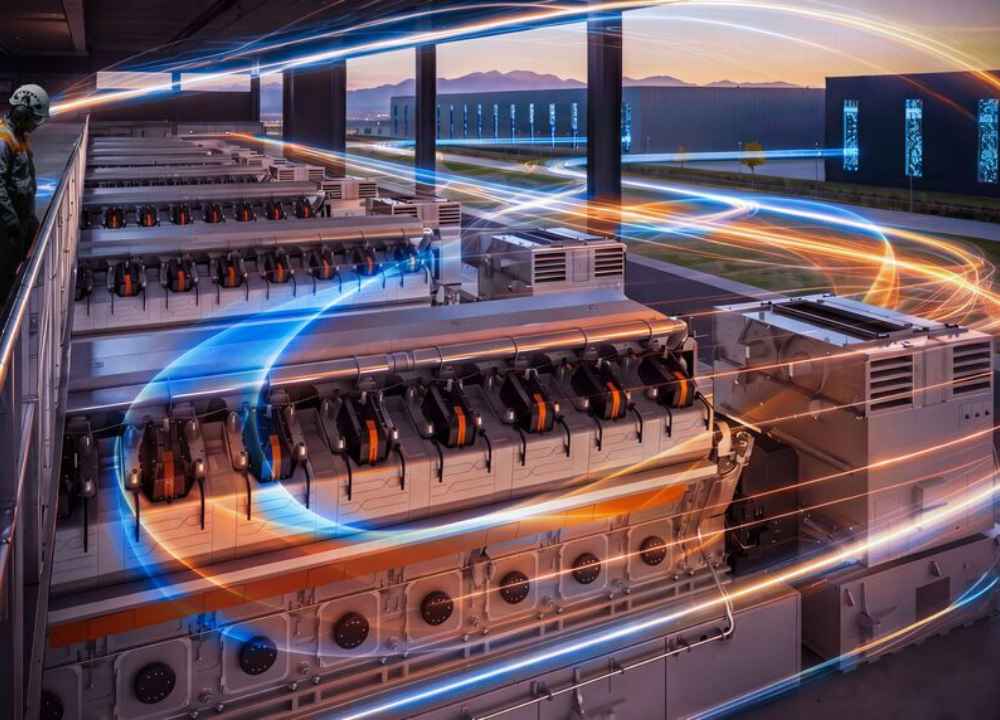
A new study by Wärtsilä has highlighted the potential financial and environmental benefits of using flexible engine-based power generation to meet the growing electricity requirements of data centres. According to the study, selecting the right power technology for off-grid data centres could generate savings of up to €196 billion over 20 years while reducing water consumption, land use and dependence on conventional power generation systems.
Titled Unlock Power. Unleash Growth: How Data Centres Can Create Tomorrow’s Power System Flexibility, the study examines how the rapid expansion of data centres can support the development of more flexible and renewable-based electricity systems. Global data centre capacity is expected to nearly triple by 2035, creating significant pressure on electricity infrastructure. As developers face lengthy grid connection delays, onsite power generation is becoming an increasingly attractive option for ensuring reliable electricity supply.
The study models a scenario in which global off-grid data centre capacity reaches 55 GW by 2035. It finds that using flexible engine-based power plants instead of combined-cycle gas turbines (CCGTs) could save approximately €196 billion over a 20-year operating period.
The environmental benefits are also significant. Engine-based solutions could reduce water consumption by 99.97% compared with CCGTs because of their lower cooling requirements. They could also require land equivalent to approximately 2,200 fewer football pitches, as the systems need less generating equipment and battery storage capacity to meet the same electricity demand.
Flexible engines can also provide benefits after data centres are connected to the electricity grid. They can supply backup power while helping balance fluctuations in electricity generation from wind and solar installations. Along with energy storage, these technologies can support the integration of higher renewable energy capacity into power systems.
Anders Lindberg, President of Wärtsilä Energy and Executive Vice President of Wärtsilä, said data centres should be viewed not only as major electricity consumers but also as potential contributors to future power system flexibility. He said selecting appropriate technologies can reduce costs, conserve natural resources and support the expansion of renewable energy.
The study also highlights the opportunity to recover waste heat from data centres and supply it to homes and businesses through district heating networks. Based on an International Energy Agency estimate, recovered data centre heat could meet around 10% of Europe’s space-heating demand and generate €180 billion in net economic value over 20 years.
Wärtsilä has called on data centre developers, regulators and power system operators to work together to make better use of onsite power generation and storage technologies. The company believes that appropriate technology choices and supportive electricity market arrangements can help meet rising digital infrastructure demand while reducing the cost of balancing future power systems.
Wärtsilä Energy supports the transition towards a 100% renewable energy future through flexible engine power plants, energy storage solutions and lifecycle services. Its engines are designed to operate on sustainable fuels. The business has delivered 81 GW of power plant capacity across 180 countries, with approximately 35% of its operating installed base covered by service agreements.
Wärtsilä is a global provider of technologies and lifecycle solutions for the marine and energy industries. The company focuses on sustainable technology and services that improve environmental and economic performance. It employs approximately 17,900 professionals across 199 locations in 78 countries. In 2025, Wärtsilä recorded net sales of €6.2 billion and is listed on Nasdaq Helsinki.