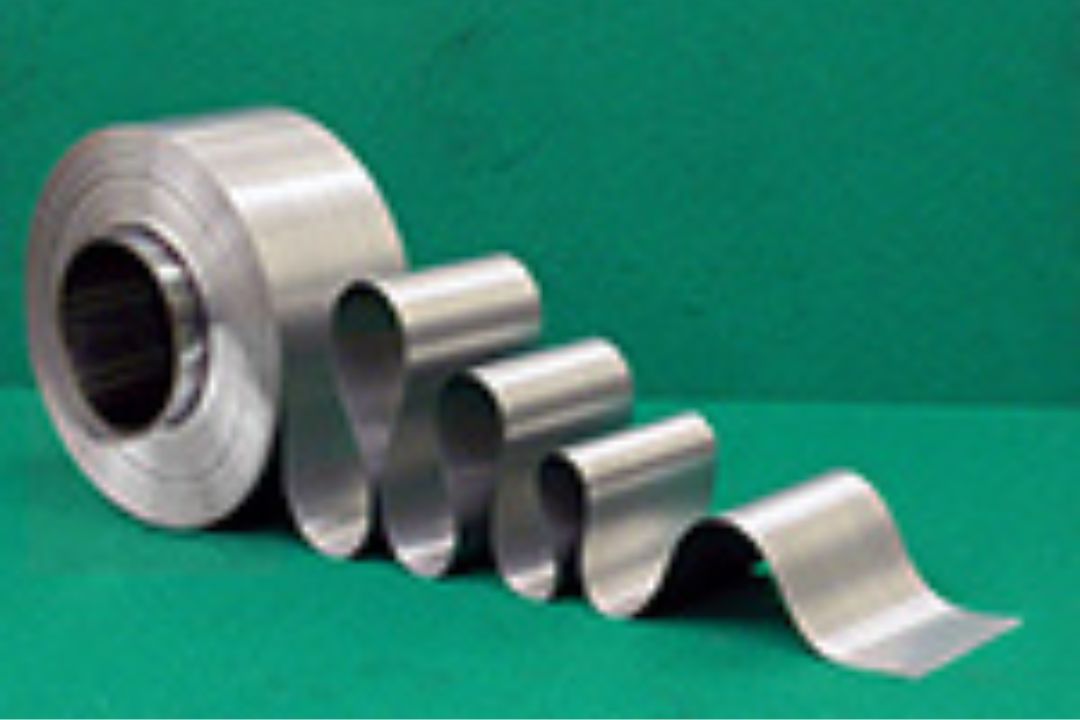
NIPPON KINZOKU CO, LTD has announced the full-scale expansion of its Eco-Product portfolio built around the company’s proprietary Composite Metal Forming Technology. Developed using the company’s long-established Fine Profile precision rolling expertise, the technology is aimed at improving manufacturing efficiency, reducing material waste, and supporting carbon reduction initiatives across industrial supply chains.
The company stated that the expansion reflects growing demand for environmentally responsible manufacturing solutions as industries worldwide seek to lower production costs while reducing environmental impact. The new technology-driven product range is designed to optimise material usage and streamline manufacturing processes across multiple sectors.
NIPPON KINZOKU’s Composite Metal Forming Technology combines several metal processing techniques, including precision profile rolling, roll forming, and press processing, to create components that are close to final product dimensions before reaching customers. This near-net-shape production approach helps minimise machining requirements, improve material yield, and reduce overall waste generation.
According to the company, one of the key advantages of the technology is its ability to produce complex cross-sectional shapes while significantly reducing material loss during manufacturing. By processing components closer to final specifications within its own facilities, NIPPON KINZOKU helps customers shorten downstream processing stages and lower overall resource consumption.
The company explained that the technology also supports greater manufacturing efficiency by integrating multiple production stages under a single operational framework. Processes that customers previously managed separately, including sheet metal fabrication and secondary forming, can now be consolidated within NIPPON KINZOKU’s manufacturing operations. This integration reduces transportation requirements, storage needs, and energy consumption associated with multi-stage production systems.
Another major benefit highlighted by the company is stable product quality achieved through continuous coil material forming. By producing long materials with minimal dimensional variation, the technology supports highly efficient drilling and machining processes while reducing the occurrence of manufacturing defects.
NIPPON KINZOKU stated that these capabilities contribute directly to lowering CO₂ emissions and supporting broader sustainability goals within the manufacturing industry. The company believes that optimising production efficiency and material utilisation will become increasingly important as industries move toward carbon neutrality targets and stricter environmental standards.
The Eco-Product portfolio has been positioned as part of the company’s long-term strategy to deliver high-performance metal processing solutions that combine productivity improvements with environmental responsibility. The initiative also aligns with growing customer demand for sustainable supply chain practices and lower lifecycle environmental impact.
Industry trends continue to drive interest in advanced metal forming technologies, particularly in sectors such as automotive, electronics, industrial equipment, and infrastructure, where manufacturers are under increasing pressure to improve efficiency while reducing waste and emissions.
NIPPON KINZOKU said it plans to further strengthen its research and development capabilities to expand the application range of its Composite Metal Forming Technology. The company also intends to deepen collaboration with customers to develop customised manufacturing solutions tailored to evolving industrial requirements.
By leveraging its expertise in precision profile rolling and integrated metal processing, NIPPON KINZOKU aims to contribute to next-generation manufacturing systems that balance productivity, quality, and sustainability. The company believes its Eco-Product strategy will play a significant role in supporting the transition toward more resource-efficient and environmentally conscious industrial production.