Genesys International Corporation Limited has appointed Dhiman Basu Ray as Chief Technology Officer (CTO) as the geospatial technology company expands its focus from high-precision mapping and Digital Twins towards AI-powered Spatial Intelligence. Dhiman brings approximately 26 years of experience in technology and digital engineering. He previously served as Global Chief Technology Officer – Digital Engineering at Tech Mahindra and has held senior positions across global technology companies. His experience covers artificial intelligence and machine learning, robotics, product and platform engineering, cloud and data platforms, software-defined vehicles, cybersecurity and large-scale digital transformation.
Sajid Malik, Chairman and Managing Director, Genesys International, said the company is entering a new phase in which geospatial information can become a foundation for understanding and making decisions about the physical world. He said Genesys has developed extensive capabilities in surveying, geospatial content and Digital Twins and now aims to build these capabilities into a scalable Spatial Intelligence platform. Dhiman’s experience in AI, robotics and digital engineering will support this technology transition.
The appointment comes as the use of Physical AI expands. AI systems that operate in the physical world require accurate information about locations, objects, infrastructure and their surrounding environments. Three-dimensional and continuously updated digital representations can provide the information required by such systems.
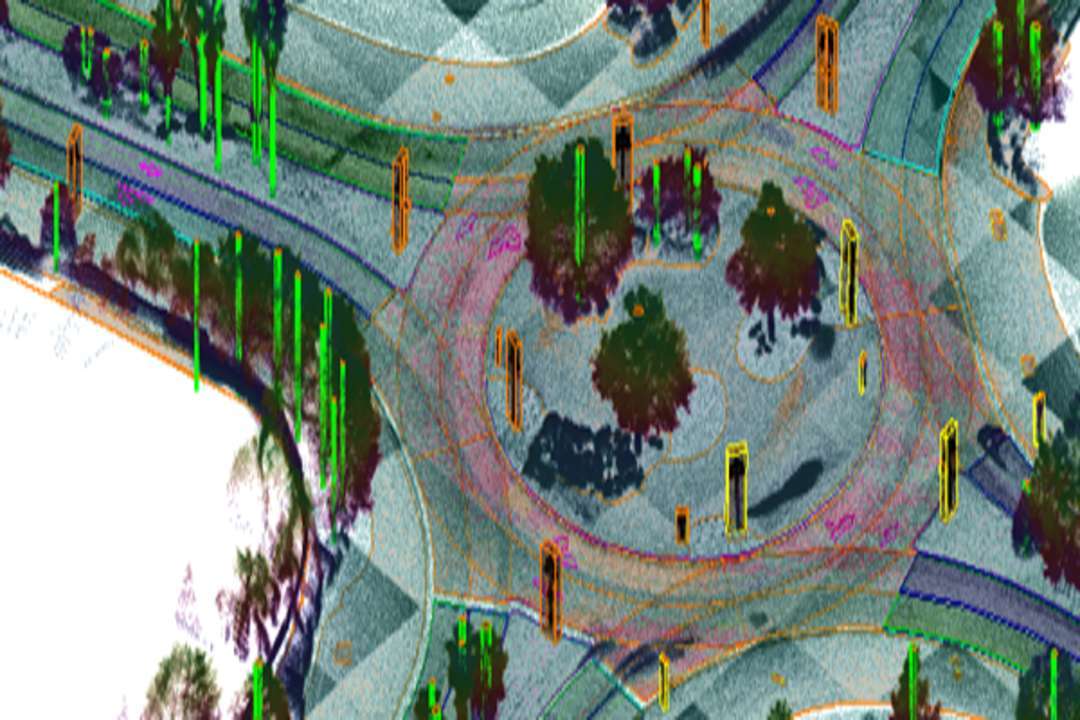
Genesys has developed capabilities across terrestrial and aerial surveying, high-definition mapping, three-dimensional geospatial data and city-scale Digital Twins. The company plans to combine these capabilities with AI, analytics and continuously updated spatial information.
Dhiman Basu Ray, Chief Technology Officer, Genesys International, said the company has built a strong foundation through its geospatial content, survey capabilities and 3D Digital Twins. He said the next opportunity is to combine these capabilities with AI and digital engineering to create a scalable Spatial Intelligence layer that can help governments, enterprises and intelligent machines better understand and respond to physical environments.
Genesys plans to develop an AI-focused technology architecture capable of continuously collecting, processing, validating and interpreting spatial information. This approach is intended to make geospatial data more useful for real-time decision-making and automated applications.
The company sees potential applications across urban governance, infrastructure, utilities, mobility, autonomous systems and enterprise operations. The growing adoption of Physical AI is increasing the need for machine-readable representations of physical environments. Unlike conventional AI systems that primarily work with digital information such as text and images, Physical AI systems need to understand where objects are located, their dimensions and relationships, and how environments change over time.
Genesys aims to use its existing Digital Twin and mapping capabilities as the foundation for this development. By combining detailed digital representations with AI and analytics, the company intends to support applications that require continuous understanding of the physical environment.
The appointment of Dhiman Basu Ray is expected to strengthen Genesys’ technology leadership as it expands beyond traditional mapping services. His experience across engineering, AI, robotics and digital platforms will support the company’s efforts to build new products and platforms for the emerging Spatial Intelligence and Physical AI markets.
Genesys International is an Indian geospatial technology company focused on mapping, surveying, 3D content and Digital Twin solutions. The company serves government and enterprise applications requiring detailed information about physical environments.