Daimler Buses is expanding its public charging infrastructure for electric buses with plans for a new charging location at Hamburg Central Bus Station (ZOB Hamburg). The site will be the company’s third own public charging location in Germany, following projects in Cologne and Munich.
The company has signed a lease agreement with ZOB Hamburg GmbH, the operator of the facility, with approval from the municipal owner. Daimler Buses has also submitted the building permit application, with commissioning scheduled for 2027. The Hamburg facility will initially have four fast-charging stations, with the option to expand to eight charging points. The stations will have an output of up to 600 kW and will be open to electric buses of all brands. The charging infrastructure will use electricity from renewable sources.
Implementation and operation will be handled by Daimler Buses Solutions GmbH, a wholly owned subsidiary of Daimler Buses. The arrangement will allow ZOB Hamburg to offer charging infrastructure without making its own investment or taking responsibility for technical operations. Daimler Buses Solutions will finance the service through the sale of charging electricity.
Steffen Germ, CEO, Daimler Buses Solutions, said public charging infrastructure is an important requirement for the electrification of excursion and coach travel. He said the company’s projects in Cologne, Munich and Hamburg are intended to support the use of electric buses on key routes in Germany, allowing buses to charge during scheduled stops.
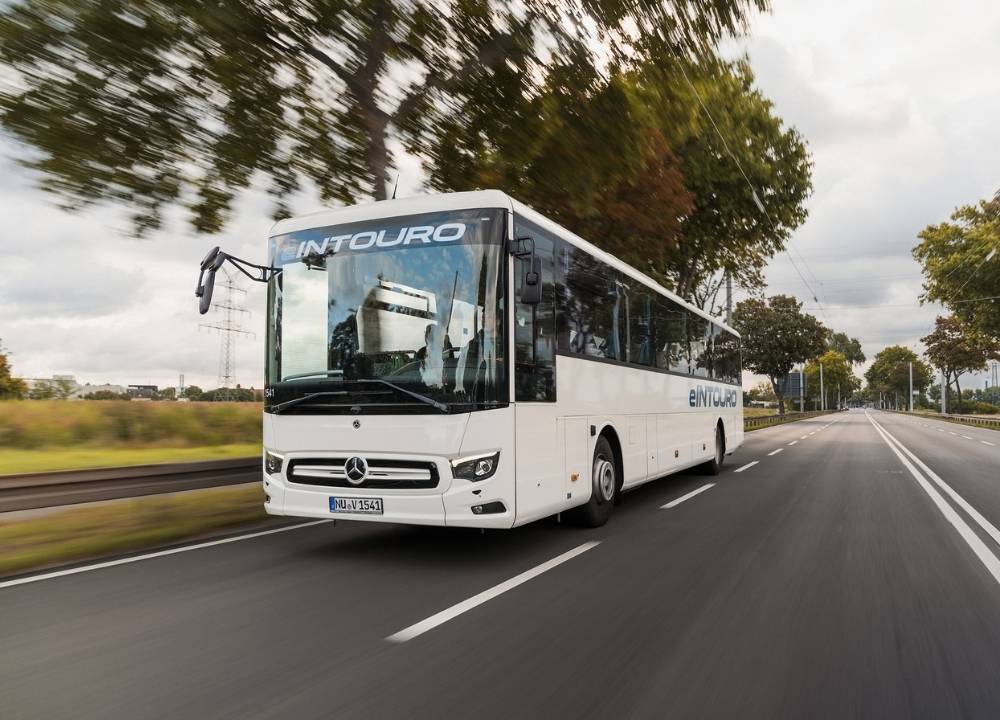
The charging infrastructure is also intended to support the Mercedes-Benz eIntouro, Daimler Buses’ first battery-electric intercity bus. The vehicle has been available for order since spring 2025, with the first customer handover scheduled in the coming weeks. The eIntouro is designed for urban-rural routes, excursion services and shorter trips. Wider use of battery-electric intercity and coach buses on longer routes will require more public charging facilities.
At ZOB Hamburg, construction work will include civil engineering, installation of high-voltage cables, a transformer and charging equipment. With more than 80,000 bus movements each year, the bus station is one of Germany’s largest long-distance bus hubs. Scheduled stops provide an opportunity for operators to charge vehicles while passengers use existing facilities.
Daimler Buses Solutions is also evaluating additional public charging locations at high-traffic sites. The company plans to work with partners during construction and use its own service team for maintenance and technical operations after commissioning. Daimler Buses said property owners, operators and long-term users of locations regularly used by intercity and coach buses can propose potential charging sites.
Daimler Buses is part of Daimler Truck and operates the Mercedes-Benz, Setra, OMNIplus and BusStore brands. Its portfolio includes coaches, intercity buses, city buses, specialty buses and bus chassis. With production facilities in Mannheim and Neu-Ulm, Daimler Buses is the only manufacturer of buses over eight tonnes producing city buses, intercity buses and coaches in Germany.