

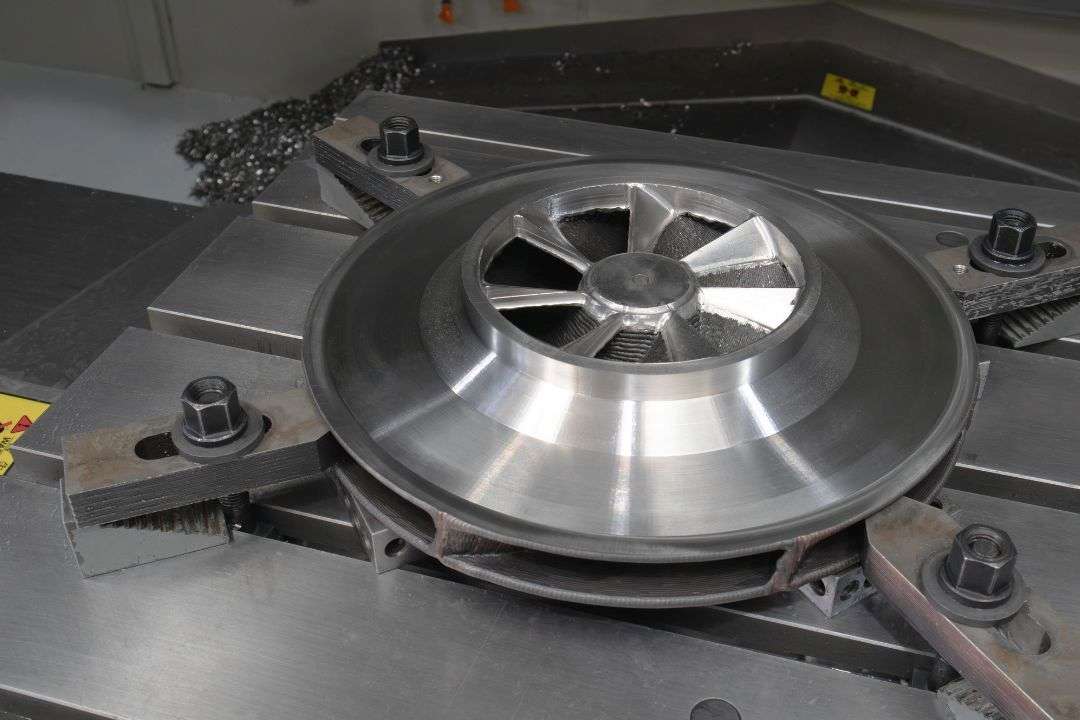
Spanish researchers from the ATILA Project have made a major stride in biomedical engineering by enabling Meltio’s metal additive manufacturing technology to produce titanium hip and knee implants. The multidisciplinary research consortium, reflecting work conducted throughout 2025, aims to create implants that meet regulatory standards while harnessing the precision and flexibility of metal 3D printing.
At the Valencian research center AIDIMME, a prototype 3D printing system was installed, marking the first time in Spain that biomedical implants made from titanium alloys were manufactured using Meltio’s innovative wire laser metal deposition (LMD) technology. The project focuses on three key implant components: the acetabular cup (hip implant), the tibial tray (upper knee surface), and the femoral component (lower femur replacement). Both in vitro and in vivo testing are underway to validate design, material performance, and biocompatibility.
The ATILA team has characterized Ti6Al4V grade 23 alloy processed with Meltio’s DED-LB/M technology, confirming a martensitic microstructure ideal for implants. Mechanical testing shows the material meets all relevant international standards for strength, elasticity, and elongation, including ASTM F3001-14, ASTM F136-2021, and UNE EN ISO 5832-3:2022, without additional heat treatment.
AIDIMME and the FIHGUV Research Foundation are conducting complementary biocompatibility studies. Surface treatments—including sandblasting, acid etching, ceramic coatings, anodizing, and nanotube applications—are being optimized to promote osseointegration, accelerate cellular response, and increase implant durability. “Machined titanium surfaces alone are insufficient for proper bone integration,” explains Jenny Zambrano, ATILA spokesperson and AIDIMME researcher.
Founded in the 1980s, AIDIMME is a private, non-profit technology institute and Innovative Business Group (AEI) supporting industrial competitiveness through advanced materials, product design, and additive manufacturing. It has been recognized as a Cervera Center of Excellence and participates in numerous European R&D projects in additive manufacturing.
The Research Foundation of the General University Hospital of Valencia (FIHGUV) drives biomedical and clinical research, operating advanced laboratories, clinical units, and simulation centers. Since 1999, FIHGUV has contributed to groundbreaking projects, including Spain’s first Chair of Robotic Surgery, and holds multiple patents and publications in biomedical innovation.
Meltio develops high-performance, user-friendly metal 3D printing solutions based on wire laser metal deposition technology, enabling industries to manufacture and repair metal parts with high density and precision. Meltio’s disruptive technology offers a reliable alternative to traditional metal manufacturing and is driving the next generation of additive manufacturing applications.









