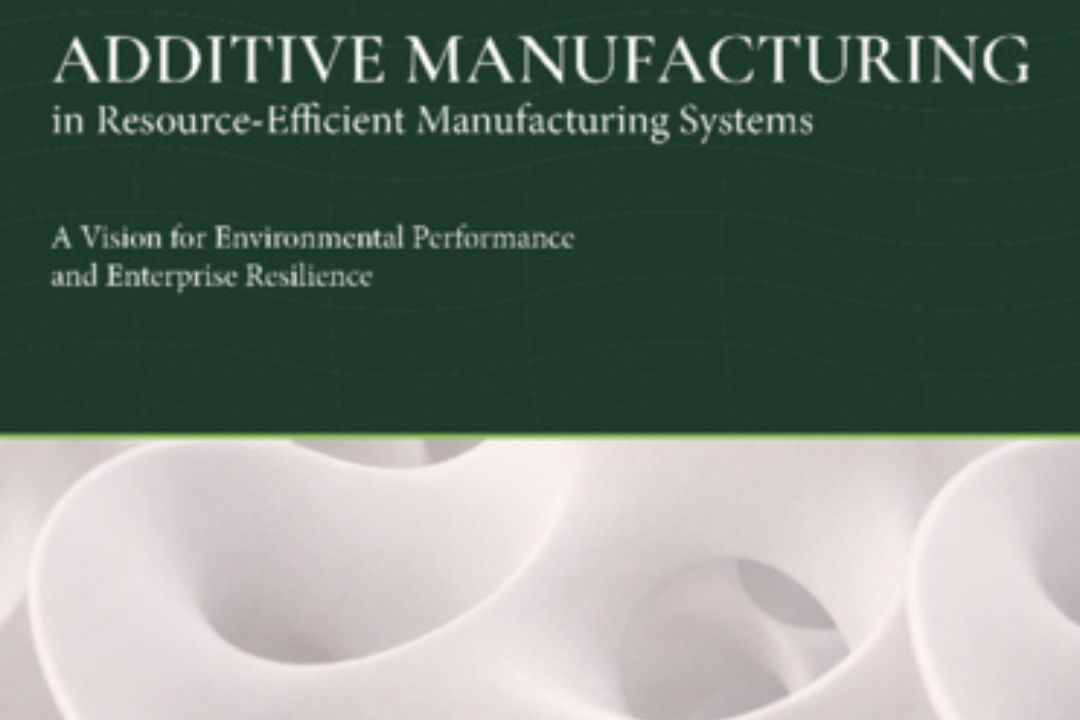
Following its 2026 Annual Member Summit, the Additive Manufacturing Green Trade Association (AMGTA) has released a new independent report titled “Additive Manufacturing in Resource-Efficient Manufacturing Systems.” The report provides a comprehensive framework for evaluating, communicating, and deploying additive manufacturing (AM) across part, system, and enterprise levels.
Presented on April 13, 2026, in Boston, the report was discussed with AMGTA’s global membership alongside its companion “Strategy 2030” document. It draws on six years of observation across both technology developers and manufacturing users, offering insights that bridge perspectives across the AM ecosystem.
The report challenges traditional cost comparison models, which often assess additive manufacturing solely at the part level. It highlights how conventional manufacturing embeds hidden costs—such as tooling investments, inventory carrying expenses, minimum order quantities, and obsolescence—that are typically excluded from standard analyses. This creates a structural bias that can make AM appear less cost-effective than it truly is.
According to the report, this is not a limitation of the technology itself but a framing and measurement issue. It introduces a more holistic evaluative structure to help organizations accurately assess AM’s value in terms of resource efficiency, supply chain resilience, and capital allocation.
Sherri Monroe, Executive Director of AMGTA, said, “The technology is proven, but current adoption does not reflect its full potential. One key reason is that AM has been evaluated against standards that fail to capture its broader impact. This report addresses that gap.”
Brian Neff, Chair of the AMGTA Board of Directors, added, “This report represents the independent, non-commercial voice the industry has needed. It delivers a rigorous, comprehensive argument designed to stand up to scrutiny from finance, procurement, and policy stakeholders.”
Founded in 2019, AMGTA is a global, independent organization dedicated to advancing the role of additive manufacturing in resource-efficient systems. It brings together stakeholders across five continents to build evidence-based understanding of AM’s operational and environmental benefits, maintaining a strictly non-commercial and unbiased position.