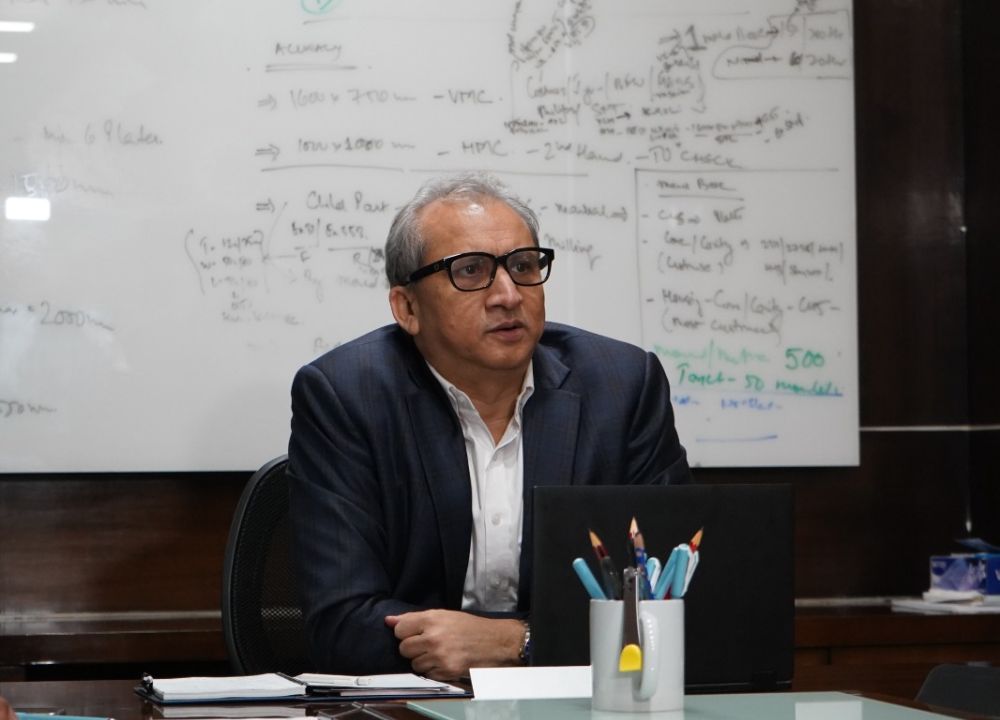
Sandeep Jain did not choose this business. It chose him. When his father, Satish Kumar Jain, fell ill and needed a kidney transplant, Sandeep was still in college, BCom Honours at Hindu College, Delhi, with half a mind to join law school. He was the only son. The decision was not really a decision. “It was a do or die situation,” he says, “So alongside my college, I joined the office.” That was 1988-89. He has not looked back since, though the business he inherited then looks almost nothing like what Sandeep EdgeTech is today.
From a Trading Firm to a Full-Stack Steel Solutions Company
The story starts well before Sandeep came into the picture. His father began in Kolkata, trading steel. The family shifted to Delhi in 1977, and Sandeep Enterprises was formally incorporated two years later. For the first two decades, it was a domestic steel trading business. Straightforward, reliable, not especially glamorous.
Then in 1999, they went into imports. Europe and Japan were the first ports of call. China was not yet the force it would become. Sandeep built relationships with names like Nachi Steel and Sanyo Steel from Japan, and partners across Italy and the rest of Europe. Some of those relationships are still active today. “China came in very late,” he says. “But today, import from China has grown quite a lot because you get good products and the quality is decent. Everything depends on the bottom line.”
The real shift came in 2010, when the company set up a manufacturing facility in Sonipat. They started with cutting. At the time, Sandeep says they had what was possibly the largest vertical cutting machine in the country, measuring 6 metres in both vertical and lateral dimensions. A few years later, in 2016-17, they bought two second-hand European machines from Mayapuri in Delhi and started machining. That was the beginning of something bigger.
Seeing What Customers Actually Needed
Sandeep had spent years travelling to Europe and Japan. He had seen how suppliers there operated. The model was simple: one source, complete solution, no running around. Back in India, what he observed was different. Customers would buy material from Sandeep Enterprises, send it to one vendor for roughing, another for machining, then bring it back to their own factory for finishing. Every step meant coordination, delays, and accountability spread thin across multiple parties.
“The customer was pretty hassled,” he says. “They wanted a one-stop solution. What does the customer ultimately want? His goods on time, at a decent price, with delivery that matches. And he doesn’t want the hassle of coordinating with too many people.”
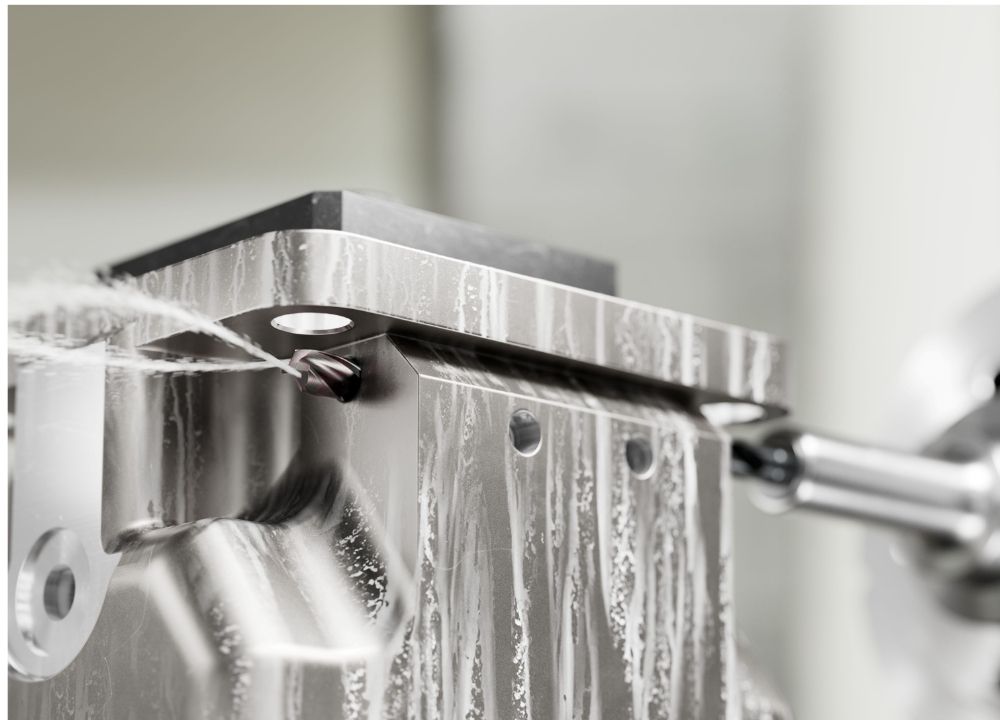
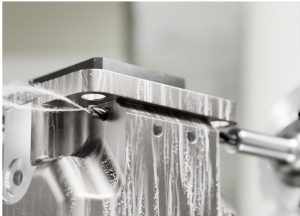
So Sandeep EdgeTech built that solution. Today the company machines components ranging from 500 grams to 5-7 tonnes, which Sandeep believes puts them among the highest-volume precision machining operations in the country, not by size of individual parts but by sheer numbers processed. The Sonipat facility handles cutting, machining, grinding, milling, deep drilling, and VMC roughing. Mumbai followed, with 20,000 square feet across three warehouses in Kalamboli. Two are primarily for stock, one replicates the machining setup from Sonipat. The company converted from a proprietorship to a private limited in 2012, originally as Sandeep Enterprise Vision One India Private Limited. In 2025, it was renamed Sandeep EdgeTech Limited.
A Recent Acquisition That Points to Where They Are Headed
The most recent development in the Sandeep EdgeTech story is an aerospace parts manufacturing firm in Hyderabad. An established operation of 10 to 15 years, the company acquired it and took over management entirely. “We wanted to show the diversification of application of our existing machines,” Sandeep explains. “With slight modifications, the same machines can make aerospace-grade components.”
It is not a detour. It is the same logic applied to a new domain: existing capability, wider use. He also runs a separate bandsaw blade business, and at TAGMA both will get representation alongside the core steel and machining story.
What Sixteen-Plus Years at TAGMA Looks Like
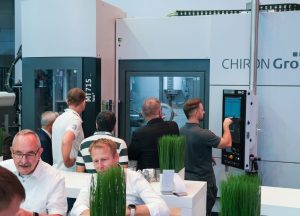
Sandeep EdgeTech has been participating at TAGMA’s Die & Mould India since at least 2010, possibly earlier. The records go back that far, and Sandeep suspects the relationship is older. What keeps him coming back is not contracts, at least not directly.
“After participating in TAGMA, you don’t have a benchmark of expectation,” he says. “It’s more about networking, meeting people, getting information and sharing yours. If I want to connect with the decision-maker of any company otherwise, I need to go down the ladder. At TAGMA, the management comes.”
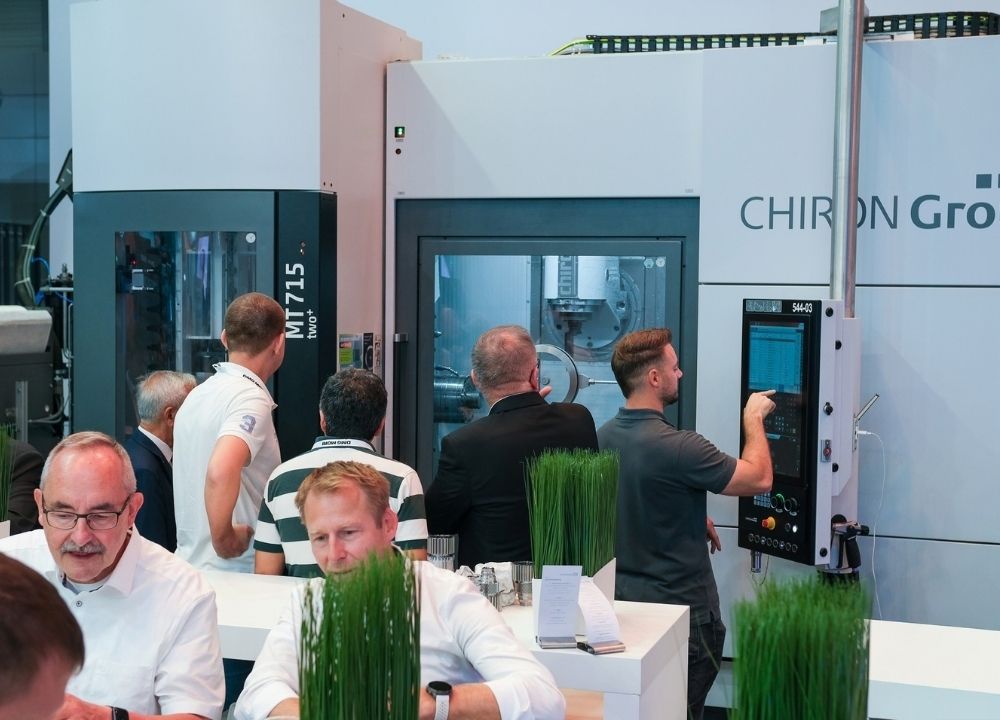
At this year’s edition, the stall is 80 square metres. Sandeep will be there alongside Vishu Jain, Sushant Jain, Samyak Jain, and Sanjay Jain. Management across the board, which he sees as the point. You send the right people to meet the right people. The exhibit will cover steel products from Japanese partners including Nachi and Sanyo, machined and processed components from across the company’s divisions, powder metallurgy materials, and a section on the new aerospace work.
What He Wants Visitors to Take Away
Sandeep is not the kind of person who sets target order values for an exhibition. He finds the framing beside the point. “We are going there with an open mind,” he says. “We want to know more about everybody and tell more about ourselves to everybody. That’s all.” But push him further, and there is a clear message underneath. “Even I think I know everything, but every morning I wake up and find there’s a lot more I don’t know,” he says. “What to do, people will teach you. What not to do, they won’t. That’s what a platform like TAGMA is for. You find both.”
He pauses, then adds: “Either you’re part of the race or you’re out of it. You can’t just stand still and call it neutral. Things are moving.” Coming from someone who joined the family business during a medical crisis, learned the trade from the shop floor up, studied how European suppliers operated and decided to replicate that model in India, and has now moved into aerospace, the point lands.