

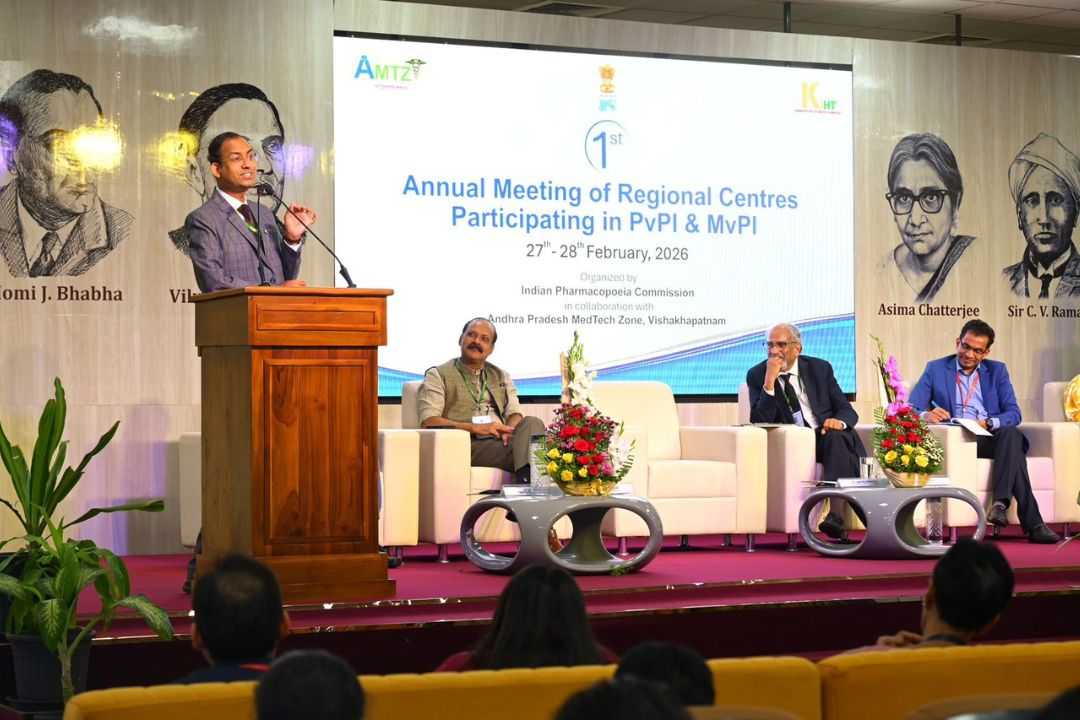
The inaugural Annual Meeting of Regional Centres under the Pharmacovigilance Programme of India (PvPI) and the Materiovigilance Programme of India (MvPI) marked a significant step toward strengthening patient safety and public health surveillance across the country. The meeting was organised by the Indian Pharmacopoeia Commission (IPC) in collaboration with the Kalam Institute of Health Technology and Andhra Pradesh MedTech Zone (AMTZ), bringing together regulators, healthcare leaders and monitoring centres from across India.
The gathering focused on reinforcing coordination among regulatory authorities, healthcare institutions, Adverse Drug Reaction Monitoring Centres (AMCs) and Medical Device Monitoring Centres (MDMCs). With the expanding use of medicines and increasing adoption of advanced medical devices, robust pharmacovigilance and materiovigilance systems are essential to identify, assess and mitigate risks associated with drugs and devices. Strengthened surveillance frameworks are critical to ensuring patient protection, enhancing regulatory credibility and supporting evidence-based healthcare decisions.
Senior officials from regulatory agencies, leading medical institutions and representatives from the World Health Organization Country Office for India participated in the deliberations. The discussions reflected global best practices and India’s growing role in advancing comprehensive safety monitoring systems.
The inaugural session was led by Dr V Kalaiselvan, Secretary-cum-Scientific Director, IPC, who underscored the need to transition from awareness-driven reporting to a performance-oriented pharmacovigilance system supported by measurable outcomes. Senior representatives from premier institutions, including All India Institute of Medical Sciences (AIIMS), joined Dr Jitendra Sharma, Managing Director and Founder CEO of AMTZ, and Dr Kavita Kachroo, COO of KIHT, in highlighting the importance of institutional collaboration to build a resilient and integrated vigilance framework nationwide.
During the session, the ADR PvPI 2.0 Mobile Application was launched to streamline adverse drug reaction reporting, enable real-time data capture and improve stakeholder engagement across the country. Dr Jitendra Sharma noted that patient safety must now extend beyond pharmacovigilance to include materiovigilance, biovigilance and radiovigilance, especially as medical technologies become more complex and embedded in clinical care. He highlighted AMTZ’s evolution into a major medical technology manufacturing cluster that combines indigenous innovation, global standards and strong safety systems.
Technical sessions that followed reviewed programme progress and addressed challenges such as underreporting, documentation gaps and strengthening oversight mechanisms. Participants emphasized improving the performance of monitoring centres and fostering a culture of systematic, high-quality reporting to further reinforce India’s commitment to patient safety and regulatory excellence.









