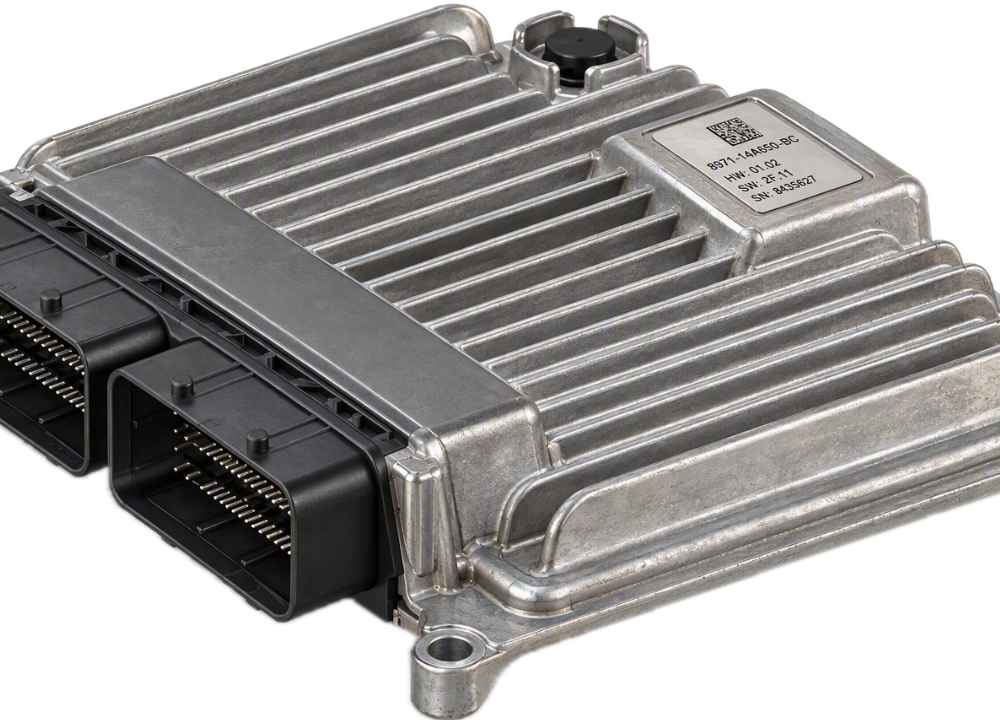
BorgWarner, a global supplier of automotive technologies and sustainable mobility solutions, has secured a new business contract to supply engine control modules (ECMs) for an internal combustion engine (ICE) pickup truck platform of a long-standing global original equipment manufacturer (OEM) customer. The high-volume programme will extend BorgWarner’s existing relationship with the automaker through 2034, with production scheduled to begin in 2029. The new contract strengthens the company’s position in engine electronics and builds on its established experience in developing engine management systems for global automotive manufacturers.
The ECMs will be custom-designed for the customer’s pickup truck platform. The solution will provide increased electronic content and functionality, greater control flexibility and a compact design to meet the vehicle’s packaging requirements. BorgWarner has been supplying engine control modules to the same customer since 2020 across several existing vehicle applications.
Commenting on the contract, Isabelle McKenzie, Vice President of BorgWarner Inc. and President and General Manager, PowerDrive Systems, said, “Securing this strategic ECM program win maintains BorgWarner’s electronics leadership and extends our engagement with this long-time partner through 2034. This program builds on our strong relationship with the customer and reflects the value of close collaboration. By combining our deep expertise in engine control technology with an understanding of the customer’s requirements, we are helping deliver a solution tailored to the needs of this important platform.”
BorgWarner offers a wide range of electronic controllers for light vehicles powered by conventional and hybrid engines. Its solutions support diesel, gasoline direct injection (GDi) and port fuel injection systems, providing accurate control of engine management functions.
The company’s engine control modules incorporate custom-designed, cost-competitive Application Specific Integrated Circuits (ASICs) developed to meet the latest emission requirements. The systems offer flexible fuel control and are designed for compatibility with injectors currently available in the market.
The ECM platform also provides multiple pin-connection configurations, integrated exhaust aftertreatment functionality and a flexible architecture supported by an advanced microprocessor. Its gasoline direct injection control capability supports fuel system pressures of up to 500 bar, enabling the technology to meet the requirements of advanced engine applications.
The latest contract reflects the importance of electronic engine management systems in modern vehicles, particularly as manufacturers continue to improve engine efficiency, performance and emissions compliance. Customised control solutions also allow automakers to address specific vehicle requirements while maintaining production and cost targets.
Beyond internal combustion engine controllers for passenger and light commercial vehicles, BorgWarner has developed a broad portfolio of technologies covering different propulsion systems. Its product range includes battery management controllers, motor controllers, commercial vehicle engine controllers and transmission controllers for both light and commercial vehicles.
The company continues to work with global automotive manufacturers to develop electronic and propulsion technologies for conventional, hybrid and electrified vehicles. The new ECM programme further strengthens its engagement with a key global customer and extends its engine electronics business over the coming years.
BorgWarner is a global automotive technology company focused on developing propulsion systems and mobility solutions. Its technology portfolio covers internal combustion engines, hybrid systems and electric vehicle applications. The company supplies products and systems to automotive manufacturers worldwide, with a focus on improving vehicle performance, efficiency and emissions.