For a long time, an inverter had one primary job: keep essential appliances running when the power went out. Customers typically looked at three things when choosing one: how much load it could handle, how long the backup would last and how reliably it performed. That is beginning to change.
As India expands its renewable energy capacity and adopts energy storage across more applications, the role of the inverter is evolving. It is no longer simply a backup device. It is becoming an important part of how electricity is converted, managed and delivered across homes, businesses and larger power systems.
This shift has implications for the entire energy storage industry. The focus can no longer be on how much energy a battery can store alone. We also need to consider how efficiently that energy is converted, when it is used and how reliably the system performs under real-world conditions.
India’s energy transition is changing the role of the inverter
India’s growing renewable energy capacity brings an important challenge. Solar power generation depends on sunlight, while electricity demand follows its own pattern. The hours when solar generation is highest do not always coincide with the hours when electricity is needed most.
Energy storage can help bridge this gap. It allows electricity to be stored when it is available and used when demand rises or generation falls. Beyond backup, storage can support peak-demand management, improve the utilisation of renewable energy and add flexibility to the power system.
The scale of the opportunity is significant. According to the Central Electricity Authority’s National Electricity Plan, India’s projected energy storage requirement is
411.4 GWh by 2031–32, including 236.22 GWh of battery energy storage. These are projected requirements rather than installed capacity, but they give us a sense of the infrastructure India may need in the coming years.
For the power electronics industry, this changes the conversation. The challenge is no longer limited to converting the direct current stored in a battery into alternating current for everyday use. Systems must also manage changing loads, operate efficiently and respond reliably to different electrical conditions.
A battery is only as useful as the system around it
Much of the discussion around energy storage focuses on battery chemistry, capacity, cycle life and charging performance. These are important considerations, but they tell only part of the story. The inverter, battery management system, control logic and protection mechanisms all influence how effectively stored energy is used. If these components are not designed to work together, the system may not deliver the performance a customer expects, even if the battery itself is capable.
Consider a commercial facility that generates solar power during the day but experiences higher electricity demand in the evening. The value of its storage system depends on more than the amount of energy stored. It also depends on how efficiently the system charges and discharges, manages changing loads and minimises conversion losses. The same principle applies to homes, shops, offices and industrial facilities, although each application has different requirements. This is why we need to evaluate an inverter as part of an integrated energy storage system, rather than as an independent product.
The shift from backup power to smarter energy management
Customers are becoming more interested in how an energy storage system performs in everyday use, not simply how long it can provide backup during an outage. Can it handle changes in load? Is it compatible with the intended battery configuration? How does it respond to fluctuations in the electricity supply? Can its performance be monitored? What happens when operating temperatures or energy requirements change?
These are practical questions, and the answers will increasingly influence buying decisions. I believe system integration will become one of the strongest differentiators in this market. The inverter, battery, controls and protection systems must work together as a reliable unit. Monitoring and diagnostic features can add value by helping users understand performance, identify potential issues and make informed maintenance decisions.
However, adding software or connectivity does not automatically make a product better. Digital features are useful only when they are supported by sound engineering, reliable hardware and meaningful performance data. The objective should be straightforward: make energy systems more reliable, efficient and easier to manage.
Grid-forming inverters and the next stage of grid stability
One of the important developments in power electronics is the growing attention being paid to grid-forming inverter technology. As renewable energy and battery storage account for a larger share of electricity systems, maintaining stable grid voltage and frequency becomes an increasingly important engineering challenge. Grid-forming inverters are designed to establish and support aspects of grid behaviour, depending on their capabilities and the conditions in which they operate.
India’s regulatory and technical discussions are also moving in this direction. Developments involving the Central Electricity Authority and proposed grid-connectivity requirements for renewable energy and storage projects reflect the growing importance of inverter capabilities in future power systems. The specific requirements, however, depend on the applicable regulations and the nature of each project.
This is an important distinction. Adding more generation and storage capacity is necessary, but the electricity system must also be able to manage that capacity reliably. Grid-forming technology is particularly relevant to larger grid-connected applications. A residential inverter does not necessarily need the same capabilities as a utility-scale system. What matters is that the technology is designed for its intended application and the electrical environment in which it will operate.
Five developments that will shape the market
Over the next three to five years, I expect five developments to influence the power electronics and energy storage industry.
1. System integration will matter more than individual specifications.
Buyers will increasingly look at how batteries, inverters, controls and protection systems perform together. Comparing capacity or efficiency figures in isolation will not provide a complete picture of system performance.
2. Total cost of ownership will receive greater attention.
As adoption grows, customers will look beyond the initial purchase price. Usable energy, conversion efficiency, battery degradation, maintenance requirements, warranty coverage and after-sales support will all influence the long-term value of an investment. A lower upfront cost does not always mean a lower cost over the life of the system.
3. Monitoring and diagnostics will become more useful.
Customers and operators need better visibility into system performance. Effective monitoring can help identify problems early, improve maintenance and provide a clearer understanding of energy consumption. The emphasis should be on features that solve real problems, rather than adding technology for the sake of it.
4. Safety and compatibility will become even more important.
As energy storage deployments increase, manufacturers and project developers will need to pay close attention to protection coordination, thermal management, testing, compliance and compatibility with the wider electrical system. Reliability must be demonstrated through engineering and validation, not simply promised in product specifications.
5. Product design will need to reflect different Indian use cases.
The requirements of a household are very different from those of a retail outlet, manufacturing unit or utility-scale storage project. Load profiles, grid conditions,
installation environments and operating expectations vary considerably across these applications. Products designed around specific use cases are more likely to deliver dependable performance than solutions that attempt to serve every requirement in the same way.
The pace of these changes will depend on policy implementation, project economics, manufacturing capabilities and the industry’s ability to deliver reliable systems at scale. Nevertheless, the direction is clear: performance will increasingly be judged at the system level.
Building technology for Indian conditions
India presents its own set of engineering challenges. High ambient temperatures, variations in grid conditions, diverse load requirements and differences in installation quality can all affect how an energy storage system performs.
Technology designed for one market cannot always be deployed in another without adaptation. This makes domestic engineering, testing and manufacturing capabilities important, not simply as a matter of localisation, but as a way to build products suited to actual operating conditions.
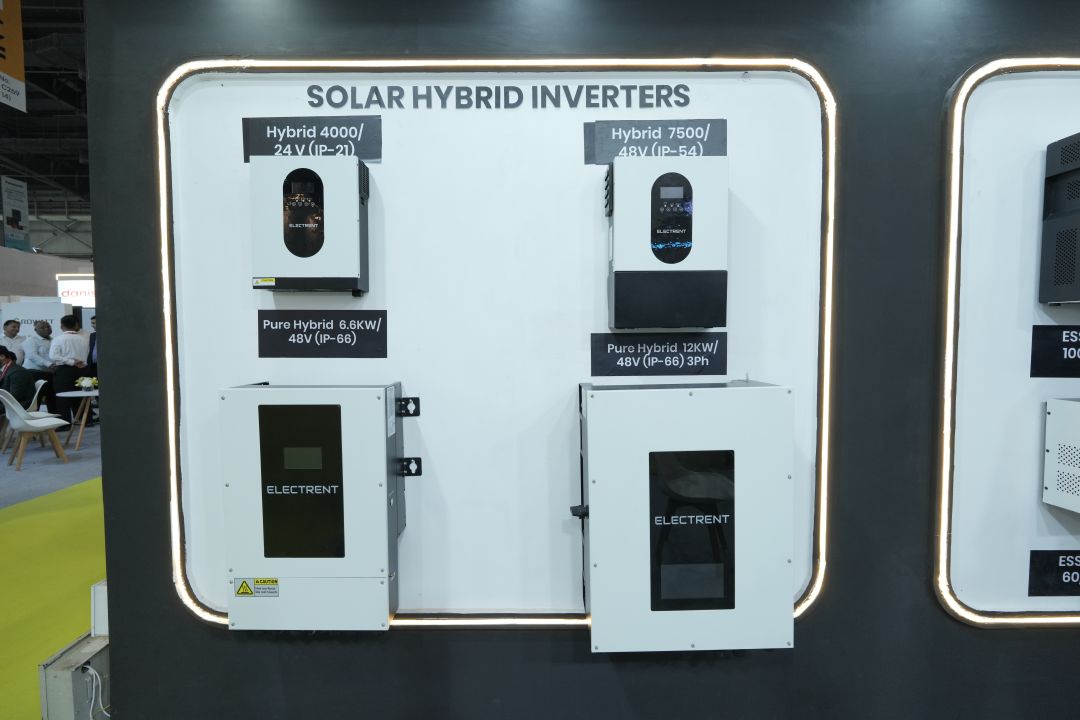
At Electrent Energy, our work on lithium-based energy storage solutions and in-house manufacturing reflects this approach. We believe energy technology must be designed around how people and businesses use electricity, while maintaining a strong focus on reliability, safety and long-term performance.
For manufacturers, the opportunity lies in bringing together better power conversion, sound system integration and application-specific design. For customers, the benefit should be a system that performs consistently and delivers value throughout its operating life.
The real competitive advantage will be system performance
India’s energy storage market has significant growth potential, but the long-term winners will not necessarily be those who add capacity the fastest or compete only on price. They will be the companies that can combine good engineering with commercial viability, dependable service and products suited to the needs of their customers.
As the market matures, the industry will need to look beyond headline capacity figures and pay closer attention to efficiency, safety, reliability, compatibility and performance over time. Manufacturers, developers and buyers all have a role to play in raising these standards.
The inverter may have started as a device that kept the lights on during a power cut. Its role is now expanding to support a more flexible energy system, integrate renewable generation and make stored electricity available when and where it is needed. The battery determines how much energy can be stored. The power electronics around it play a critical role in determining how effectively that energy can be used.