Manufacturing today is no longer centred solely on automation or process efficiency but on how well manufacturers can build and scale a workforce that keeps pace with constant technological change. For years, India’s strength in manufacturing was synonymous with scale. Today that perspective is shifting as the country’s contribution becomes more strategic and deeply integrated into global operations. Indian talent is no longer just supporting global operations but actively shaping their direction.
A decade ago, manufacturing in India depended heavily on external expertise. The focus was on getting the basics right, such as process stability, quality checks, and shopfloor discipline. It was common to see global specialists working closely with Indian teams to set up, train and steady operations.
That dependency has reduced over time. Today, Indian engineers and shop floor specialists are part of projects outside the country, especially when manufacturers expand into new markets. This signals a shift-from relying on external expertise to becoming a source of it.
India Steps into a Larger Role
As manufacturing becomes more complex, this shift matters. The conversation is moving beyond output volumes to skill and capability. While that transition is still underway, it is already visible in how teams are being deployed and what they are expected to deliver. India’s manufacturing strength is no longer driven only by workforce scale. It is increasingly shaped by the ability of its talent to adapt, solve problems, and support complex global manufacturing operations.
This is also where the local ecosystem plays a vital role. Strong supply chains and capable local suppliers make a big difference, especially for electronics manufacturing large manufacturers have started working with suppliers, helping them improve processes and meet higher quality benchmarks. These changes are gradual, but they are shaping how competitive the ecosystem can be over time.
Rethinking Skills on the Shopfloor
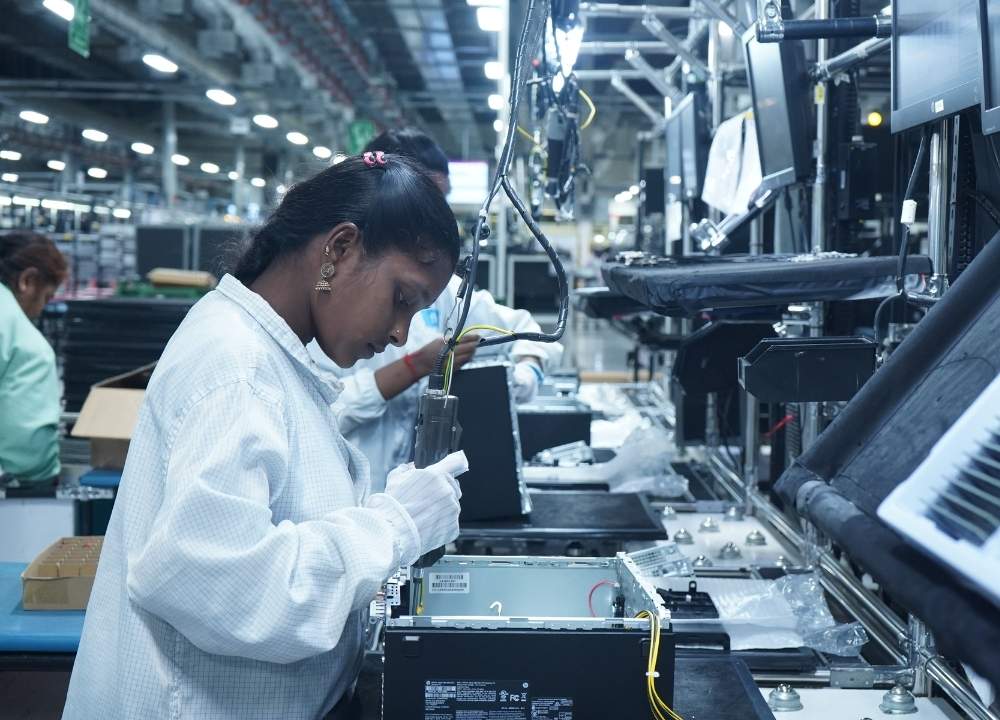
Skill development is another area where things are evolving. Training is no longer limited to basic operations. In many manufacturing facilities, roles now require a mix of technical skills with data understanding.
This means shop floor engineers and operators need to continuously update their skills. The pace of change makes one-time training less effective. What matters more is the ability to keep learning and adapting on the job.
India’s demographic advantage, as one of the youngest large economies globally strengthens this trajectory. Manufacturing clusters that once focused primarily on assembly are now contributing to design support, systems engineering, process optimization, and global quality leadership. The shift from execution to engineering reflects measurable capability deepening across the ecosystem.
A decade ago, the priority was capability absorption. Today, India contributes capability outward. As global manufacturing networks become more distributed and technology-intensive, the ability to build skills that travel across geographies has become a strategic imperative. India is no longer defined only by its ability to manufacture at scale. It is increasingly defined by its ability to build, deploy, and export expertise, shaping how the global manufacturing workforce evolves in the era of intelligent industry.