TEAL, Titan Company’s wholly owned engineering arm, has grown from an in-house watchmaking equipment shop into a precision manufacturer supplying components for LEAP engines, aircraft landing systems, and defence platforms to global majors like Safran, Liebherr-Aerospace, and Raytheon Technologies. Its Q4FY26 income rose 60% year-on-year to ₹454 crore, and a fresh ₹192 crore investment under the government’s electronics components scheme signals a bigger push into semiconductor and electronics manufacturing equipment.
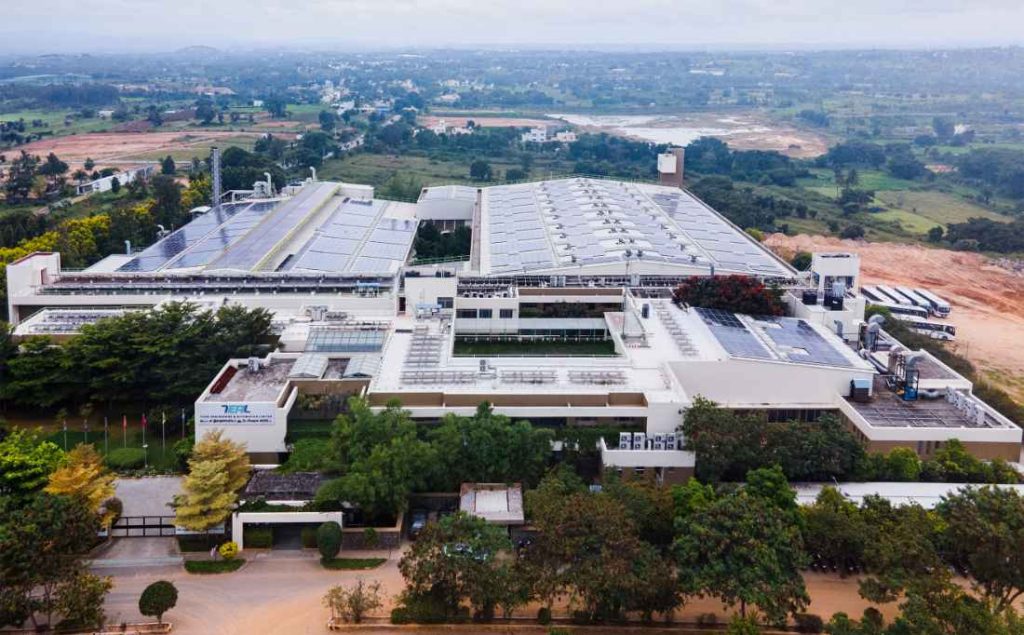
Titan Engineering and Automation Limited (TEAL) has spent three decades operating largely out of the spotlight, first as the in-house engineering function that kept Titan’s watch factories running, and later as a standalone precision manufacturing and automation business. That quieter profile is changing quickly. Over the past 18 months, TEAL has signed manufacturing agreements with some of the biggest names in global aerospace, including Safran Aircraft Engines for LEAP engine components and a five-year agreement with Liebherr-Aerospace Lindenberg for critical landing system parts, while also winning approval under the government’s Electronics Components Manufacturing Scheme (ECMS) for a ₹192 crore capital goods investment.
The financial story backs up the momentum. TEAL closed Q4FY26 with a Total Income of ₹454 crore, up 60% over the same quarter last year, and the business is now tracking close to ₹1,500 crore in annualised scale, with roughly ₹400 crore of further capex planned across its automation and precision manufacturing lines. For a company that used to describe itself, half-jokingly, as Titan’s best-kept secret, that kind of visibility is new.
In an exclusive conversation with Machine Maker, Sridhar Neelakantan, Managing Director and CEO of TEAL, walked us through how this transformation happened, the accidents of history that shaped TEAL’s core capabilities, the years of trial and error before the company found its focus, and where he sees the business headed as India’s manufacturing base widens into semiconductors, batteries, and next-generation automation.
A Precision Inheritance
Sridhar’s own career has an unusual symmetry with the company he now runs. A mechanical engineer from the University of Bombay with a management degree from S P Jain, he joined Titan straight out of campus in 1994, starting out in watch manufacturing in Hosur before eventually heading supply chain central planning. In 2000, he moved to Wipro, spending much of the next eight years in international sales out of Finland and the UK, working with telecom and banking clients across Europe. He returned to India, and to Titan, in 2008 into what was then called the Precision Engineering Division. “I wanted to get back to my passion for manufacturing,” he says. “I felt India had a unique opportunity to scale in precision manufacturing outsourcing. My judgement was pretty much accurate, except that the real scaling came almost a decade later. But it did happen.”
That same instinct for precision runs through TEAL’s founding story, and Sridhar traces it back to the watch. “Most of the capability we’ve built in TEAL comes from our pedigree in watchmaking,” he explains. “For a really good watch, every component inside has to be super precise; we’re talking accuracies of two or three microns. Our hair is about 70 microns thick, so you’re talking one-seventieth of that. That was the core engineering pedigree of this company; we understood precision.” It’s a detail worth sitting with: the same shop-floor discipline that once ensured a watch hand moved true is, decades later, the discipline behind components flying inside a jet engine.
The second half of TEAL’s DNA came out of necessity, not choice. “In the early ’90s, you’ll remember the balance-of-payments crisis: we didn’t have much foreign exchange, but we were growing as a company and needed equipment. Most of it came from Switzerland, France, Germany, Japan, and you needed forex to buy it. So we chose to build our own.” That decision, forced by a currency crunch rather than strategy, is the direct ancestor of TEAL’s automation business today. In some ways, it’s a very Indian origin story: a constraint turned into a capability, decades before anyone called it import substitution.
Finding Focus
TEAL formally became a business in the early 2000s, built to leverage that in-house capability and put Titan’s watchmaking-era assets to wider use. But the path from there to a globally recognised aerospace supplier wasn’t linear. “It wasn’t easy; we went through a long phase of exploring markets, trying things, not making money in markets that were large but just didn’t suit us,” Sridhar admits. Interestingly, one of TEAL’s earliest forays into aerospace-adjacent manufacturing services started with something as unglamorous as spacecraft panels, before a contract with Hamilton Sundstrand later folded into United Technologies and eventually Raytheon Technologies opened the door to the relationship that today makes Raytheon one of TEAL’s biggest customers.
The turning point was a deliberate narrowing rather than an expansion. TEAL chose to stick to aerospace on the precision-manufacturing side, and to high-precision, smaller automotive components on the equipment-building side, rather than chasing every market that looked attractive. “That strategy paid off, because as the industry grew — especially after Covid — the need for automation picked up sharply. We were among the very few companies in India with these capabilities, so naturally, everybody started looking to us,” Sridhar says.
That focus is now visible in the everyday. Sridhar likes to point to something as ordinary as an IndiGo A320neo landing: the reverse-thruster actuation system that helps the aircraft brake on the runway, the cowl visible swinging open near the engine as the plane slows down, includes critical components built at TEAL’s Hosur facility. It’s a useful way of making an abstract supply-chain story concrete: components most passengers will never think about, built a few hours’ drive from Bengaluru.
Riding Two Global Tailwinds
TEAL’s growth today is being pulled by two large, largely independent forces. The first is global aerospace and defence spending. Commercial order books at both Airbus and Boeing are stretched further than either manufacturer can currently produce. Airbus ended the first half of 2026 carrying a backlog of roughly 9,216 aircraft, equal to more than ten years of production at current delivery rates, while Boeing’s backlog stood at 6,814 aircraft, also more than a decade’s worth of output. “There’s no better segment for growth today,” Sridhar says. “Every country is spending more on defence, and even in civil aerospace, Airbus and Boeing are carrying order backlogs they can’t fully service. They’re looking for suppliers who can expand and who have deep capability.” TEAL’s own order book reflects this: long-term agreements with Safran for LEAP engine parts, a five-year deal with Liebherr-Aerospace for landing systems, and an ongoing relationship with Raytheon.
The second tailwind is domestic: India’s own manufacturing base is widening in ways that create fresh demand for TEAL’s automation and equipment-building arm. The EMS (electronics manufacturing services) segment is the clearest example — India’s EMS market has expanded from roughly $10–12 billion in FY20 to $40–45 billion in FY25, and is projected to cross $150 billion by FY30. “The EMS segment in India has really scaled, and that’s giving us a lot of opportunity for growth,” Sridhar notes. The government’s ECMS scheme, whose outlay was raised to ₹40,000 crore in the Union Budget 2026-27, is designed precisely to pull component manufacturing, and TEAL’s own ₹192 crore approval under the scheme sits squarely in that thesis.
Automotive adds a third leg. India’s passenger vehicle sales hit a record 4.37 lakh units in April 2026, up 25.4% year-on-year, with two-wheeler sales rising 28.4%, and EV adoption is climbing alongside it — India sold 24.5 lakh EVs in FY2025–26, up 24.6% year-on-year, with EV penetration reaching around 8.5%. “If you look at this year, the numbers look very, very encouraging,” Sridhar says. “Almost double-digit growth in passenger vehicles and two-wheelers. EV penetration has grown significantly.” For a company that builds automation lines for automotive manufacturers, a market growing this fast — and electrifying this quickly — is a direct multiplier on demand.
What It Takes to Be Trusted
Winning a place in global aerospace supply chains, Sridhar points out, isn’t simply a matter of having capacity. “It’s not an easy task. Aerospace requires discipline and deep competence in understanding aerospace requirements. We entered this segment in the early 2000s, so we have almost two decades of experience now,” he says. That two-decade head start matters more than it might sound, because aerospace qualification can’t be compressed; it accumulates audit by audit, certification by certification.
That discipline, in Sridhar’s telling, spans several layers most outsiders never see: traceability of where material is sourced and how it’s stored, documented systems and processes across the organisation, and a set of “special processes” coatings, chemical treatments, painting, powder coating, heat treatment that sit outside ordinary metal-cutting work. “All of these need international certifications,” he says, “and you have to keep them current. You have to be very disciplined about how you look at these processes.”
Sridhar credits this compounding discipline, more than any single contract, for TEAL’s ability to keep winning repeat business from demanding global customers. A single missed audit or lapsed certification can shut a supplier out of a programme for years; TEAL has kept its aerospace credentials current for nearly two decades, which, in his framing, is the real moat harder to replicate than capacity and slower to build than capital.
India’s Structural Moment
Asked why global aerospace supply chains are turning to India now, Sridhar offers a structural argument rather than a cost-based one. “Historically, most of the aerospace supply chain was centred in Western Europe and North America, and it’s fairly fragmented there, with lots of small, family-owned companies with deep competence built over many years. As it moves to countries like India, and China to an extent, the advantage is that you have larger, professional companies of scale.” That shift, he argues, reshapes the supply chain itself: more machines per supplier, greater integrated capability, and real economies of scale and scope that fragmented Western suppliers structurally cannot match.
He’s equally clear that this isn’t purely a labour-cost story. “Aerospace manufacturing isn’t high-volume, low-value-content work. It’s all about precision, engineering content, complexity. That deep engineering value is inherent to its nature, and that’s why it lends itself so well to India as a market, he adds, with a genuine arbitrage in process-engineering skills and a large pool of trained talent to draw on.
The scale of what’s being attempted in parallel across sectors, Sridhar argues, is unusual by any historical comparison. On semiconductors, India’s fabrication and packaging ecosystem has moved from policy to plant floor: as of 2026, twelve facilities have been approved under the India Semiconductor Mission with combined investment of over ₹1.65 lakh crore, of which three Micron, CG Semi, and Kaynes are already in commercial production, while the country’s first front-end wafer fab, the Tata-PSMC plant at Dholera, is targeting first silicon by December 2026. On batteries, roughly 40 of a targeted 50 GWh of advanced chemistry cell manufacturing capacity has already been awarded under the government’s PLI scheme. On solar, India’s module manufacturing capacity has jumped from 3 GW to 172 GW, while cell manufacturing capacity has risen from zero to 27 GW over roughly a decade.
“There are segments being created in India where the entire value chain of a market is coming up at one time. I don’t think this has happened in any country in the world,” Sridhar says. “Look at batteries: India is building everything from cell manufacturing to BMS and ESS, all together. Same with semiconductors silicon to ingot to packaged chips. Same with solar: silicon right up to modules and storage. All of this will need equipment, and we want to be a credible Indian equipment builder for it.”
Getting Smarter, Not Just Bigger
Automation in India, Sridhar says, has crossed a psychological threshold that once held it back. “Earlier, when you wanted full automation, there was always an ROI question: people are cheaper; does this make economic sense? That question isn’t being asked as much anymore.” He frames this as India catching up to a trend already visible elsewhere: TEAL, having already built fully automated lines for European customers, now finds Indian customers asking for the same standard it once reserved for export markets.
The newer layer on top of automation is intelligence. Camera-based inspection is replacing subjective human checks on TEAL’s own lines, sharpened using AI and deep learning. “Our human eye is the best instrument on the planet, but you get more predictability when you use imaging, and then make it better with AI and deep learning. You teach the tool, and it gets better with time,” Sridhar says. “We’ve built our own solutions for this, and we’re now trying to patent an algorithm for some of these inspection applications.” It’s a small but telling detail: an engineering-services business quietly building its own IP, rather than only integrating equipment bought elsewhere.
Layered on top of that is a broader Industry 4.0 push: sensor-enabled machines, digital twins, and shop-floor visibility through MES systems that let a plant manager see, in real time, what’s happening on a line without walking the floor. “Machines are getting a lot more intelligent. You can build sensors into machines so that the machine itself tells you if there’s a problem coming, before you lose time or production,” he says. “We’re Industry 4.0-enabled, digital twin-enabled, connecting our machines to MES so you can digitally see what’s happening on the shop floor.” For a business that spent its early years scraping together equipment because it had no other choice, being asked, now, to build predictive, self-reporting machines for the world is a fairly complete circle.
Asked about TEAL’s long-term ambitions, Sridhar doesn’t hedge. “We want to be a comprehensive player of intelligent equipment and automation made in India, for India and the world. There aren’t too many companies in India like us, and we’d like to be one of the largest players from India providing this kind of futuristic automation solutioning, not just for India but all over the world — and one of the largest precision manufacturing players for aerospace, defence and semiconductor.”
That ambition rests on the same two pillars the whole conversation kept returning to: precision manufacturing for aerospace, defence, and semiconductors on one side, and intelligent automation and equipment-building for India’s fast-widening manufacturing base on the other. Both, in Sridhar’s account, trace back to lessons TEAL learned decades ago — one from the inside of a watch, the other from a foreign-exchange shortage that forced a young engineering team to build its own machines rather than import them. Three decades on, those two accidents of history have become a fairly deliberate strategy and, if the order books at Safran, Liebherr, and Raytheon are any indication, one that global aerospace has started to take seriously.