Across India’s logistics sector, which is projected to reach USD 527.5 billion by 2033, parcel volumes continue to grow rapidly, fuelled by the expansion of e-commerce, quick commerce, omnichannel retail, and rising consumer expectations for faster deliveries. This growth, supported by government initiatives such as PM Gati Shakti and the National Logistics Policy, is placing increasing pressure on warehouses and distribution centres to process higher volumes while consistently meeting tighter delivery commitments.
This rapid growth is also reshaping the competitive landscape. Logistics providers must scale operations efficiently while managing rising operating costs, labour shortages, and tighter service-level agreements. At the same time, customer expectations continue to rise, leaving little room for operational delays or errors. Even minor disruptions can trigger delayed deliveries, refunds, reverse logistics costs, and ultimately erode customer trust and loyalty.
Physical infrastructure and workforce productivity therefore become paramount. Much attention is rightly given to increasing throughput through automation, faster conveyors, and high-speed sortation systems. However, maintaining that speed consistently is becoming just as important as achieving it.
Keeping Operations Moving
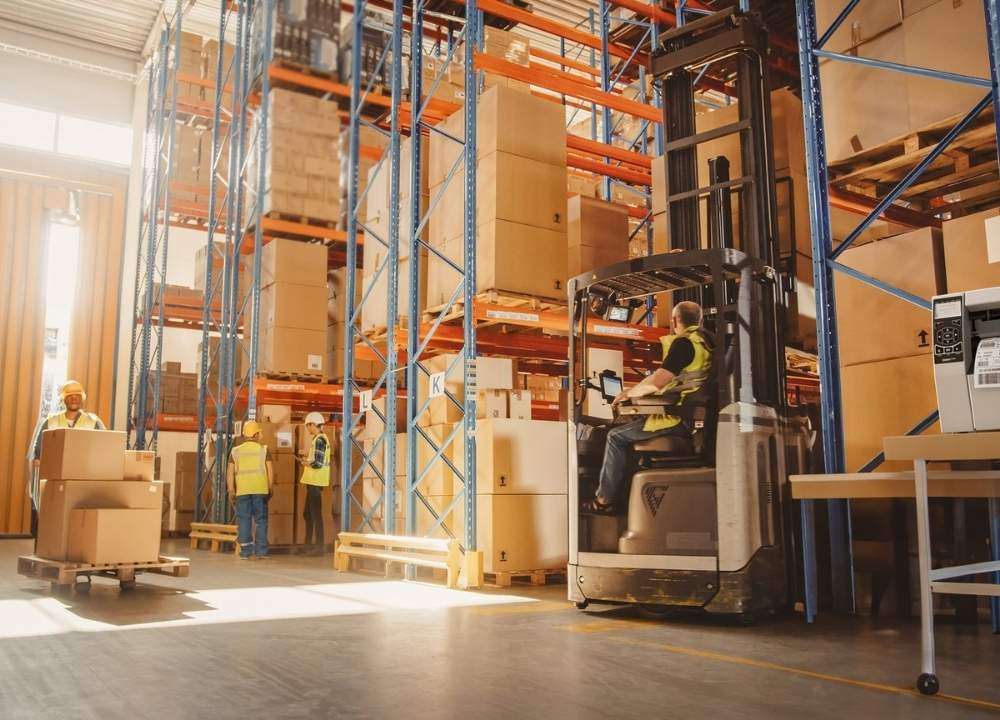
Inside modern, high-volume fulfilment centres, conveyor networks and automated sorters are designed around the principle of continuous movement. Every stage, from receiving, sorting, picking, packing, and shipping, depends on packages flowing without interruption.
When the flow slows down, delays are measured in seconds because every second has financial consequences that can multiply across the supply chain. Packages begin recirculating, throughput declines, shipments are delayed, service-level agreements come under pressure, and operational costs rise. As facilities become larger and more automated, maintaining uninterrupted conveyor operations becomes increasingly important to protecting overall profitability.
This reality is reflected in a new global study commissioned by Zebra with Oxford Economics, which surveyed senior leaders across major manufacturing and logistics hubs, including India, Japan, Australia, the US, and Europe. The research demonstrates that modernising these critical frontline workflows directly unlocks substantial productivity and financial gains. For example, the study estimates that improving shipping and loading workflows can deliver a potential USD $2.8 million profit increase for a typical transport and logistics organisation, while modernising picking and packing operations can boost operational speed by up to 54%. Actual results may vary depending on an organization’s baseline technology, operational environment, and deployment strategy.
Understanding the “Blockage Response”
Whether a blockage alert is genuine or false, operations teams often respond in exactly the same way. A temporary slowdown can easily be interpreted as a conveyor blockage, triggering unnecessary investigations or even stopping outbound lanes. Packages may recirculate through the network while operators inspect equipment that was never actually blocked. Valuable labour is diverted from higher-value tasks, and productivity suffers.
According to research from Zebra and Oxford Economics, 34% of surveyed logistics firms saw a correlation between improving their warehouse operational workflows and better staff retention and satisfaction. Conversely, false blockage alerts can create almost as much financial disruption as genuine ones. Over time, repeated interruptions contribute to “alert fatigue”, reduce confidence in automated systems, and make overall throughput less predictable. As logistics operators pursue greater efficiency, many are now looking beyond conventional sensing technologies to protect continuous operations.
Conventional blockage detection relies on photoelectric sensors, which often have a limited view: blocked or not blocked. Today’s logistics environments, however, are far more dynamic. Conveyor speeds are higher, package volumes are denser, and parcels vary in shape, weight, and material. Under these conditions, temporary congestion can easily look like an actual blockage, triggering unnecessary alerts that slow operations rather than improve them.
The latest generation of machine vision solutions combines smart cameras with practical AI to continuously analyse live video feeds and rapidly captured images. Rather than simply detecting a static obstruction, AI evaluates package movement, flow patterns, congestion levels, and velocity in real time to determine whether a genuine blockage exists.
This transition represents a broader, global shift as AI moves rapidly from theory to practice on the warehouse floor. Indeed, interest in deploying AI for shipping and loading workflows has nearly tripled among logistical organisations still aiming to improve. This strategic evolution was recently validated by the Wall Street Journal, which ranked Zebra Technologies 10th for AI Readiness and 76th overall in its inaugural “Best Companies for the Future” report.
When a genuine blockage occurs, operators receive timely updates with visual evidence, providing the real-time visibility they need to know where to respond and what to expect. When the system determines that flow remains normal, packages continue moving with minimal interruption. This lets teams stay focused on more critical, revenue-generating operational tasks. By equipping a connected frontline with tools like advanced on-device AI Enablers and workflow-automating AI Blueprints, organisations can turn real-time data into immediate, localised action.
Advances in both AI software and edge computing have now made this approach practical for large-scale logistics environments, helping organisations address operational problems that have existed for decades.
Delivering Reliable Operations Through Actionable AI
As India strengthens its position as a global manufacturing and logistics hub, warehouses and distribution centres will need to handle increasing order volumes without compromising speed, accuracy, or reliability. With India’s e-commerce market projected by Deloitte to reach $250 billion by 2030, the pressure to deliver faster fulfilment and consistently high service levels will only intensify.
Meeting these expectations will require more than automation alone. The next phase of operational excellence will be driven by systems that can anticipate disruptions, provide actionable insights, and enable frontline teams to respond before small issues become costly bottlenecks. By combining AI with real-time operational visibility, logistics organisations can improve equipment availability, reduce downtime, optimise workflows, and keep goods moving efficiently across the supply chain. As fulfilment networks continue to evolve, organisations that combine automation with AI-powered operational intelligence will be best positioned to drive efficiency, enhance customer satisfaction, and support India’s ambitions of becoming a global logistics and manufacturing powerhouse.