What began as a small mustard oil business in Bareilly has evolved into one of India’s most diversified and forward-looking enterprises. Today, BL Agro’s journey stretches far beyond edible oils, into food processing, advanced manufacturing, automation, renewable energy, and even cattle genetics. At the centre of this transformation is a belief that growth comes not from staying within the boundaries of an industry, but from constantly challenging them. Under the leadership of Ashish Khandelwal, BL Agro has combined traditional strengths with modern technology to build businesses that create value across agriculture, manufacturing, sustainability, and rural development.
BL Agro began as a small mustard oil business in Bareilly, named after a grandfather and built by hand. Three generations later, it packs 1,100 metric tons of edible oil daily, runs one of India’s most ambitious cattle genetics programmes, and is targeting a Rs 30,000 crore turnover by 2030. Ashish Khandelwal, the third-generation Managing Director who drove the company’s full automation overhaul, speaks to Machine Maker about the decision that changed everything and why the family’s most interesting chapter may still be ahead.
The name BL Agro came from his grandfather. Bisan Lal Khandelwal started the business in Bareilly, Uttar Pradesh, and those initials now sit on packaging distributed to more than 1,25,000 retailers across North India, covering roughly 11 to 12 percent of the country’s total mustard oil production.
Ashish grew up around the business. He was still in school when he started spending time at the facility. His formal education, though, was in computers. He graduated in Computer Science, and his first real contribution to the company was not on the production floor; it was writing accounting software that the business actually needed.
“Software was my first priority,” he says. “Accounting, implementing technology, that was the first achievement.”

When Customers Brought Their Own Containers
Mustard oil packaging at BL Agro in the early years was handled the way most things were in small-town Indian manufacturing: largely by hand. Customers brought their own containers. Hygienic bottling was not yet the standard.
By 1992, the company had moved ahead of most. BL Agro introduced bottling in half-litre, one-litre, two-litre, and five-litre formats, among the first mustard oil brands in India to do so. The machines available domestically at the time were basic. By the mid-1990s, with demand growing and SKU counts expanding, the operation had scaled to 18 small packaging lines, each one requiring significant manual involvement at nearly every stage. “Back in 1996-97, it was more labour intensive,” Ashish says. A single shift required between 800 and 900 workers. While the model supported growth, it also meant that packaging operations remained heavily dependent on manual intervention.
The Food Safety Act, and One Decision
The Food Safety and Standards Act came into force with stricter enforcement from around 2012-13. BL Agro’s plant faced a suspension. Ashish did not look for a minimum compliance threshold. “I decided human intervention should be removed from the entire process,” he says.
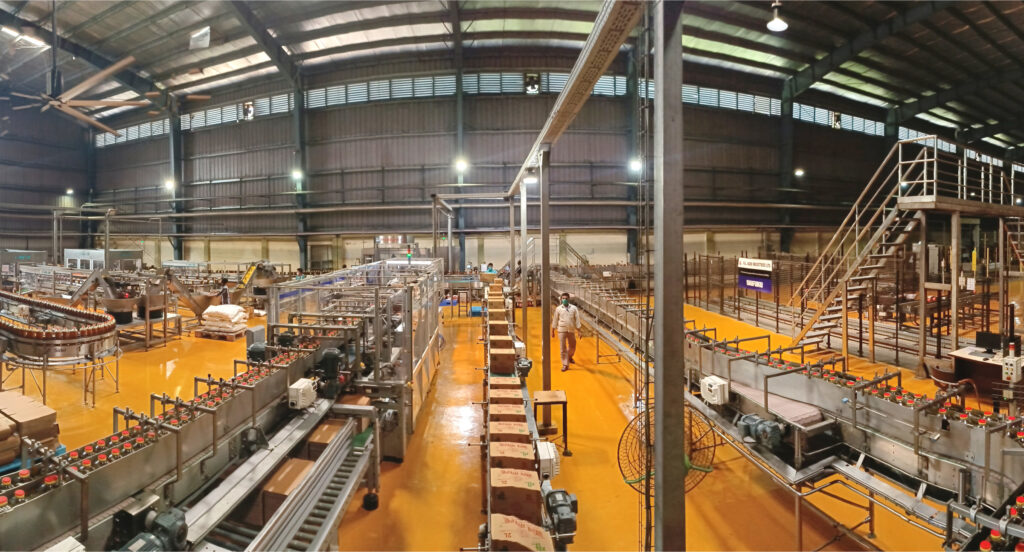
The team went looking for machinery that could fulfill the requirements. They evaluated European suppliers and identified a filling line from Cypet Technologies capable of running 200ml to 5-litre formats at 1,100 metric tons per day, a throughput Ashish describes as one of the first of its kind in Asia for this combination of range and output. For 15-litre jars, which presented their own racking and stability challenges, the same supplier provided a solution after additional engineering work.
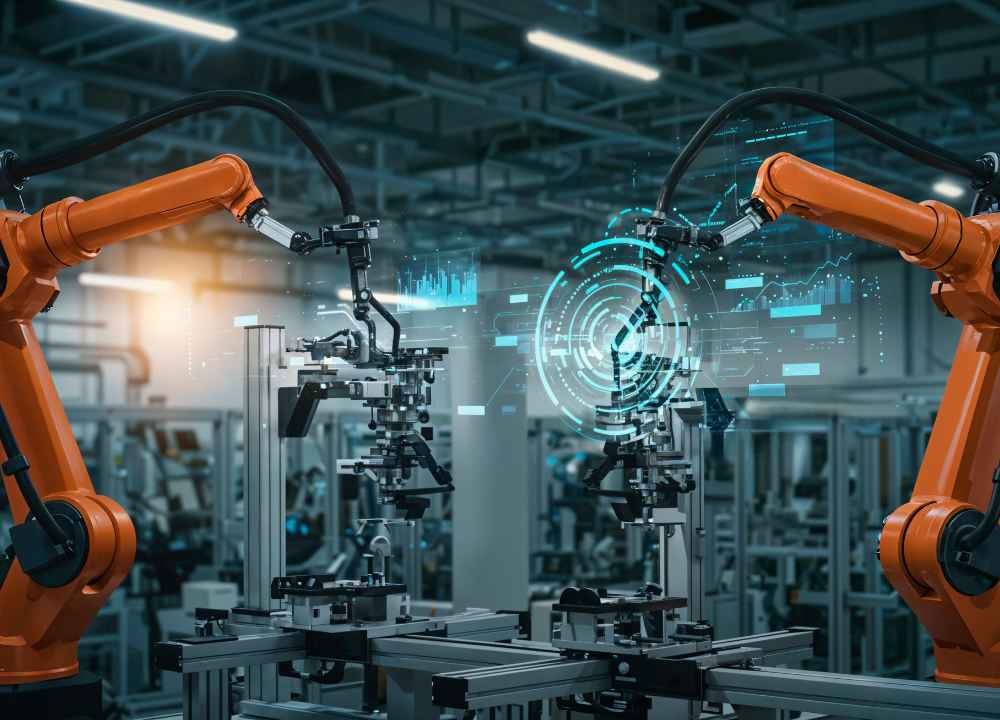
All 18 manual lines were shut down and replaced by three automated lines. The impact was immediate. The single shift that had needed 800 to 900 people reduced substantially. Product consistency and fill accuracy stabilised in a way that manual operations simply could not deliver. Ashish says efficiency improved around 400 times compared to what the manual lines had produced. The capital investment paid back in nine months. “Automation was the major turnaround,” he says.
From Mustard Oil to Food Processing
With the packaging operation transformed, BL Agro turned its attention to expanding the product portfolio. In 2018, Ashish travelled to Korea to evaluate vacuum packaging technology for food grains. The problem was specific: contamination from pesticide residue and fumigation chemicals in loosely packed pulses, flours, and grains. Vacuum sealing removes the atmospheric conditions that allow this contamination to persist. The Korean machinery was adopted, and BL Agro built out a food grains range that now covers approximately 600 SKUs; pulses, flours, semolina, macaroni, pasta, rice, and spices. This infrastructure became the production base for the Nourish brand, launched in 2019.
The Bareilly facility today runs on 100 percent solar energy for in-house packaging. Refining capacity stands at 450 TPD, packaging at 500 TPD, and warehousing at 26,000 tonnes. The plant has its own railway siding for raw material inflow and a fractionation unit for oil processing. A Rs 1,660 crore greenfield project is currently underway, which will add a fully automated basmati rice milling unit, expanded oil refining and extraction at 500 TPD, advanced packaging lines, sugar storage, and 40,000 MT of grain storage.
The Cattle Embryo Problem India Could Not Solve for Ten Years
What BL Agro does today is not easy to categorise in a single description. From mustard oil, it has expanded into packaged food grains, insurance, agricultural forecasting using satellite data and crop estimation instruments, and most recently, genetics.
According to Ashish, the opportunity emerged after years of unsuccessful attempts to import cattle embryos from Brazil under the national Breed Improvement Programme. In 2023, BL Agro acquired Leads Connect, a full-stack agri-tech firm, for Rs 500 crore. Under it, Leads Genetics now operates India’s first privately-owned integrated Centre of Excellence for Cattle and Plant Genomics in Greater Noida. BL Agro is the first Indian private company to have imported Gir embryos from Brazil under the national Breed Improvement Programme.
The results are significant. The embryo transfer success rate at Leads Genetics runs between 65 and 68 percent. The global benchmark is 12 to 18 percent. Indigenous Indian cows from this programme yield 40 to 60 litres of milk per day. The next step is genome sequencing. BL Agro has purchased a sequencing machine that will make it the second-largest genome sequencing unit in India. The scope covers livestock, crops, and human health.
Risk Lena Hoga
Ashish’s advice to young entrepreneurs is direct: take the risk and go to the field. “The new generation must take risks,” he says. “If you stay in the office behind a computer, that is the same as everyone else. Risk lena hoga.” He advises from his own experience. A Computer Science graduate who chose the packaging floor. A third-generation inheritor who moved to full automation when partial compliance was available. A food company director who ventured into genomics and cattle genetics, an area far removed from the company’s traditional edible oils business.
BL Agro’s group turnover currently stands at Rs 15,000 to 16,000 crore. The 2030 target is Rs 30,000 crore. There are also two defence-related projects currently underway that Ashish expects to disclose at a later stage. Bisan Lal Khandelwal’s initials are still on every bottle. What they represent has grown considerably beyond mustard oil.