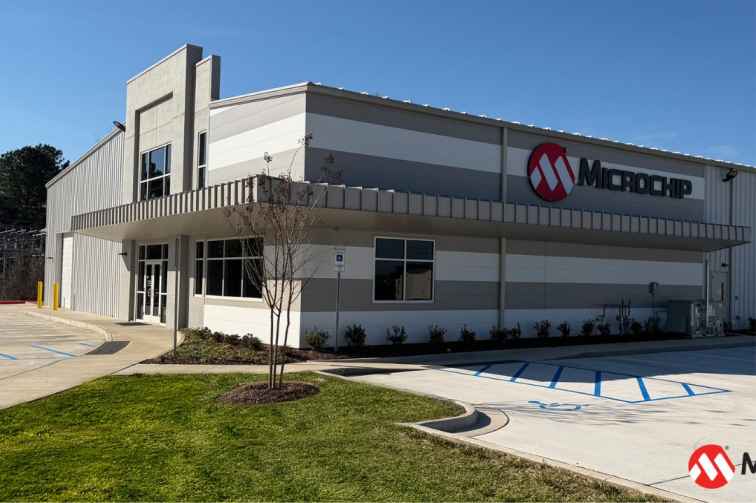
Microchip Technology Inc (Nasdaq: MCHP) has announced the opening of a new manufacturing facility in Tuscaloosa, Alabama, to increase production capacity for its hydrogen masers and shorten delivery timelines as worldwide demand for advanced timing systems continues to rise. Hydrogen masers are highly accurate atomic clocks that use the properties of hydrogen atoms to generate stable microwave frequencies for precision timekeeping. These systems play a vital role in maintaining Coordinated Universal Time (UTC), the global benchmark for time synchronization used across essential infrastructure such as power grids, mobile networks, satellite communications and navigation systems.
As countries place greater emphasis on resilient and independent timing networks to safeguard critical services from outages and disruption, the requirement for hydrogen masers has grown significantly. Microchip said the new facility will focus on manufacturing its MHM-2020 Active Hydrogen Maser, supporting higher output and faster response to customer needs.
The MHM-2020 Active Hydrogen Maser is engineered for applications that require exceptional frequency stability and ultra-low phase noise. These include national timing laboratories, scientific research institutions, radio astronomy, deep-space tracking systems and GNSS/GPS ground stations. The system is designed to deliver synchronization accuracy of one picosecond for precise GNSS calibration and has demonstrated an operating life exceeding 20 years with minimal maintenance requirements.
The Tuscaloosa site will also support production of other products in Microchip’s timing and synchronization portfolio, including the Auxiliary Output Generator (AOG-110) and the 1000C-OCXO ultra-high-performance crystal oscillator. The AOG-110 enhances functionality for stable frequency standards, while the 1000C-OCXO is built for metrology and laboratory environments where low phase noise is essential.
Microchip’s roots in Alabama trace back to earlier acquisitions beginning with Frequency Time Systems in 1996. The company has maintained operations in Tuscaloosa County since then. The newly opened facility spans approximately 15,000 square feet and includes dedicated temperature-stability testing areas along with an advanced research and development laboratory.
Located close to the University of Alabama campus, the new site further strengthens Microchip’s collaboration with the institution. The partnership includes shared access to equipment, workforce training, student employment opportunities and advisory board participation.
Dr Thejesh Bandi, Principal Investigator of the University of Alabama Quantime Laboratory and Technical Director of the ACCEPT program, said, “Our laboratory focuses on quantum physics research and the development of timing, frequency and navigation technologies. We have worked closely with Microchip on its hydrogen maser programme, and this expansion reflects a shared commitment to advancing precision timing solutions.”
Randy Brudzinski, Corporate Vice President of Microchip’s Frequency and Time Systems business unit, said the investment supports growing customer demand while strengthening ties with the University of Alabama’s Precision Navigation and Time Laboratory.
Microchip Technology Inc develops embedded control and processing solutions designed for secure, connected, and intelligent applications. With a broad product portfolio and streamlined development tools, the company supports efficient system design aimed at reducing development risk, cost, and time to deployment. Serving more than 100,000 customers worldwide, Microchip’s technologies are applied across sectors including industrial, automotive, consumer electronics, aerospace and defense, communications, and computing. Based in Chandler, Arizona, the company maintains a focus on reliable product delivery, high manufacturing quality, and strong technical support.